Navy pitches PFAS treatment plan amid growing fears of Swan Pond contamination
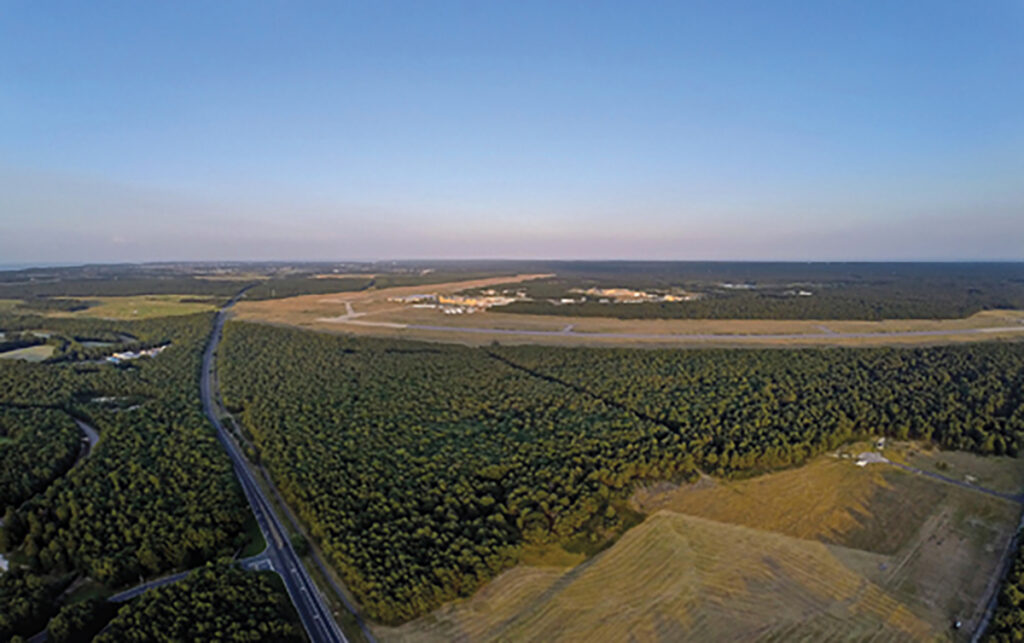
Navy officials said Tuesday they are moving ahead with an interim treatment plan for groundwater contamination threatening Swan Pond, as criticism mounts over the military’s 30-year cleanup of the toxic Grumman plume in Calverton.
The announcement came during a virtual meeting with the Calverton Restoration Advisory Board and followed newly public Suffolk County health data showing startlingly high contaminant levels around the former Grumman site at EPCAL.
In light of those findings, the U.S. Navy proposed a “two-pronged process” to address a particular area at the former military aircraft facility that was used as a fire training pit and holds high concentrations of perfluoroalkyl and polyfluoroalkyl substances, commonly known as PFAS, in the plume.
Nate Winston, a geologist working on the project for Resolution Consultants, confirmed the goal is to get the pumping system operational and treating water by mid-fall of this year.
“From all levels of the Navy, this is something that’s really high priority,” Mr. Winston said. “We are actively working as hard as we can to get the existing Navy-owned treatment system mobilized to the site, wells drilled, and a lot of that’s going to depend on coordination and also the timely input from our regulatory team.”
Navy hydrogeologist and engineer Laura Cook explained how the Navy plans to target the forever chemicals at the area of concern.
The first step would pump the contaminated groundwater and evaluate the proper treatment above ground before discharge. This is not a final remedy, Ms. Cook said, but an effort to ensure this approach is the most effective way to target PFAS in the Site 2 source area.
“The approach that we’re planning to use for that involves bubbling air up through the water, and because of the nature of the PFAS, that acts sort of like a soap,” Ms. Cook said. “The higher concentration levels of PFAS will foam out, and then we can skim that off or remove it off the top, and send it for treatment.”
Treated water would then go through filtration to remove remaining PFAS. The contaminants would be retained on the filter, removed and replaced at a later date, and then clean water would be discharged.
Next, the goal would be to cut off the plume migration pathway by installing an underground funnel and gate system. As the groundwater flows downgradient, it would move through the gates to be cleaned before it flows into Swan Pond.
The initial treatment system is expected to operate at about 20 gallons per minute, and could expand to 40 gallons per minute, officials said.
After a heated Restoration Advisory Board meeting back in February, local officials unveiled independent county testing of private wells on April 28 — data the Navy declined to accept — as concerns grew over the spreading groundwater contamination moving beneath Calverton from the former Grumman site.
Testing found substantial amounts of PFAS in Swan Pond, Donahue Pond and the Peconic River — all of which are popular boating and fishing spots. Health officials stressed that past surveys showed a credible risk of people eating contaminated fish. The Suffolk County Health Department has placed a “no fishing” sign at Swan Pond.
Most distressing to the public was the fact that the Navy collected fish, sediment and surface water samples from Swan Pond in November 2024, detected excessive concentrations of these “forever chemicals” in the fillets — and did not notify the public for more than a year.
Navy officials took ownership of that error at the latest RAB meeting.
“This was an oversight,” said Addison Phoenix, RAB co-chair and the Navy’s remedial project manager for Calverton. “We will not be making this mistake in future.
Jennifer Corack, a Navy human health risk assessor, said fish tissue is difficult to sample. She said although the data has been validated, the report that includes the data analysis and risk assessments is still in draft form and under development.
“We’re going to be, as we move forward with the remedial investigation, continuing to evaluate these chemicals, both their nature and extent, and the potential risk from exposure,” Ms. Corack said.
RAB members slammed the Navy’s decision to host this month’s meeting virtually instead of in-person. Riverhead Water District superintendent Frank Mancini said the choice to be virtual “diminishes the collaboration” between Navy officials, regulatory agencies and community members. Navy officials said the next meeting, planned for the fall, will be held in person.
Andrew Rapiejko, a hydrologist for the Suffolk County Department of Health Services and a Calverton RAB member who led the presentation on the Suffolk County health data in April, alleged the Navy excluded the county from a technical call about its pumping well treatment plan.
“I hear some feedback from the technical people that they appreciate the county’s input, but to not include us on a technical call, and then tell us that’s because we’re releasing draft data to the press, which is not true, and didn’t give me any examples of that, just seems like an excuse to keep us out,” Mr. Rapiejko said. “Hopefully, the Navy changes their position on this.”