Guest Column: There’s some lively fishing to be had
As we reach the end of July, we’re starting to see some local fisheries light up again. Black sea bass have finally decided to cooperate. After weeks of slow and inconsistent fishing close to home, Gardiners Bay and Pigeon Rip are beginning to produce a solid number of keeper-sized fish. This is welcome news for anglers who haven’t had much to target since the biomass of porgy and fluke headed east. There are still plenty of smaller fish mixed in, but enough keepers are around to make the fishing worthwhile.
Structure has been the key to finding them. Any kind of contour or hard bottom in 30 to 90 feet of water will hold seabass this time of year. Shallow rock piles in Long Island Sound are a great opportunity for light tackle anglers while spots like Pigeon Rip are proving productive for more conventional anglers. Diamond jigs with a teaser or two on top have also worked, as well as a simple high-low rig baited with clam or squid.
Porgy fishing around Montauk Point has also been excellent. Porgies are by far the most prevalent inshore species at the moment. Anglers have been finding them in impressive numbers and size. They are not always the most glamorous target (their smaller size makes them difficult to filet), but they fight hard for their size and are excellent on the table. Squid remains one of the best bait choices for porgy. Anglers are finding drifts most productive as the fish are in such large numbers.
South of Montauk, the fluke fishing is beginning to look more promising. There are still plenty of shorts to work through, but better fish are there to be caught. This past week, a local fisherman reported catching double digit flukes, which is a sign of a body of larger-sized fish showing up. Frisbees has been a hotspot for dedicated fluke anglers. Its changing bottom contour and abundance of bait fish creates the perfect environment for predatory fish like the summer flounder. Artificial baits like Berkeley gulp on high-low rigs or bucktail teaser rigs have done a good job of culling fluke, but stripped squid and spearing have also produced fish.
There is still striped bass fishing to be done, although the Gut has dried up substantially. Earlier in the season, the Gut held good numbers of bass, but the combination of warming water and changing bait patterns has caused that fishery to slow. Anglers looking for a good shot at stripers should now head toward the Race. The stronger current and deeper water there continue to attract both bait and bass. Mid-summer striped bass don’t feed as aggressively as they do in the spring, so catching a striped bass may require multiple drifts instead of the instant action the month of June had.
Offshore, the inshore bluefin tuna fishing has been much slower than last year. Recreational-sized fish are being picked from Haab’s Ledge to Tuna Ridge, but the fishing has lacked consistency. There is plenty of bait and mammal life throughout these areas, but not enough tuna. Every weather window only a handful of boats pick fish. Inshore tuna anglers are hoping that another wave of fish will come through, but for now, the inshore bluefin bite is slow.
The first inshore yellowfin tuna have also been reported in the shipping lanes. These fish are encouraging and make a stronger inshore appearance seem more promising. Yellowfin can move into an area quickly when the bait and water conditions line up, so spots like the Coimbra are worth keeping an eye on over the coming weeks. For now, however, anglers should be prepared to cover water and spend time searching.
Farther offshore, water temperatures in the canyons have climbed to around 78 degrees. That warm water has created some decent mahi-mahi fishing. Mahi can often be found around floating debris, weed lines and, most commonly, buoys. When headed home or during a midday tuna lull, mahi are a great source of action. They are often in numbers and bite just about all day.
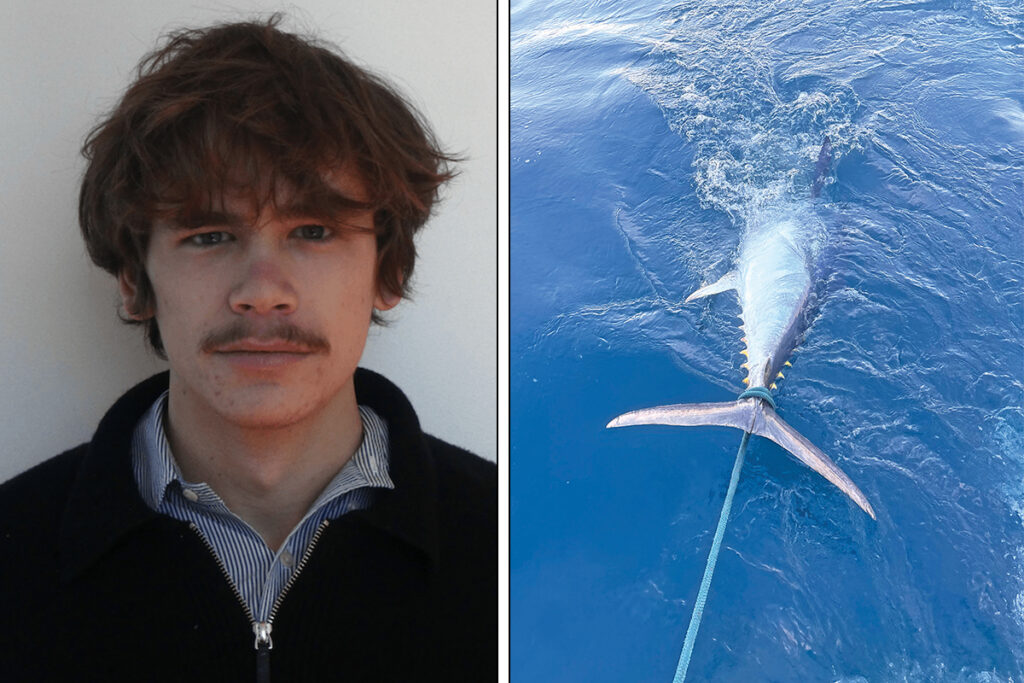
Overall, Canyons fishing has been hit or miss. Yellowfin have been more scattered than they were over the last month, and one day’s productive area may be quiet the next. The story remains the same with bigeye tuna: if you are in the right place at the right time, the fishing can be excellent. That uncertainty is part of offshore fishing, but when everything comes together, a slow trip can turn into an unforgettable one in a matter of minutes. That was the case for me and my crew mates off the coast of Montauk last week, when a listless troll exploded into sudden chaos of big-eye tuna action. We came home with a box full of fish.
Henry Cruise writes the ‘Gone Fishing’ column that appears in the Shelter Island Reporter.