Deadly LIRR train wreck at Calverton pickle factory remembered 100 years later
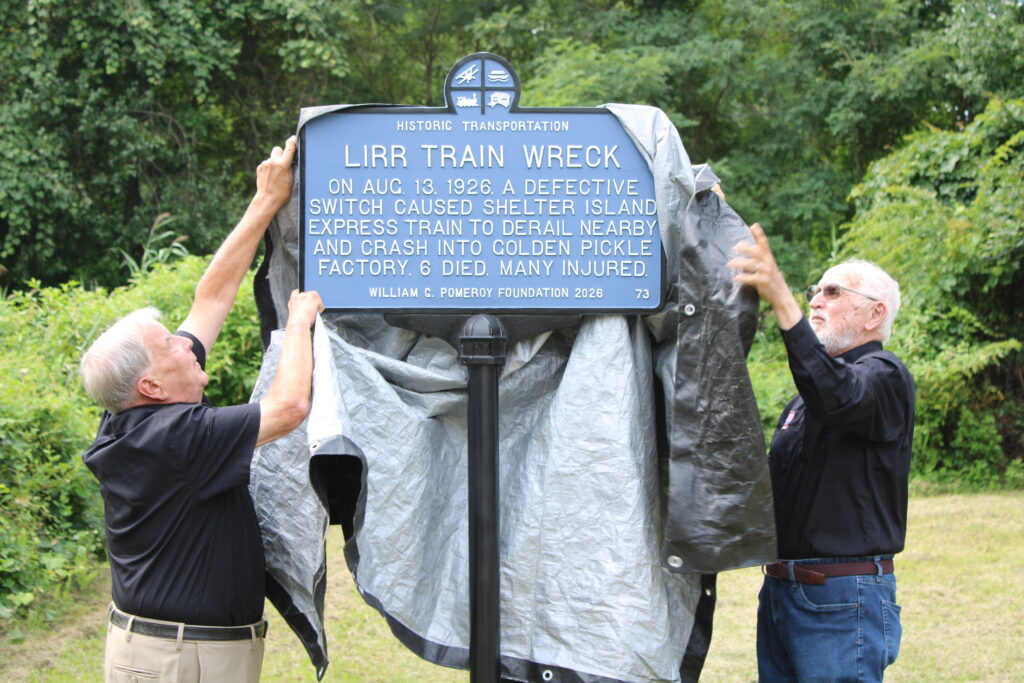
A century after one of the worst wrecks in the history of the LIRR, the Railroad Museum of Long Island unveiled a historic marker Thursday at the Calverton site to commemorate the six people killed.
The marker — provided by the William G. Pomeroy Foundation — commemorates the derailment caused by a defective switch, which killed four of the 387 passengers aboard and two crew members. The sign stands at the intersection of Railroad Avenue and River Road.
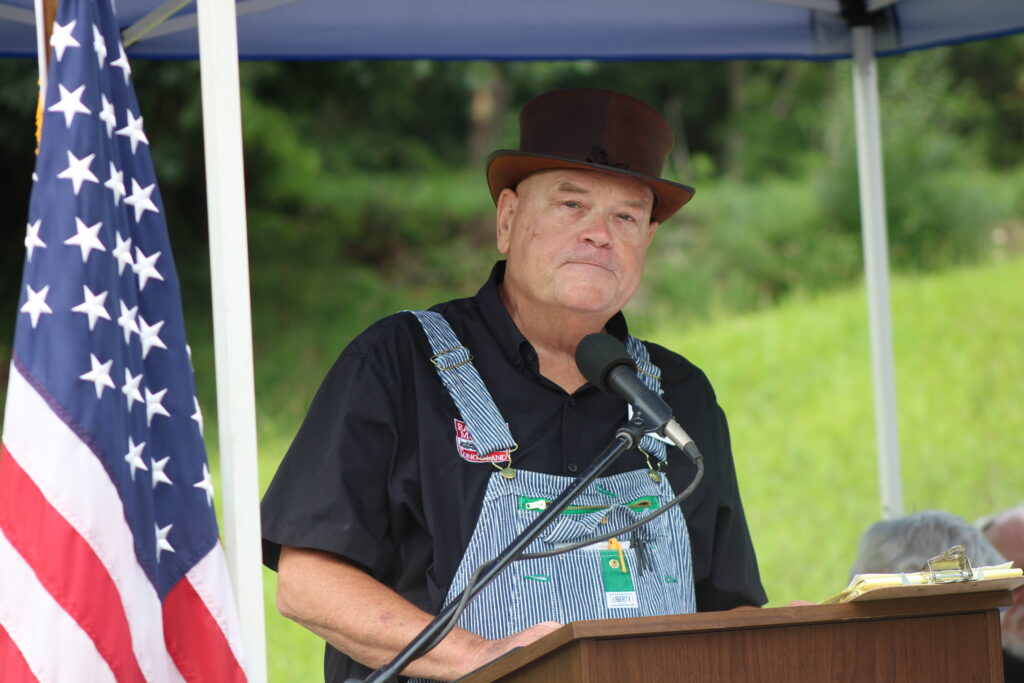
“It’s those people that we will remember today — the people who lost their lives — and it’s to them that we dedicate the sign,” Don Fisher, the long-serving president of the railroad museum, said at the dedication.
The Shelter Island Express was packed with tourists and locals, its two locomotives hurtling toward Greenport on Aug. 13, 1926. Thunder and lightning had been filling the sky throughout the day, which Mr. Fisher called “dark and forbidding.”
Alongside Calverton station, Golden’s Pickle Factory had its own track, or siding, where trains could drop off cucumbers and pickling ingredients and pick up finished products to be shipped elsewhere.
As the first engine, a camelback locomotive with its boiler in the middle of the cab, passed over the switch for the pickle factory, its speed and vibration shook the mechanism free, a condition railroaders call “picking the switch.” When the second, traditional locomotive followed, it threw the switch completely and was directed onto the siding.
“Little did they know that a bolt stood between them and their weekend on the East End,” Mr. Fisher said.
As the second locomotive entered the siding, the train’s inertia pulled the tender and first locomotive with it, wrenching the lead engine backward and off its track. The two locomotives crashed into the building and landed in a heap. The force pulled the parlor car upright and through the building’s roof.
As the train smashed into the pickle factory, the impact broke through the second floor, where the salt was stored, sending it raining down.
“Behind the two locomotives, the Pullman car and the baggage combine also pulled off the tracks, went over on its side, and telescoped into the building,” Mr. Fisher said. “There we had more loss of life.”
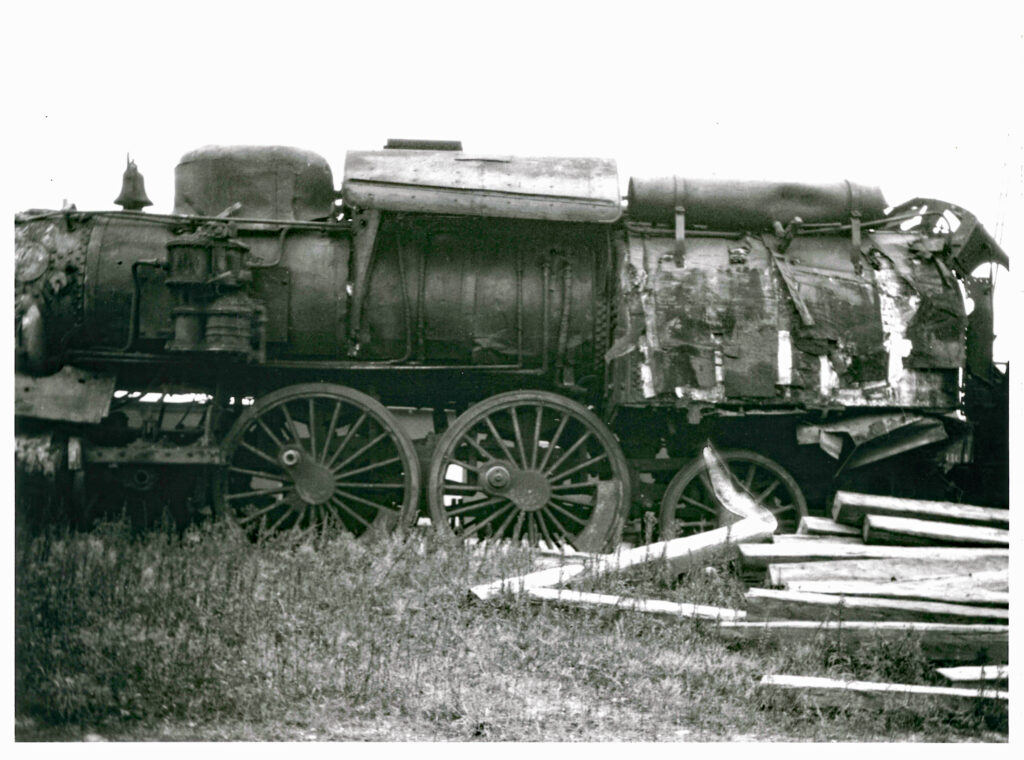
Mr. Fisher read the names of those who died — Dorothy Shuford; George Shuford Jr.; their mother, also named Dorothy Shuford; Harold Fish; John Montgomery; and William Squires — while museum archivists rang a bell for each.
“The engineer and the fireman on the second locomotive survived with just some scratches and bruises, and they were heroic in the sense that they were able to put the fires out in the boiler,” Mr. Fisher shared with the crowd. “Had those fires not been put out, possibly an explosion of the boiler, or a fire starting in the wreckage of the Pickleworks factory itself (could have happened). It could have started and would have made the disaster worse.”
Dr. Stephen Sanfilippo, a professor at Stony Brook University, recorded a song retelling the history of the wreck, which was played to the crowd just before the unveiling.
“Golden’s Pickle Factory was right here; we are sitting at the back of the factory,” Mr. Fisher said. “It’s no longer here, and this is one of the greatest changes in the face of Calverton.”