Editorial: The hard work behind Labor Day
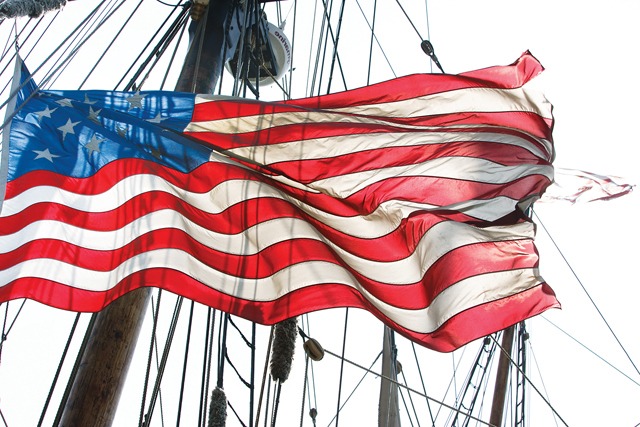
Labor Day, America’s end-of-summer weekend celebration, lost its original meaning long ago.
The first Monday in September was earmarked Labor Day as an election year appeasement by President Grover Cleveland. During the Great Depression of 1893, a strike by Pullman railroad car workers in Chicago went national and it took 12,000 federal troops to break it. The leaders went to federal prison and the group spearheading the strike, the American Railway Union, was disbanded and most of the other industrial workers unions were done in. But protests still boiled, and soon after the bloody end of the strike, legislation was passed by both houses of Congress and President Cleveland signed Labor Day into law to cool things off.
It wasn’t looked at as just a paid holiday, but as a sort of victory and, as one labor leader said, a day when workers “rights and wrongs would be discussed.” It was an early example of something created out of a need for good PR that has since died along with the once essential movement that produced it.
Unions went into hibernation after the Pullman strike but roared back during the next Great Depression beginning in 1929. Organization and collective bargaining thrived for several generations, contributing to one of history’s triumphs: the rapid and extensive expansion of the American middle class. In the 1950s, 50% of American workers held union cards. Today, according to the U.S. Department of Labor, only 10% of employees are unionized, with just 5.9% of private-sector workers in unions. Those unionized employees made about $14,000 a year more than those not represented by a union.
Affordability? Maybe it’s time to get organized.
Some people think unionizing a fast-food worker is strange or funny. We should remember that most fast-food employees aren’t kids, but people trying to support families. The U.S. Department of Labor, for example, found the median age of these workers is over 26, and the U.S. Department of Labor Statistic say that the median annual income of these employees is $30,110.
These jobs are widely disparaged in American culture – someone “flipping burgers” is a figure of fun. And unions? They’re considered an anachronism at best, “job killers” at worst. That is, except to those union members who have a job and make a living wage. The left and the right both moan about how the middle class has been squeezed and shrunk over the last several decades, and both political wings have their reasons.
One argument for the stagnation of real wages is that, with the death of unionized labor, real money in the pocket has shrunk for those working for a living and supporting families.
This Labor Day weekend is a time for family, friends and looking forward to a season of new schedules, school and work. It might also be a time to remember why we have the holiday, and what the future — AI is here — will be for this and subsequent generations.
Happy Labor Day from all of us at Times Review.