State buys nearly 750 acres around Shoreham plant in record DEC land deal on Long Island
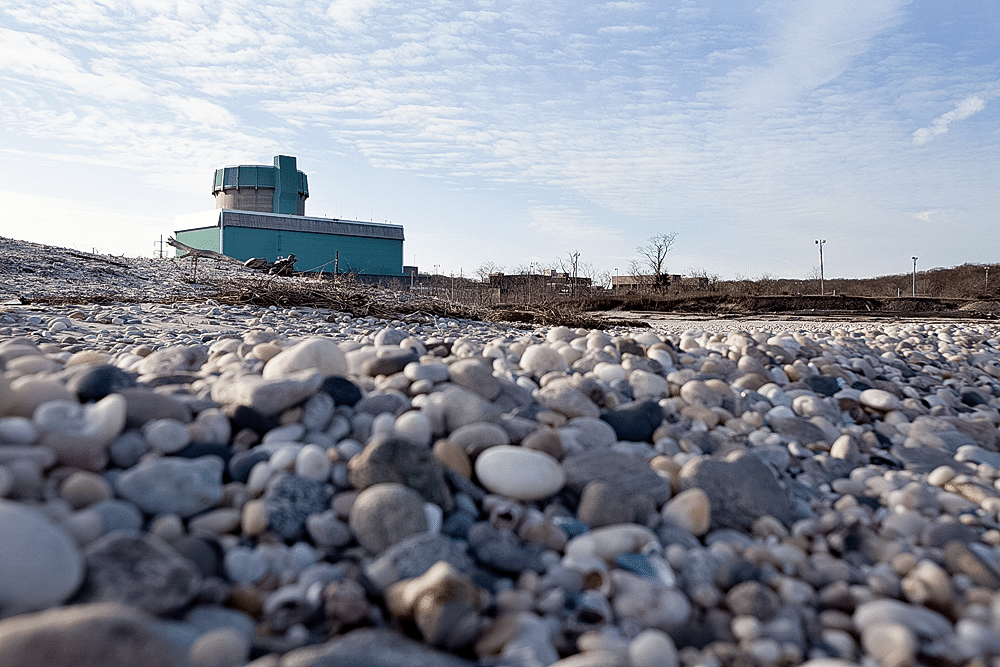
New York State has acquired one of the largest remaining undeveloped coastal parcels in the Long Island Sound Estuary to protect rare pine barrens ecosystems and Long Island’s sole source aquifer.
Governor Kathy Hochul announced Thursday that the state Department of Environmental Conservation secured 750 acres of open space from National Grid surrounding the never-opened Shoreham Nuclear Power Plant. The DEC purchased the property for $28.25 million with contributions from the U.S. Environmental Protection Agency’s Long Island Sound Partnership Program, the New York State Clean Water Infrastructure Act, and the 1996 Clean Water, Clean Air Bond Act.
It’s the largest DEC land acquisition on Long Island.
“Protecting the north shore’s coastal beauty is more important than ever, and this historic acquisition integrates the ecological benefits of the Long Island Sound Estuary, Pine Barrens and other critical habitat to provide lasting benefits for the region,” Gov. Hochul said.
“For decades, the permanent protection of the unique land surrounding the former Shoreham Nuclear Power Plant has been an aspiration, and together with our many partners, New York State has succeeded in ensuring this open space is preserved for generations to come.”
The property — within both Shoreham and Wading River — was originally slated for the power plant, but it was abandoned in 1989 and decommissioned in 1994 following anti-nuclear protests. The parcel has been a priority of the DEC for over a decade, listed in both the 2016 New York State Open Space Conservation Plan and the 2026 draft plan as a target for preservation.
It spans diverse ecological habitats, including sand and gravel beaches, 100-foot-high bluffs, maritime shrublands, coastal oak-heath forests, rare pine barrens, and more than 40 acres of tidal marshes and shrub swamps. It also hosts habitats for species — such as osprey — and the endangered piping plover, rare native plants, and maritime life.
“These open spaces and wetlands will serve as critical habitat, recharge our sole-source aquifer, help prevent flooding, and reduce pollution to our bays, harbors, and the Long Island Sound,” Citizens Campaign for the Environment executive director Adrienne Esposito said.
The DEC is planning several land-access improvements, including a public parking area and marked trails to be designed and installed in the coming years.
This acquisition is part of Gov. Hochul’s ‘30×30’ Initiative to protect 30 percent of New York’s lands and waters by 2030.
“From its undeveloped shorelines and remarkable wetlands, to its extensive areas of intact native forest, there are few pieces of unprotected property that so wonderfully embody Long Island’s rich ecological diversity, and which offer so many opportunities for exploring and enjoying nature,” Group for the East End president Bob DeLuca said.