Riverhead Pilates studio owner helps son recover from devastating motorcycle crash
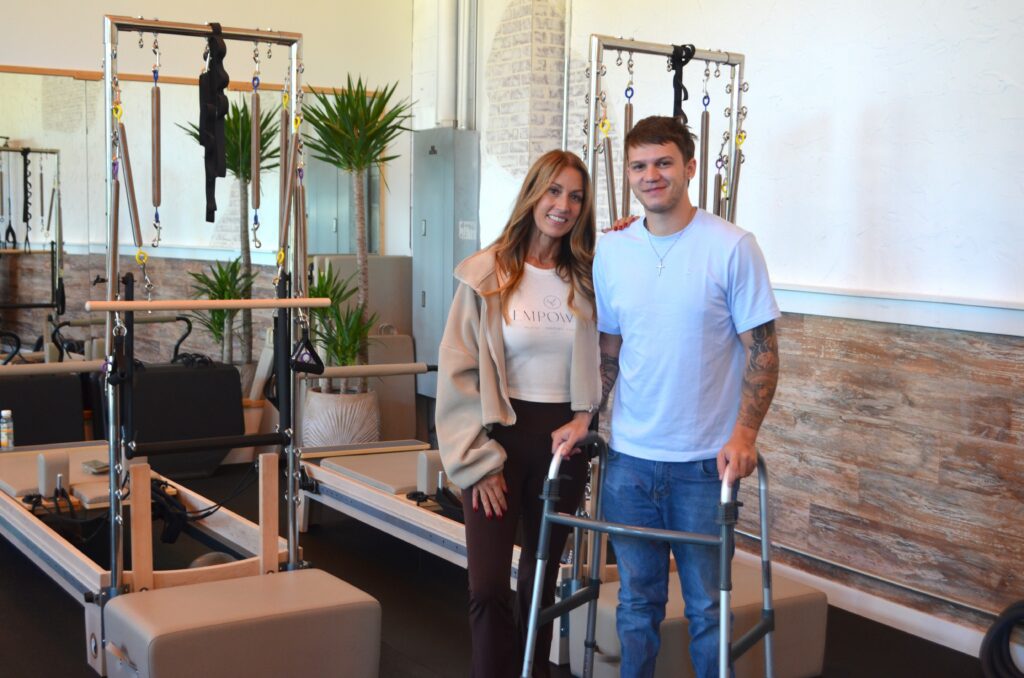
After a life-altering motorcycle accident, William Alaimo and his mother, Jeannie Brady, received the worst news imaginable: He might never walk again.
However, for Ms. Brady and her son, “never” was not an option. Just over a year later, Mr. Alaimo is defying the odds. He uses a walker, has gained independence and can leg-press up to 190 pounds. He continues to make progress through rehabilitation, including Pilates, while his mother takes an active role in his recovery.
“It’s an absolute miracle,” she said.
Ms. Brady vividly remembers getting the devastating call from her son that no parent ever can fathom receiving.
She recalls leaving Empower Pilates and Personal Training, the fitness studio she owns in Riverhead, and as she was heading home to East Moriches she thought about giving her son a call. Just as she was about to give him a ring, his name popped up on her phone. Pleasantly surprised by the coincidence, she answered, and commented on the pure happenstance before her son uttered the worst news.
“Mom, I was in an accident,” Mr. Alaimo said.
The now 25-year-old was working as a boat mechanic at Rose Marina in Center Moriches, and recently moved in with his girlfriend Katie, and their two English Lab puppies. The morning of Sept. 22, 2025 started off normal. He had off from work and remembers hanging out with his dogs in the morning. That afternoon, he decided to make a routine run to the bank — about a 10 minute ride on his motorcycle.
As he was riding down Montauk Highway and approaching the bank, he saw a Tesla at a complete stop across the way, with its left-turn signal on.
“I rode dirt bikes and quads my whole life, I was always super cautious, I’m very observant and I know people make mistakes and people don’t pay attention a lot,” Mr. Alaimo told the Riverhead News-Review. “I saw her, so I slowed down, and then assumed that she wasn’t going [to turn] because at this point, I’m pretty close to her.”
The driver suddenly turned across his path, leaving Mr. Alaimo with less than a second to react.
His instinct was to hit the rear brake of his motorcycle, which locked up his back wheel. The move knocked his bike sideways and he slid along with it, slamming into the car’s rear tire. The impact ejected him nearly 50 yards across the street onto the grass.
“I stayed calm the whole time. It was the craziest feeling getting hit like that,” he said. “I opened my eyes and I felt fine, and I just had a bunch of adrenaline…I went to get up, and I just couldn’t move my legs, so that’s when I got super scared.”
He started screaming for help and after a few minutes bystanders came rushing over. One older man gently held his head still, while another woman comforted and prayed over him. She retrieved his phone and he rang his mom.
Ms. Brady got to the scene within 90 seconds of getting that phone call.
“I just was running down the road, I could see his motorcycle in the middle of the street, I could see the car on the side of the road, the woman that hit him,” Ms. Brady said, getting emotional recalling the terrifying ordeal. “I feel like from that moment on, once he was in the ambulance, it was like this protection part of me came out like nothing I’ve ever had to experience before.”
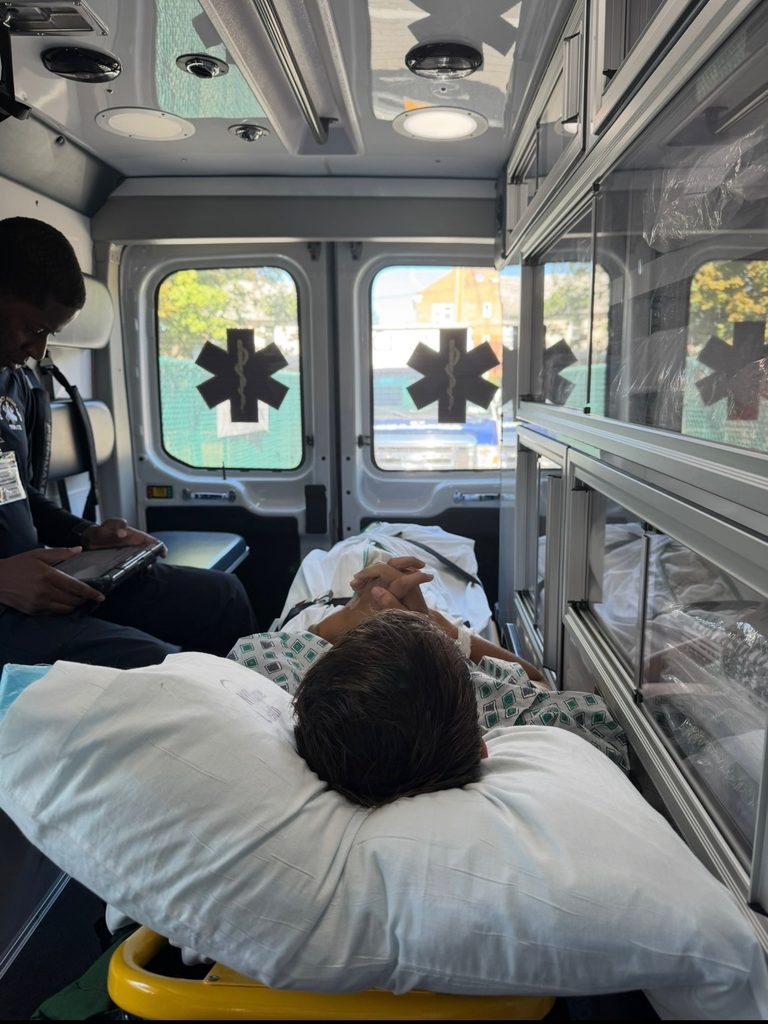
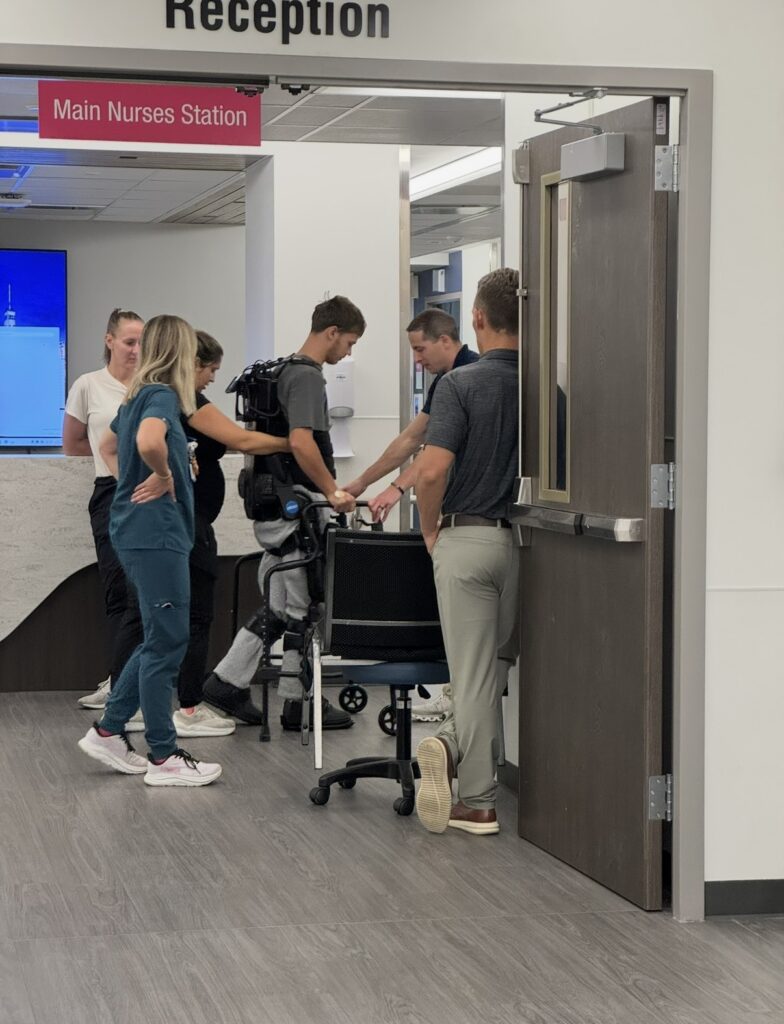
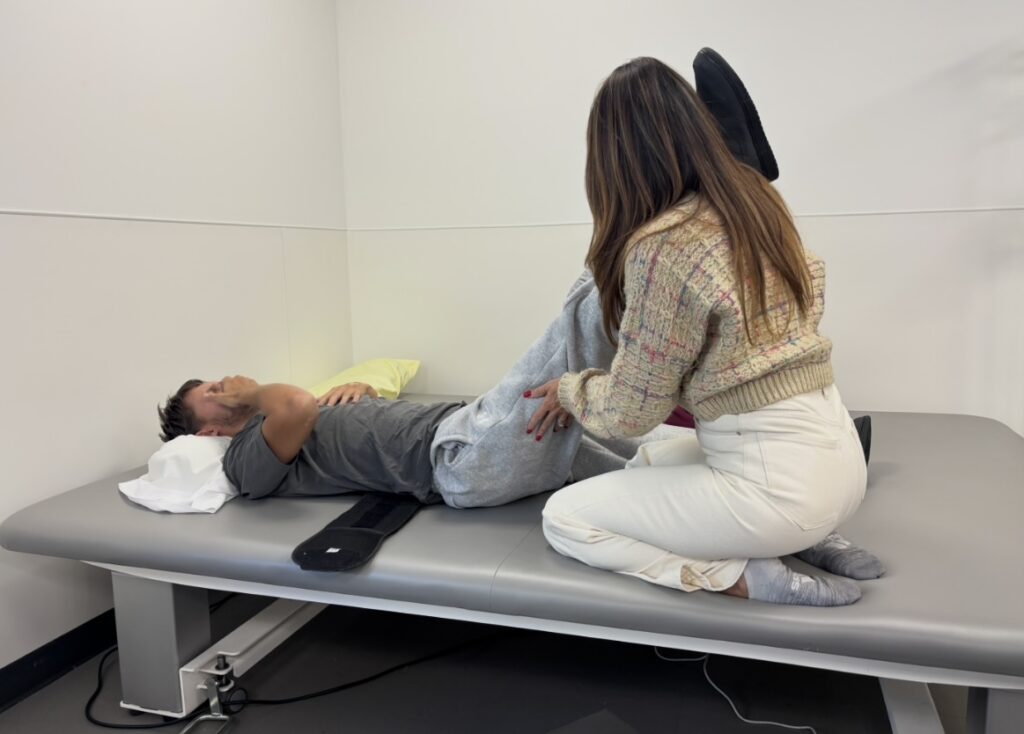
The accident resulted in an L3 burst fracture in his spine, which compressed the vertebra and broke it into pieces. Some fragments entered his spleen, nicked a lung and damaged nerves near the spinal cord.
He underwent emergency spinal fusion surgery that lasted four hours at NYU Langone Hospital in Mineola. Because the L3 vertebra was unsalvageable, surgeons fused and stabilized his spine with two rods and eight screws. They also tried to repair as many damaged nerves as possible. The surgery finished around 4 a.m.
The next day, doctors told Mr. Alaimo he might never walk again.
“You don’t want to believe it, it doesn’t feel real,” he said.
He spent about a week at the Mineola hospital. Trauma, neurology and orthopedics teams would come into his room repeatedly to check on his movement. Every hour, he was asked to try wiggling his toes, but he hit a wall of frustration and felt discouraged. Sitting up with a back brace for the first time caused significant pain and fear.
He also experienced early complications, including bloating and difficulty using the bathroom. He had drains in his back. He remembers those initial days of recovery as “a blur.” One positive he remembers is all the people who visited, offered support and rallied behind him during this traumatic time.
He then moved into the inpatient Mount Sinai Rehabilitation Center in Manhattan, where he received a month of intensive daily physical and occupational therapy. On the first morning, a therapist got him into a wheelchair, then helped him stand and take small steps using parallel bars.
Ms. Brady remembers rushing down the hospital halls with Katie to witness the special moment which doubled as a birthday gift for his mom.
After weeks of using a catheter and being told he might need to catheterize himself after hospital discharge, Mr. Alaimo had another celebratory breakthrough — he was able to urinate on his own.
During his stay, he also bonded with another patient and a rehab volunteer who was also wheelchair bound. He shared a memory of them going to the gym and then grabbing Starbucks, which gave Mr. Alaimo a chance to get outside and practice navigating his wheelchair around the city’s uneven sidewalks, curbs and steep ramps.
Then it was time to go home, which brought on fears and questions of what recovery looks like outside of the hospital walls.
“It’s terrifying to think like, what do we do when we leave this place,” Ms. Brady said.
Returning home came with some challenges, the mother and son said. With not many local physical therapy options that specialize in spinal injuries on the East End, care led to long commutes and intense pain from sitting in a car.
Mr. Alaimo said he felt he went from individualized care to having too little support for his specific rehabilitation needs, which made navigating daily life after discharge difficult. He desired to be challenged in his recovery, which led to Ms. Brady and Maria Sanchez, a trainer and physiotherapist at Empower Pilates, creating their own program for him.
In her last 30 years of teaching the fitness concept, Ms. Brady said her passion is helping people overcome injuries and gain confidence, both physically and mentally, through Pilates.
Joseph Pilates developed the century-old mind-body conditioning system during World War I to help rehabilitate injured and bedbound patients.
Today, the practice has evolved into a fitness fad that focuses on the complete coordination of body, mind and spirit. Pilates can support rehabilitation when a knowledgeable instructor tailors the work to the person’s injury and goals, Ms. Brady explained. This means choosing the right equipment, appropriate exercises, and working with the body as a whole, not solely the injured area.
For William, tailored exercises such as clamshells and small banded leg raises help activate individual muscles. He also focuses on core and balance work. Ms. Sanchez often reminds him not to overthink the movements and to let everything “feel natural,” his mother said.
“Regain confidence in being able to stand, trust yourself, trust your body, you’ve done this before,” Ms. Brady said, recalling Ms. Sanchez’s guidance. “You just have to relearn that trust in yourself again, in your abilities again.”
Mr. Alaimo also recently returned from Medellín, Colombia after participating in a week-long stem cell therapy program at the BioXcellerator treatment center. The FDA says regenerative medicine therapies have not been approved in the United States to treat neurological disorders.
In April, he received what he described as a 15-million-cell stem-cell injection in the U.S. and completed six months of hyperbaric oxygen therapy. After researching BioXcellerator and watching positive testimonials from UFC and MMA fighters who had also experienced paralysis, he and his mother decided to try the program.
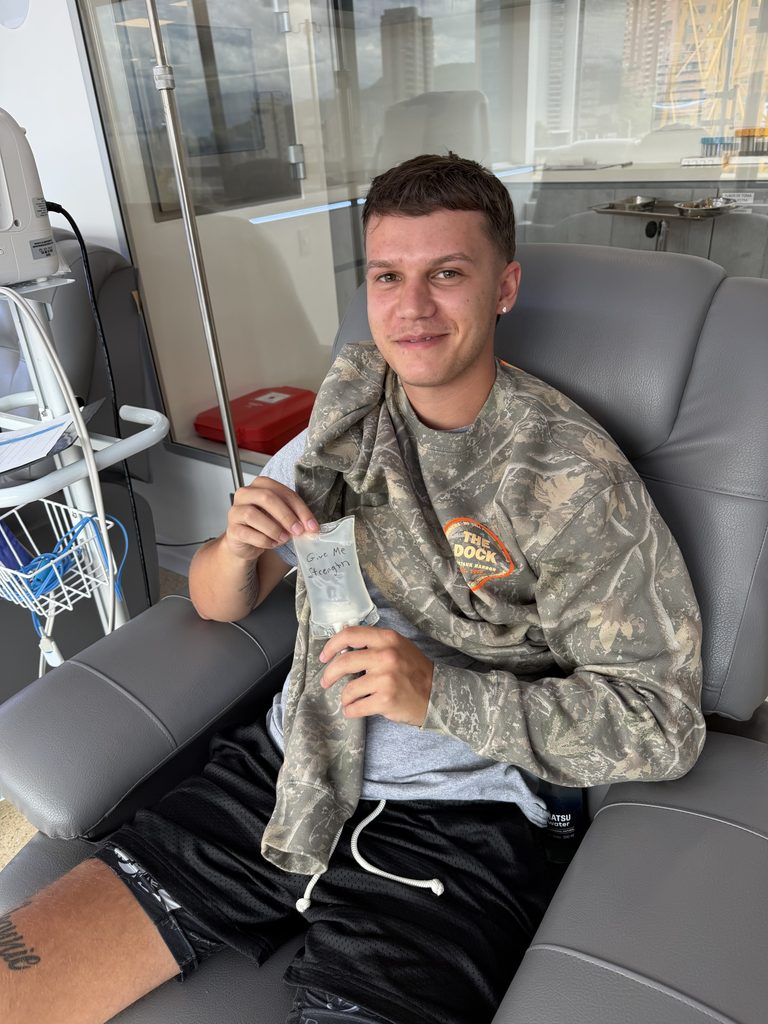
He received a first round of approximately 500 million stem cells in total, with the expectation that roughly half will not survive, Mr. Alaimo said. He is returning to the treatment center in December, and plans to visit two more times. The program cost nearly $70,000, not including airfare, meals and related expenses. His family hopes the treatment might help repair nerve damage.
His goal is to continue to push himself towards progress and keep using the walker. When asked how he defines strength, he said it is all about showing up for himself. His message to anyone else going through a similar experience is to move and never stop trying.
“I just think it’s so important to not just accept what the doctors tell you your life is going to be like, at least try to take control a little bit and do it for yourself,” he said. “ I still have issues, but I’m in a completely different place than I was.”