Calverton landfill’s solar and BESS project nears finish line
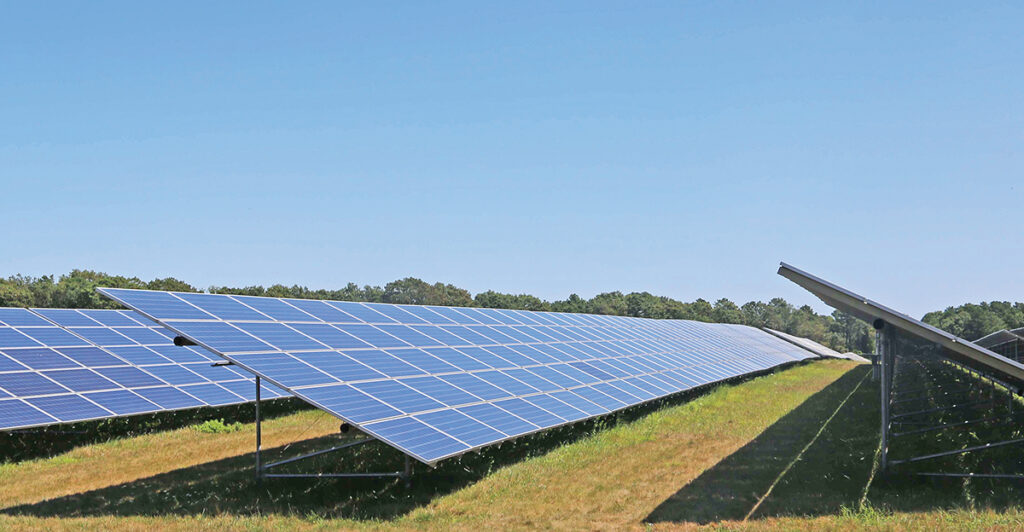
Riverhead Councilman Bob Kern says a combined solar and BESS system project that has been in development for the last three years is days from completion at the capped Youngs Avenue landfill in Calverton.
Mr. Kern said the 7-megawatt solar array is expected to generate about 9,400 megawatt-hours of electricity annually, enough to power as many as 1,500 homes.
The array will be paired with a battery energy storage system, or BESS, capable of storing 13.68 megawatt-hours, according to his announcement Thursday.
“This is a big win for the community,” Mr. Kern said in a statement. “It serves as energy savings for local residents and also plays a role in supporting New York State’s ambitious clean energy initiative and climate smart goals.”
In a text to the Riverhead News-Review after the release, Mr. Kern said the hope is to have a ribbon-cutting ceremony within the next few weeks.
Once the system is switched on, the town expects a one-time payment of about $73,500, based on $10,500 per megawatt, Mr. Kern said. The annual lease payment is projected at about $154,000, or $22,000 per megawatt.
Mr. Kern also cited an estimated $38,000 annually in payments in lieu of taxes, or PILOT payments, with increases over time. Separately, he said the project would provide electricity-bill savings for the town and participating residents and businesses.
The councilman noted Riverhead Town will receive credits tied to 40% of the project’s solar output, while more than 120 local households and small businesses have signed up for the remaining 60%, receiving credits on their utility bills without needing to install solar panels directly.
What was once seen as a financial drain and an “unusable piece of real estate” is now being transformed into land that can generate economic benefits for Riverhead and its residents, he said.
The project aligns with Gov. Kathy Hochul’s initiative for the state to achieve at least 10 gigawatts of distributed solar by 2030. Distributed solar generates electricity close to where it is consumed.
The battery system is designed to store excess solar energy and release it when demand is highest, helping stabilize the grid and local power supply, according to the company behind the project, Changing Visions of Energy North America, known as CVE. It is the company’s first combined solar-and-battery project in New York.
Other solar developments in the Calverton area include the Calverton Solar Energy Center, operated by LI Solar Generation, and AES’ Riverhead Solar Farm and Riverhead Solar 2 projects.
This solar farm at Youngs Avenue joins a few others in operation at the Calverton area, including the Calverton Solar Energy Center, Riverhead Solar Farm, Riverhead Solar 2, both known as AES, and LI Solar Generation.
The Youngs Avenue site has been capped and closed since 1993. Prior proposals to build a solar farm atop the former 76-acre landfill from other companies failed to come to fruition. The original charge to reuse the area for clean energy was led by former councilman George Gabrielsen in 2011.
At the time, Sag Harbor-based Long Island Green Energy proposed installing solar panels at the closed landfill, which prompted the town board to put out a request for proposals to see if other companies were interested.
CVE first pitched its plan for the capped landfill in 2022. That year, Riverhead adopted a moratorium on new commercial solar farms to give the town time to identify suitable locations while updating its comprehensive plan. The moratorium was extended and expired in October 2023.
The company secured the bid contract with Riverhead in November 2022, after it was one of three developers to submit a proposal to the town. In July 2023, the town entered a 25-year lease agreement with CVE. The contract includes the option for two five-year extensions. Construction began in May 2025.
Mr. Kern credited town engineer Ken Testa for his technical assistance with the request for proposals for the Youngs Avenue site. He also thanked the town’s planning department, fire marshal, Riverhead Fire Department, highway and water departments, and Councilman Ken Rothwell for their work moving the project forward.
The project is nearing completion as other East End communities continue weighing battery-storage regulations amid fire-safety and environmental concerns. Southold’s moratorium remains in place through April 2027 while the town develops local rules.
Mr. Rothwell said his focus was on ensuring the Youngs Avenue installation could be properly decommissioned at the end of its operating life. He said modern solar panels are largely recyclable and that bonding is in place to cover dismantling and recycling the installation.
“CVE made certain that they had all the necessary fire equipment in place prior to us turning on the site, electrifying it,” Mr. Rothwell said. “The fire department was very pleased to get additional equipment, and [they were] taking training classes as well, so they’ve done very well.”
He also cited the use of newer Tesla battery units as one reason for his confidence in the project’s safety.
“We wouldn’t put a project forward if there were any type of major environmental concerns,” Mr. Rothwell said. “I think the town board, working with Councilman Kern over the last few years, we’ve worked very hard to try to find a very different pathway to reduce property tax impacts…every time we cut our electric costs down out of town buildings, then that savings goes directly to the taxpayers.”
Riverhead Town Supervisor Jerry Halpin also expressed support.
“I’m happy that Councilman Kern has been working on it, and is able to get it across the finish line, which hopefully will bring the relief promised to the Riverhead taxpayers,” Mr. Halpin said.