Riverhead honors former slave Brister Youngs with historic marker at Aquebogue Cemetery
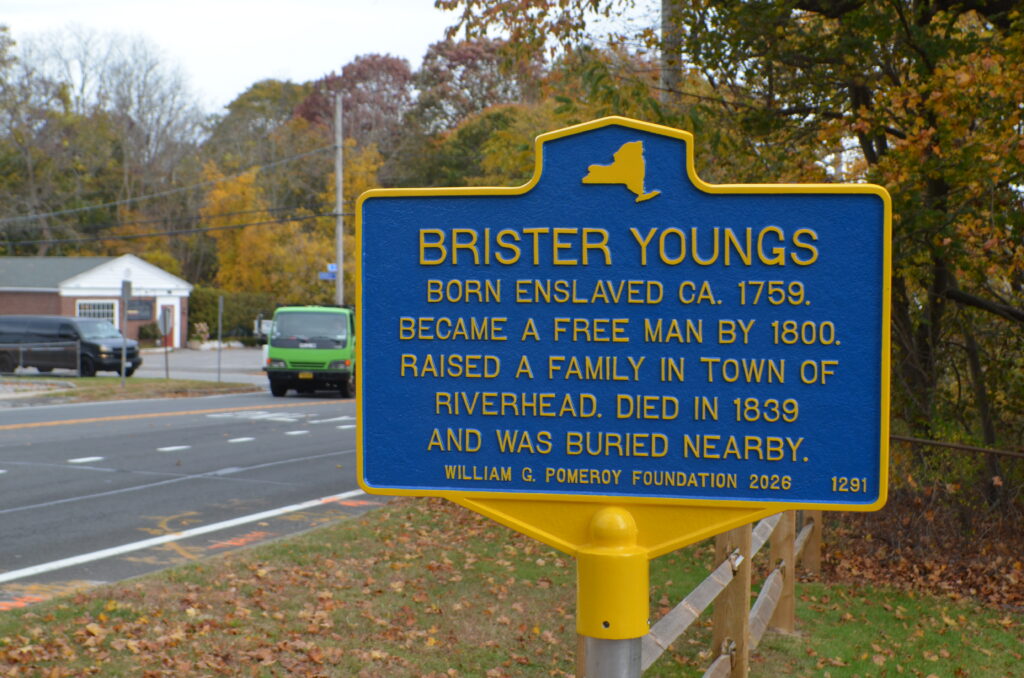
A former slave buried at the second-oldest cemetery in Riverhead is getting his recognition as a critical piece of the town’s Black history.
Riverhead Town’s Landmarks Preservation Commission on Thursday placed a historic marker right at the entrance of Aquebogue Cemetery in honor of Brister Youngs, who was born a slave around 1759.
He is one of around 900 people enslaved on the North Fork between 1640 and 1827, and one of three known former slaves in Riverhead, according to commission chairman Richard Wines. Although Riverhead did not officially become a town until 1792, when it was carved out of Southold by the state Legislature, Mr. Wines estimates there were possibly up to 300 in the town at the time.
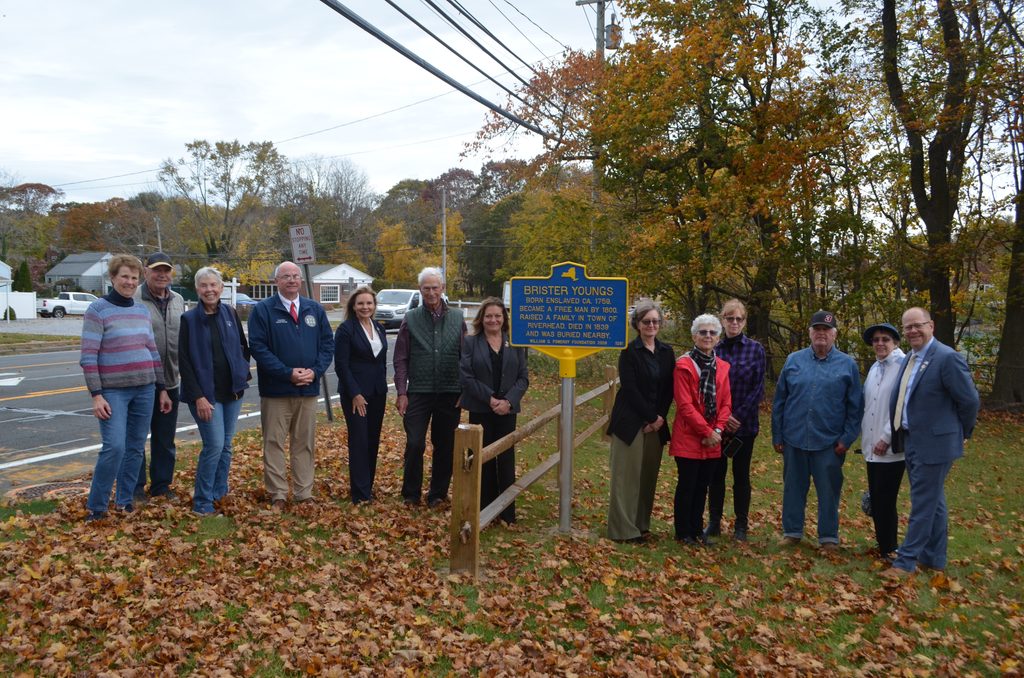
Standing alongside Town Board members — including newly-reelected Supervisor Jerry Halpin and his opponent in the race Ken Rothwell — Mr. Wines said Brister’s life is a reminder of the long, often overlooked history of slavery on the North Fork and in Riverhead, and other stories of Black resilience on Long Island.
“We wanted the marker here not just for Brister, but also as an emblem of the 900 people that were enslaved here on the North Fork,” Mr. Wines said at the dedication ceremony. “It is important to remember them as amongst the people who lived here in the town, and I also think it’s important for us to just remember that slavery did exist here and to think about what did the existence of slavery here mean.”
Brister is believed to have been a slave of the Rev. Daniel Youngs, a longtime minister of Old Steeple Church in Aquebogue, which is across from the cemetery on Main Road. It is possible his wife, Zipporah, was also owned by the Rev. Youngs. There is also a connection to the former Kubby Farm at 1117 Main Road in Jamesport, where Brister may have lived.
Census records show that Brister had been freed by Youngs by 1800 and gradually became part of a small but growing free Black community in Riverhead.
As a free man, he started a family in Aquebogue and contributed to local economic life. Mr. Wines said he was a regular customer who purchased goods such as tobacco, cider, and molasses. He reportedly held shares as the only Black person in an otherwise white-operated fishing company.
Mr. Wines noted he was remembered for his tasty fish stews.
“He was remembered years after because he apparently had a recipe for fish chowder, which was wonderful,” the historian said. “Whenever they caught a sheepshead, they picked them out of all the millions of menhadens and all the members of the company contributed carrots, beans and corn, and he cooked up the chowder for them.”
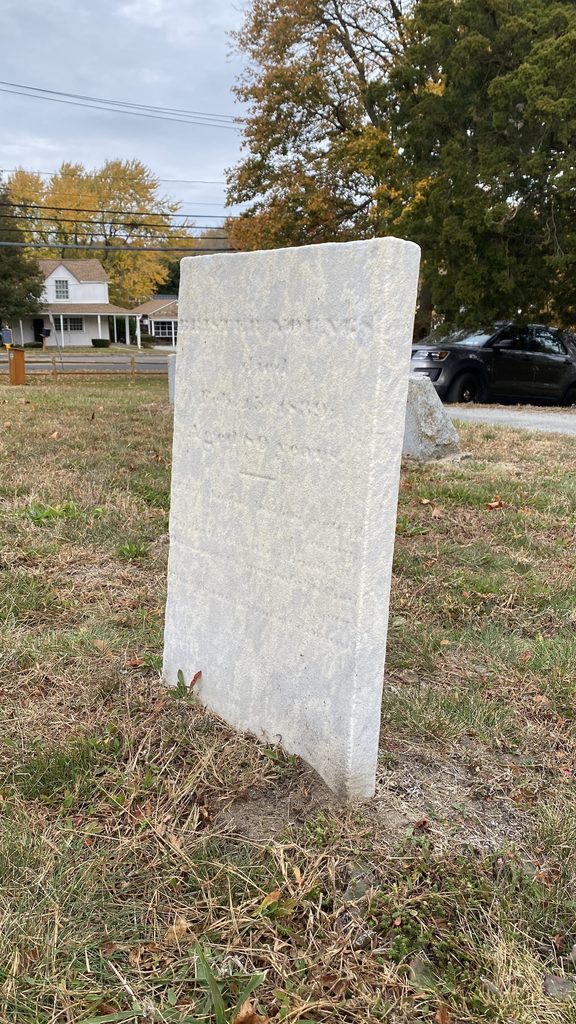
When slavery officially ended in New York on July 4, 1827, Brister was likely 68 years old. Zipporah died in 1805 and is likely buried near Brister, along with their son and five grandchildren, in unmarked graves. He died in 1839 at 80.
He is also buried beside Thomas Austin, a slave who escaped from North Carolina.
Thanks to the generosity of the William G. Pomeroy Foundation — a Syracuse-based funder of historical markers — the marker was provided to the town free of charge.
Councilwoman Joann Waski, the Town Board liaison for the Landmarks Preservation Commission, thanked Mr. Wines, town historian Georgette Case and members of the Aquebogue Cemetery Association who had a hand in making the Brister Youngs marker happen.
Mr. Halpin closed out the dedication ceremony, thanking Ms. Waski and Mr. Wines, and spoke about the importance of remembering the past in order to avoid repeating these “hideous acts” against humanity.
“No man should have ever been born into slavery,” Mr. Halpin said.