Letters to the Editor: Thanks from Key Club
Riverhead
Thanks from Key Club
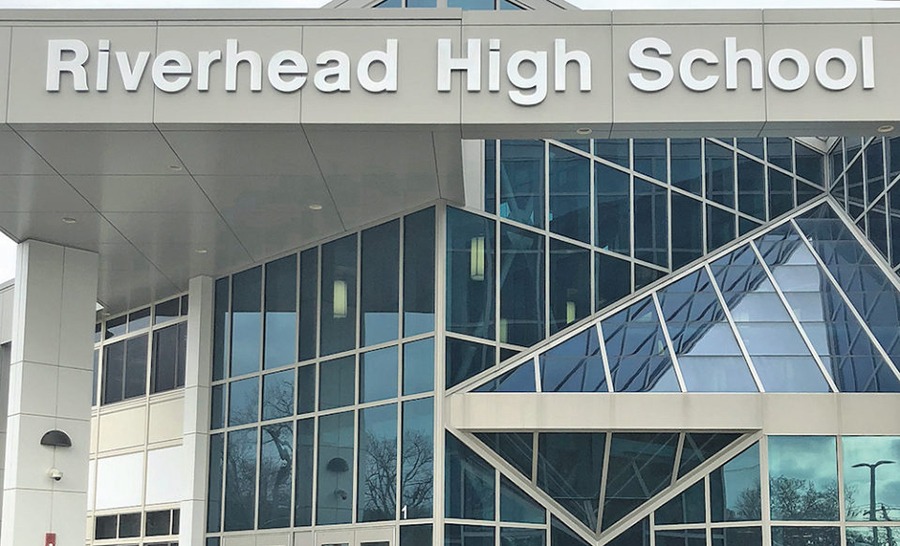
The Riverhead High School Key Club is proud to give back to our community and would like to give thanks to the local businesses that have supported us in our efforts.
We recently hosted our annual Safe Halloween event and welcomed over 300 elementary students to the high school for a safe alternative to traditional trick-or-treating. We also held our annual Homeless Night in the courtyard of Riverhead High School, where 40 Key Club members braved the elements and slept outside to bring awareness to local people in need. We raised nearly $2,000 and collected 360 canned/non perishable items to donate to local food pantries.
We would like to thank the following local businesses for their support: Bellissimo Pizzeria and Pasta, Carlo’s Pizza Oven, Celeste Bakery, CVS, Dunkin’ Donuts, Goldberg’s Bagels, Helen’s Greenhouses and Flower Farm, Jerry and the Mermaid, Peconic Eatery, Sujecki Farms and Nurseries, The Sweet Escape Macarons and Candy Shop.
Garrett Moore
Cutchogue
Turtle theory
During the past couple of weeks, we’ve witnessed an odd number of disruptions: Microsoft 365 outage, FAA nationwide ground stop, JPMorgan Chase banking outage, United Airlines system outage, Apple service disturbances, Delta Airline interruptions and more.
The Trump administration claims all these things were separate technical failures. Oddly enough, they occurred shortly after the mid-term elections in which the MAGA folks got crushed. But Trump & Co. nevertheless insist there’s no evidence that all of this was a coordinated cyberattack. Because if it were, that would require a response by a competent government, something America now lacks.
Ten years of MAGA has caused most Americans to stop trusting the government to tell the truth. Conspiracy theories on all sorts of things run rampant under the current administration. Confidence in political leaders cries out for a hard reset. Until then, we’ll all be scratching our heads and wondering what’s really going on.
Bill Clinton had the perfect metaphor to fit the current occurrence of one failure after another: “If you see a turtle sitting on top of a fence post, it didn’t get there by accident.”
Michael Levy
Greenport
Five years is enough
For at least five years, Greenport has discussed expanding housing opportunities, with remarkably little legislative progress.
The village first considered legalizing accessory dwelling units (ADUs) in 2021. A draft law followed in February 2022. Since then, village committees and the Planning Board have submitted numerous proposals to the Trustees. A community survey demonstrated support for housing initiatives, and the Village Board has held multiple discussions. Countless volunteer hours have gone into addressing this pressing need.
Yet meaningful housing legislation remains unadopted.
At its Nov. 19 meeting, the Village Board postponed scheduling a long-promised public hearing, citing unresolved policy questions and concerns about the process and policy objectives. These concerns deserve attention. Comprehensive zoning legislation requires careful review and public deliberation.
But the village cannot keep treating housing policy as though the discussion is just beginning. Much of the groundwork is complete. Residents have had multiple opportunities to participate in Village Board, housing committee, code committee and Planning Board meetings. Committees have made recommendations, many reflected in the current draft.
Meanwhile, Southold is developing its framework for distributing community housing funds. Appropriate zoning legislation could position Greenport to pursue funding and translate opportunities into actual housing.
The Trustees should promptly identify and resolve outstanding policy questions through open deliberation and establish a firm timetable for a hearing and legislative action.
Residents should attend upcoming meetings, make their views known and hold Trustees accountable for decisions.
The draft is lengthy and complex, reflecting interconnected zoning provisions. Simplification or revision may be warranted, but dividing the legislation into smaller pieces risks further delays and repeated reconsideration of related provisions.
Careful review is necessary. Endless review is not. After five years, Greenport deserves action, not another open-ended process.
Patricia Hammes
Southold
Don’t be that neighbor
Almost everyone I meet loves the life they’ve created here and can name what makes the North Fork so enchanting. Most also recognize that our town is at a pivotal moment, facing important problems, changes and decisions.
I believe our town leaders want to do the right thing. They have told me they wish to hear from the people they represent — not only the few who speak most loudly.
Local civic associations offer a clear way to make your voice heard. They share nonpartisan information that helps residents stay informed, prepared and involved. Join your local civic. Serve on a committee, take part in discussions and encourage public forums. Don’t just complain — or ignore what’s happening. Be a factor, not a victim.
A neighbor once asked a civic board member, “What are YOU going to do about it?” The board member replied, “You mean, what are WE going to do about it?” The neighbor walked away. Don’t be that neighbor. The stakes are too high.
Ralph Reinertsen
president, Southold Peconic Civic Association
Greenport
Survey can’t script village future
There is a growing tendency in local government to treat surveys as if they were planning documents. They are not.
A survey can tell us what people think at a particular moment. It cannot tell us what Greenport needs, what history has taught us or why previous generations made the decisions that shaped the village we inherited. Most important, a survey cannot replace judgment.
Greenport did not emerge from a questionnaire. It was built over generations by people who understood the realities of a working harbor, a fragile coastline, limited public resources and the challenge of balancing growth with preservation. Priorities — protecting the waterfront, maintaining infrastructure, safeguarding water quality, supporting maritime industries, preserving historic character and ensuring financial sustainability — were learned through experience, not polling.
These are not matters of opinion, and how residents rank them on a survey is largely irrelevant. This is where modern planning often goes wrong. Surveys encourage people to answer a different question than government is supposed to answer. Citizens are inclined to identify what they would like. Government must determine what is necessary. [And] a problem arises when residents’ preferences are elevated above documented needs and long-established priorities. A village cannot successfully govern by wish list. If Greenport is serious about planning, every proposed goal should first be measured against the historical record.
Most of Greenport’s major challenges are already known. We don’t need a new survey to tell us. Decades of plans, reports, budgets, grants and public meetings have already established those priorities.
Over-reliance on surveys creates the illusion that every generation starts from scratch. Institutional memory erodes. Long-term obligations become secondary to short-term enthusiasm. That is not planning. It is drift.
Public input is essential, but it should inform decisions, not dictate them. Surveys should help officials understand how residents prioritize established needs. They should not be used to manufacture new priorities disconnected from history, evidence or fiscal reality.
Before asking what Greenport should become, we should first understand what Greenport has always been. Only then can we responsibly decide where it is going.
Mary Bess Phillips
Greenport Village trustee