Riverhead to modernize and tighten parking enforcement measures
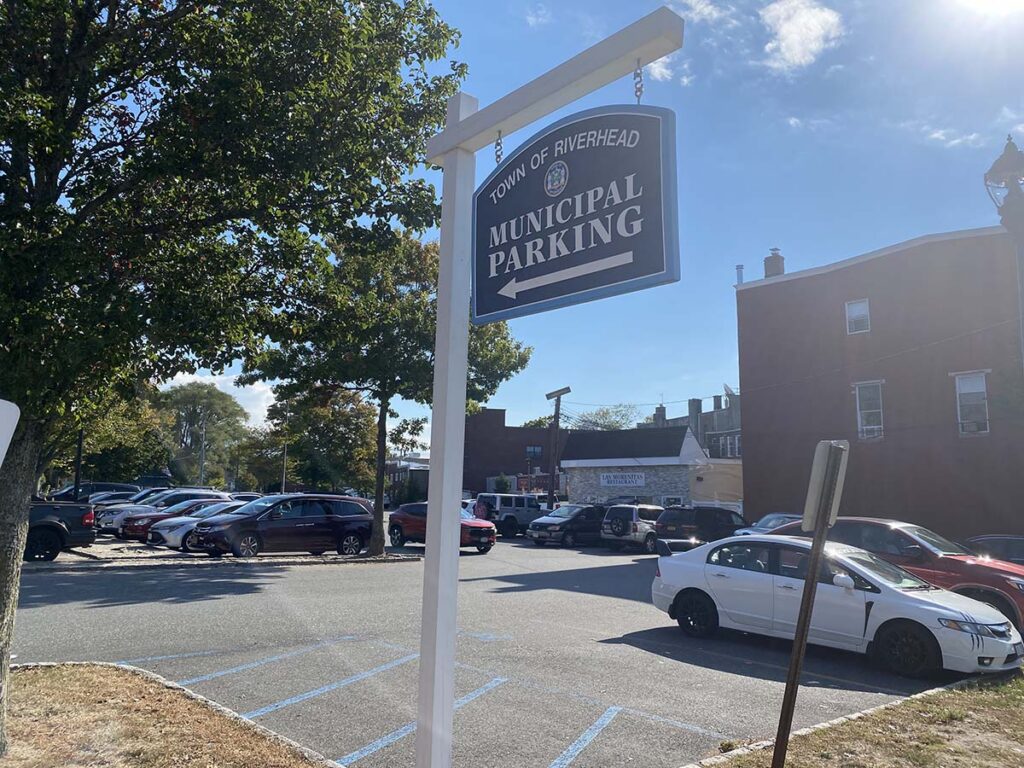
Riverhead Town is bringing its parking enforcement capabilities into the 21st century.
To combat the labor-intensive, outdated ticketing and court processes, the town wants to undergo an electronic overhaul of the current system. This includes giving officers handheld electronic devices to issue QR-code tickets, so violators can take more immediate action.
Officials are also cracking down on vehicle owners overstaying the time limits on Main Street and in key downtown parking lots, specifically the ones behind Moonfish Brewery and on McDermott Avenue where there are no clear timeframes.
A draft resolution to change the two-hour parking code in these two lots will go to a public hearing later this month.
Over the next 30 days, the police department is going to begin to issue warnings to the public to make them aware of the new enforcement measures.
“This is about changing behavior, making sure people park in spots they should be in, and not taking commercial spots away from the downtown businesses that are having a hard time with all the construction right now,” said Councilwoman Denise Merrifield, who is the town board liaison to the parking advisory committee, at Thursday’s work session. “And, generating revenue for the town, with less man hours used in providing all the data.”
Discussions on how to modernize its parking system and regulations have been ongoing for years. Riverhead police and code enforcement officers typically issue a pink, hand-written paper ticket to violators. Riverhead Town Justice Court employees then manually enter these tickets into the court system.
Riverhead Town Justice Lori Hulse explained on Thursday how the paper tickets bog down the justice court with an abundance of parking appearances, especially from out-of-towners during the summer months.
“I’ve come in on Mondays for court when we have a very heavy calendar and we have to dedicate staff to inputting all of the information on the tickets that we’re receiving,” Ms. Hulse said.
Riverhead Town Police Chief Ed Frost estimated the police department issued roughly 4,000 parking tickets last year.
“I will be pushing for plate readers because we can’t have officers just constantly walking scanning registrations for time limits,” the chief said. “Initially, it’s going to be a little labor intensive and it’s going to draw personnel off other matters, but obviously I am 100% for it.”
Denis Farrell, president of Fundamental Business Service, Inc. and consultant on parking technologies, said the proposal includes six handheld devices called Zebra TC27s and Seiko MP-B30 printer that officers would take into the field.
Each ticket issued has a QR code. Violators can then scan, pay the fine or plead not guilty right on their mobile device or computer. The system also supports digital data, such as photo evidence, GPS location of the vehicle and a PDF of the charging instrument.
“The violations are issued cleaner and clearer,” Mr. Farrell said. “When the ticket is data entered, they go in very quickly, they’re immediate when the tickets are issued on the street, [and] they go into the court system in a matter of minutes.”
Ms. Hulse said those issued the ticket can also upload their own digital evidence to defend their case.
“A lot of this can be resolved without anybody having to come in,” she said.
Mr. Farrell said one benefit of this process will be “voluntary compliance,” as violators can respond to the ticket immediately. He also feels the paper trail bottleneck that hinders workflow in the justice court will decrease.
“The court is involved in the paper management: filing, pulling, reviewing, updating records with paper — it’s cumbersome, it’s burdensome and it’s expensive,” the consultant explained. “I think in the longer term, you’re going to end up with a cost-effective efficient system that’s going to provide you with the kind of technology today that the public expects.”
In terms of future phases of integration, officials talked about the possibility of providing a mobile pay app. Mr. Farrell also asked if the town would consider using the software from the Long Island-based software company GOGov, which provides citizen engagement tools for local municipalities.
Mr. Farrell said this software could be used to make sure that the parking permit information within the town is up to date and accurate.
Kevin Wood, a consultant with Parking and Mobility Consultants, told town officials at the work session there is a future meeting set between Mr. Farrell and representatives of GOGov to discuss how to connect the multiple softwares. On ways to further change parking behaviors, Mr. Wood suggested the town install more ‘no parking’ or time limit signage.
“I think technology can do a lot for this town, and could make us very efficient,” said Kevin Wood, a consultant with Parking and Mobility Consultants. “This is the very start of it.”
Supervisor Jerry Halpin assured residents the new enforcement measures are not meant to deter anyone.
“We’re trying to create opportunity and turnover, so that people have an opportunity to park close to businesses,” Mr. Halpin said. “This is about creating equitability for everybody to park.”
The six handheld devices have already been acquired, Mr. Farrell said. The next steps are for town council members to approve the purchase of the equipment, six individual cell phone service contracts for each device and the final design of the ticket.
Once all this happens, the rollout can begin either in early or mid-August, Mr. Farrell estimated.
“We’ve been asking for this for no less than seven years…I’m just very appreciative to the town board for actually getting this done,” Ms. Hulse said. “This isn’t my purview, but it’s going to be a huge revenue source for the town, and it’s going to be much better working for our staff with this program.”