Riverhead native and civil rights activist Rashad Robinson returns home to discuss bestselling book
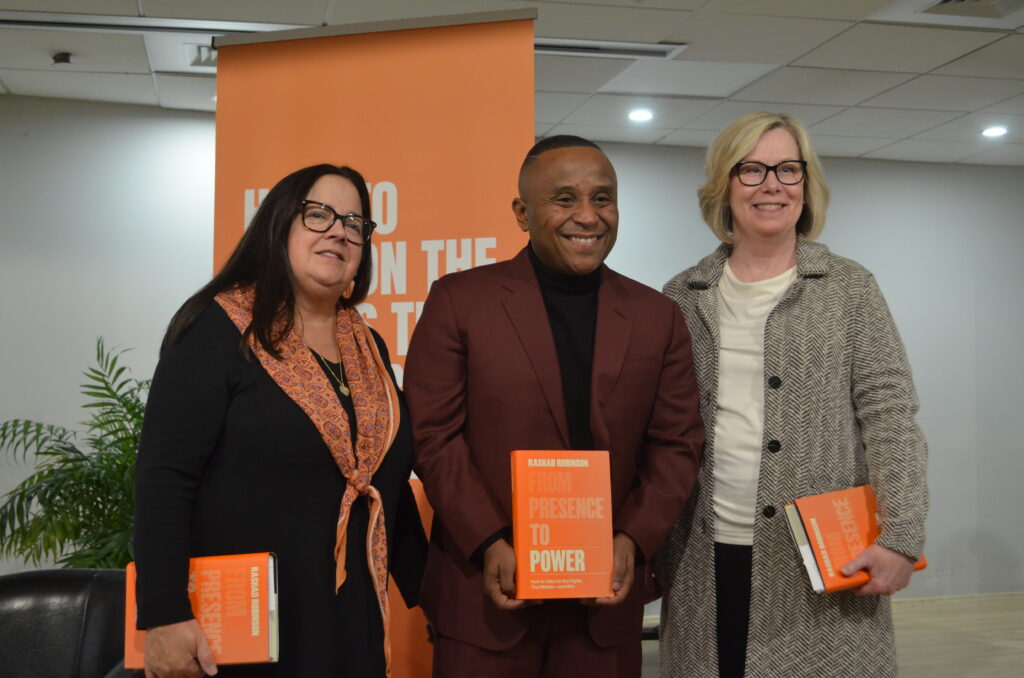
A Riverhead native who went from organizing protests as a high schooler to becoming a prominent civil rights activist and national voice for social justice returned home to discuss his bestselling debut book.
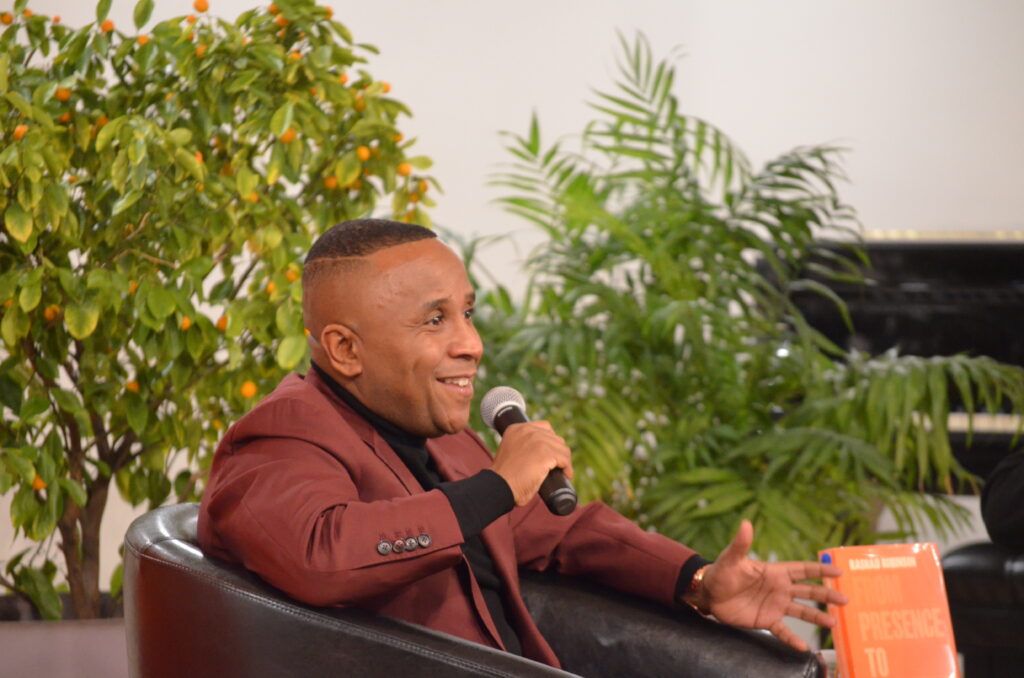
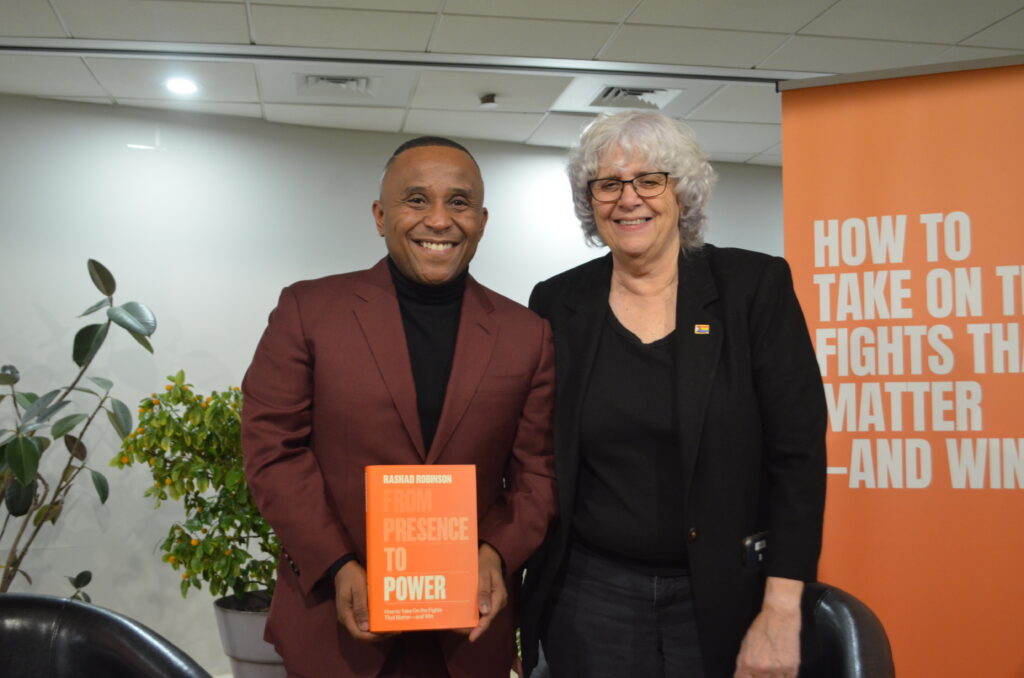
Rashad Robinson, former president of Color of Change, spoke at the Riverhead Free Library last Thursday about “From Presence to Power: How to Take On the Fights That Matter — and Win,” published July 28. His first nonfiction work examines the difference between visibility and power and explores what is needed to build lasting institutional, structural and policy change.
Seeing familiar faces in the library’s packed grand room, Mr. Robinson expressed gratitude for the support and encouragement he has received, especially from the community where he first found his voice.
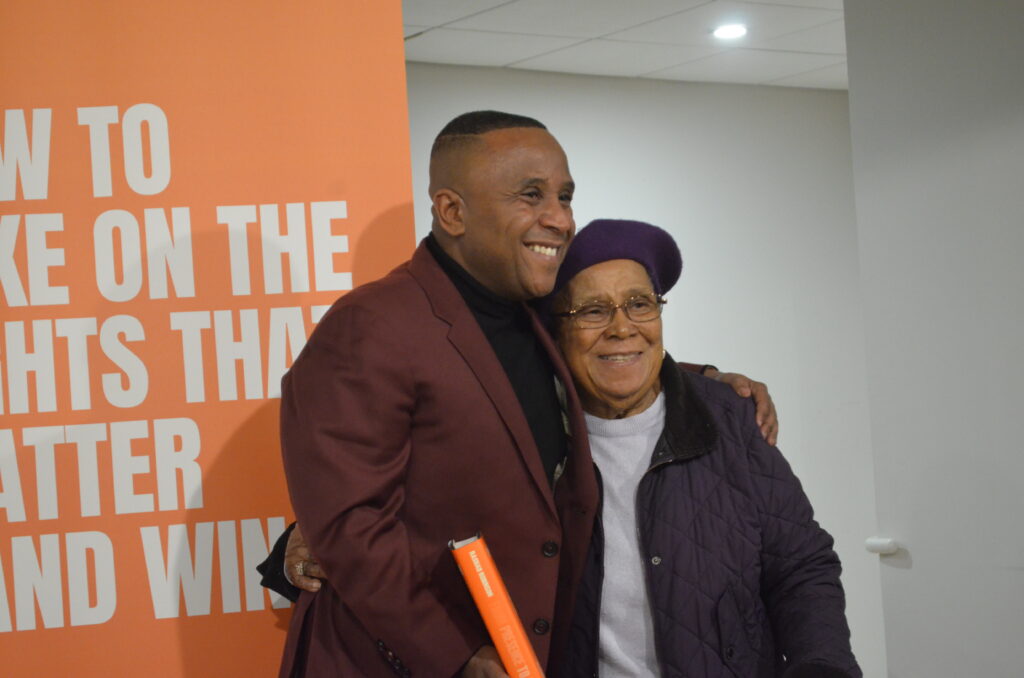
He credited his parents, Shirley and Everett Robinson, who brought him to the Yellow Barn for free library programs, school board meetings, protests against Rite Aid in the 1990s and the Shoreham nuclear power plant near their home. They also supported his public-access talk show while he was in high school.
He also recognized his 94-year-old grandmother, Mary Robinson, who was in the audience and was born two decades before the landmark 1954 Supreme Court decision outlawing racial segregation in public schools.
“It’s actually a bit surreal and emotional to see so many faces, to see this community come out for me in this way,” Mr. Robinson said. “There are so many people in this room who are part of my story.”
During the discussion moderated by Denise Civiletti, Mr. Robinson explained one of the central themes of the book: the distinction between “presence,” which involves showing up and changing headlines, and “power,” which involves changing the rules themselves. He argued that mistaking a change in headlines for a change in the rules can impede meaningful progress.
He reflected on his time as a youth activist, recounting moments from his teenage years that shaped his understanding of power. In the book, he references a 1992 incident in which a Riverhead High School assistant principal recruited seven Black students, at the request of police, to serve as stand-ins in a police lineup. The incident drew criticism from parents and community members. Mr. Robinson remembered Riverhead First Baptist Church condemning the action and described it as a defining moment for the community.
“I watched the community stand up, I watched the assistant principal not lose his job, but end up eventually becoming my high school honors history teacher,” Mr. Robinson recalled.
He read an excerpt from a chapter exploring the distinction between “unfortunate” and “unjust.” He described Hurricane Katrina in 2005 as a turning point in the modern civil rights movement, arguing that the disaster exposed deep racial and economic inequalities in the United States.
Mr. Robinson uses Hurricane Katrina to show that a community’s visibility and cultural presence do not necessarily translate into institutional power. He described scenes of Black people stranded on rooftops, pleading for government help but ultimately being “left to die.”
He argued that institutions did not fear “disappointing” Black communities and that visibility alone does not ensure protection or influence over the decisions that shape people’s lives.
“Whenever we fall for the story that an injustice is part of the natural order of things, we are less likely to confront the people who actually cause it, that is why they keep using the term natural disaster,” Mr. Robinson read from his book. “Charity is just a consolation prize. We are being trained to think we need to live with injustices rather than believing that we can eliminate them. We are being duped into thinking people are victims of life itself, rather than victims of people in power.”
The book also includes nine exercises designed to encourage personal reflection and collective action. Mr. Robinson said the goal is to help readers use their time and resources effectively to build real power.
“I really wanted to break down for folks, how do we both build presence, which is not a bad thing, but how do we recognize where presence starts and where power begins, and not confuse the two,” Mr. Robinson said. “I think that’s a key ingredient, to be able to not just win real world change, but it’s about being able to have change that is durable and sustainable over time.”
Since graduating from Riverhead High School in 1997, Mr. Robinson has led campaigns involving public policy, corporate accountability, criminal justice reform and LGBTQ+ rights.
As president of Color of Change, a racial justice nonprofit, he helped lead the 2020 Stop Hate for Profit advertising boycott against Facebook, part of a broader effort to pressure the company over hate speech and discrimination on its platforms. The organization has also campaigned for changes to the criminal justice system, including local prosecutorial practices.
Audience members posed questions to Mr. Robinson at the end of the talk, including Roanoke Landing resident John McAuliff, who asked how a growing, diverse community like Riverhead can come together to create meaningful change.
Mr. Robinson said Riverhead is not alone in its “wrestling with power,” as many other communities he has visited are experiencing similar issues. He stressed the importance of challenging narratives and longstanding rules about how things should work.
Photos by Ana Borruto
To illustrate his point, he shared an anecdote about a Black actor friend in Hollywood that drew laughter from the audience.
His friend was talking with people writing a story about elves. Hoping to help other friends who were looking for work, he mentioned that he knew people who might be interested in auditioning for roles.
“They’re like ‘are they also Black?’ and he’s like ‘yes, like me, they are also Black,’ and the friends respond, ‘well these are elves, and elves aren’t Black,” Mr. Robinson said, pausing for the audience to absorb the story before delivering the punch line. “Elves aren’t real.”
The anecdote demonstrates how narratives can exclude Black people from opportunities, even in an imagined world where anything should be possible. Challenging those narratives, Mr. Robinson said, can open opportunities for the entire community.
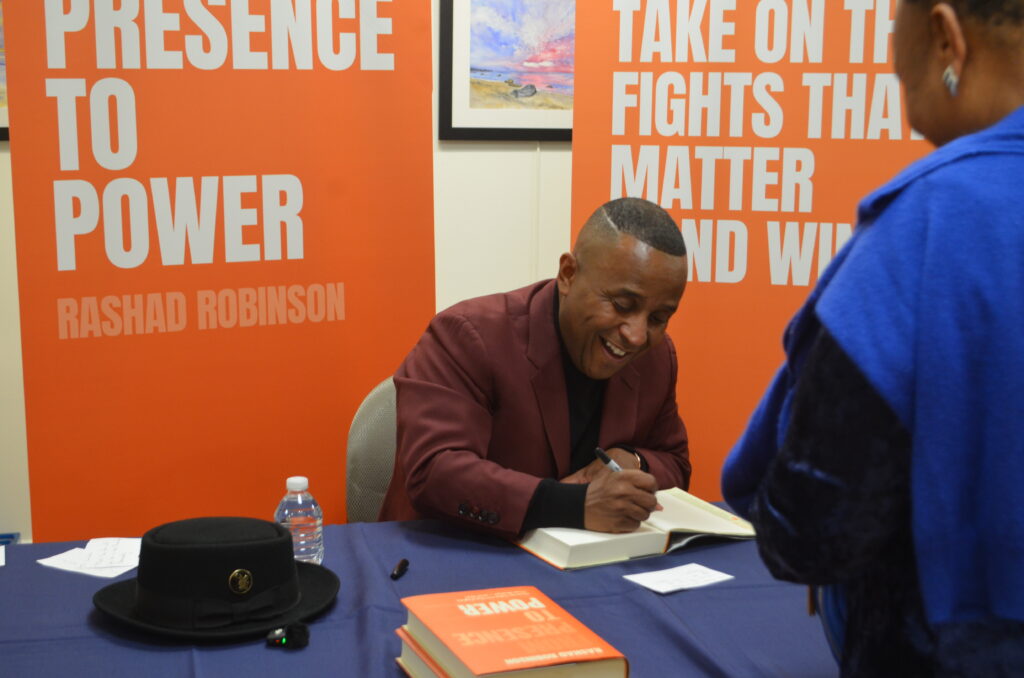
Following the discussion, attendees purchased copies of “From Presence to Power” provided by A Book Place and lined up for Mr. Robinson’s autograph. An audiobook version is also available, although Mr. Robinson joked listeners would have to bear with his Long Island accent.
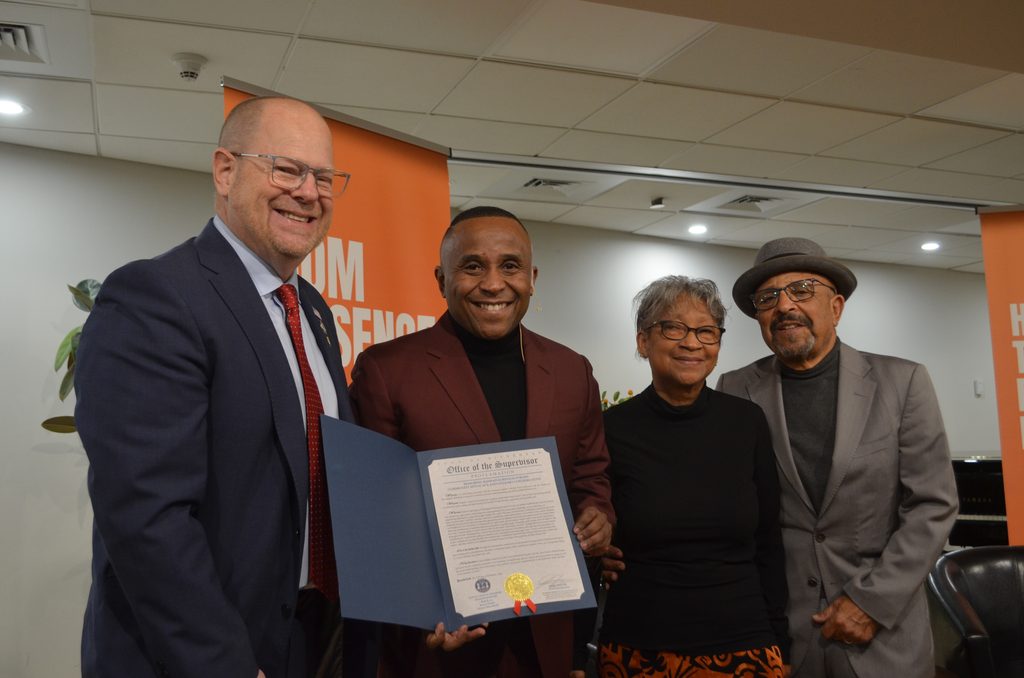
Riverhead Supervisor Jerry Halpin also presented Mr. Robinson with a proclamation, congratulating him on the success of his book.
“What our experiences are when we grow up, you clearly have grown from Riverhead, [you’re] loyal to our soil here,” the supervisor said. “We are so proud of you, and so thankful for you.”