Riverhead Tanger Outlets seek changes to zoning code as store vacancies grow
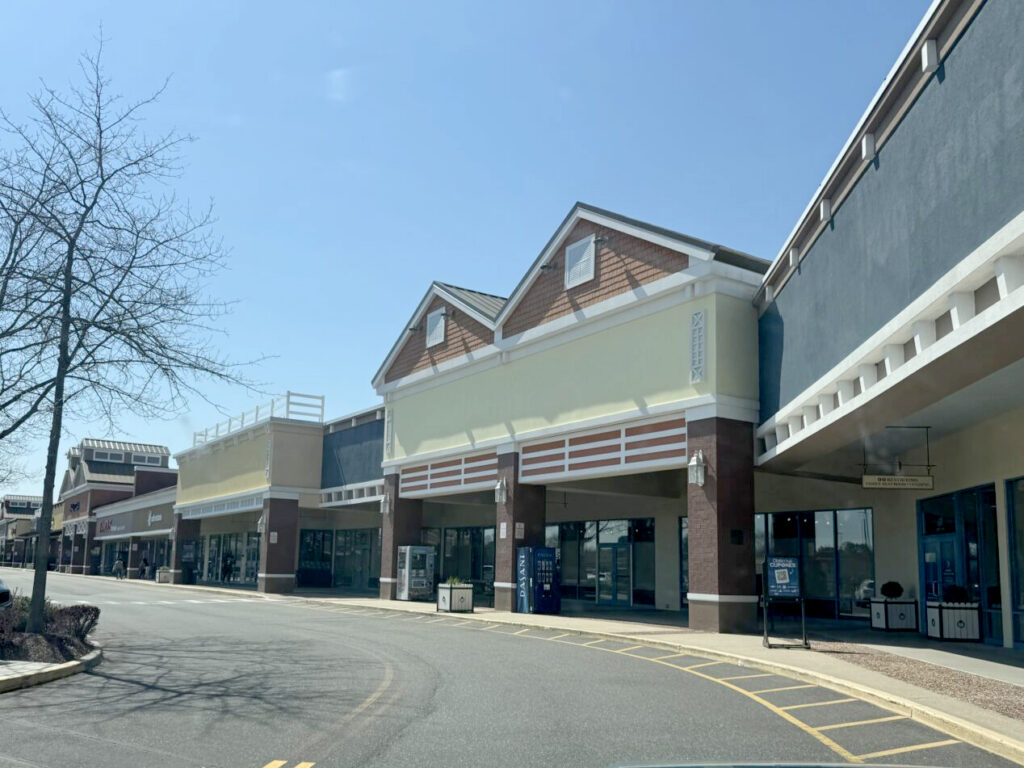
Shoppers at the Tanger Outlets in Riverhead can browse dozens of stores, but when it comes to dining, their options are limited — a sign of decades-old zoning restrictions that officials say are making it harder for the center to compete and fill vacant storefronts.
Zoning laws put in place more than 30 years ago allow just one restaurant or food court at each Riverhead Tanger’s two campuses — one of many restrictions the company’s representatives say are making it harder to attract tenants and contributing to rising vacancies.
The zoning rules stem from the town’s Manufacturers Outlet Center code adopted in 1992 amid concerns the then-new outlet center could hurt Main Street businesses.
“This was all done so that Tanger could just bring in their outlet stores, and the demise of Main Street ended up being [Route] 58, not Tanger at all,” Councilwoman Joann Waski said at an April 9 Town Board meeting with Tanger officials. “I think it’s so important that we are removing these restrictions and giving them the go ahead that they have out in Deer Park and other places throughout the country to help them thrive in a time where everybody’s not going to the stores like they used to.”
The Tanger Outlets has become a major property tax revenue generator for Riverhead Town. However, the retail center is now struggling to keep storefronts filled.
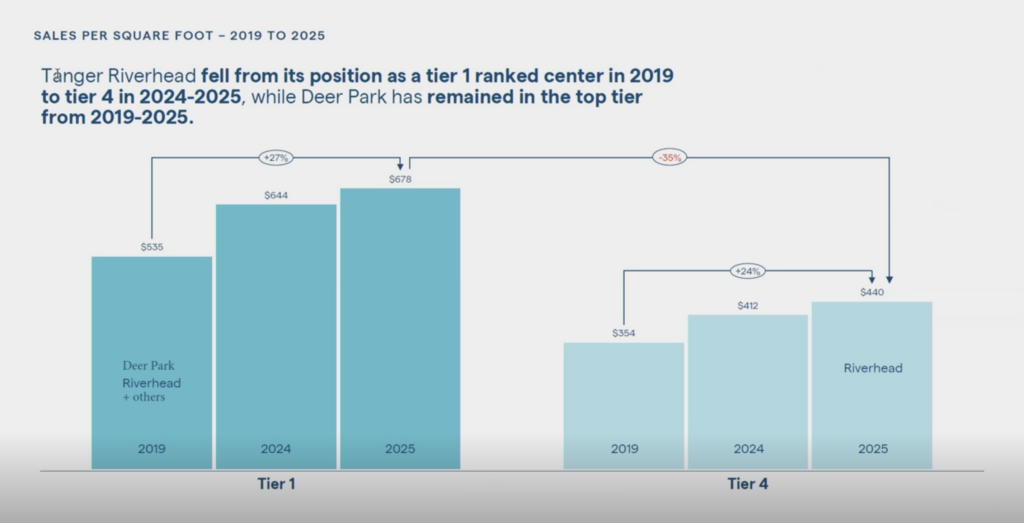
Jordin Horan, vice president of development at Tanger, says the company has seen a shift in performance at the Riverhead location in recent years. While both the Riverhead and Deer Park outlets were considered top-performing centers in 2019, Riverhead has since dropped to a lower tier within Tanger’s portfolio.
“Comparing Deer Park to Riverhead, what we’ve seen with that difference in zoning is that our tenant mix has evolved there between 2019 and 2024 … [and] continued to bring in new tenants in and met the demands of the consumer,” Ms. Horan explained to the town board on April 9. “With Riverhead, with some of the restrictions that we do have, we’ve unfortunately not been able to do that, and we’ve lost some of our existing outlet tenants, and have seen a vacancy rate continue to creep up.”
Town officials say those limitations are built into the zoning code itself.

Town planner Greg Bergman described some existing restrictions — including the one-restaurant or food court limit — as outdated, noting the scale of the Tanger 1 complex makes such caps impractical.
The most recent code amendments, approved in 2024, allow for general retail stores, interior design showrooms and trade centers, specialty grocery, various indoor activities, and an indoor theater that offers dining, comfortable seating and alcoholic beverages — but officials say more flexibility is still needed.
The proposed zoning revisions would loosen those restrictions and allow a wider range of businesses at the site. Among the changes under consideration:
- Removing the current cap limiting the number of restaurants
- Allowing restaurants with or without drive-through service
- Expanding permitted uses to include personal services, banks, indoor recreation and professional offices
- Adjusting parking requirements from one space per 200 square feet to one per 250 square feet
- Reducing front yard setback requirements and modifying landscaping rules
- Eliminating the single-story campus requirement while maintaining overall design standards
The proposed changes are expected to be referred to the town’s Planning Board, with a public hearing to follow before the Town Board can take final action.
For town officials, the discussion is not just about expanding dining options or filling empty storefronts, but about protecting one of Riverhead’s largest commercial tax bases as retail trends continue to shift.
“A loss of revenue like that would be devastating to the town as a whole. If Tanger could not survive for any reason, we would have to pick up the tab,” said Councilman Kenneth Rothwell. “It’s important for the residents to understand when we make adjustments like this, yes, it’s for the success of [Tanger], but in the end as a large taxpayer, their success takes the tax burden off each and every one of us.”