Halpin retirement proposal stalls as Riverhead board questions incentive plan
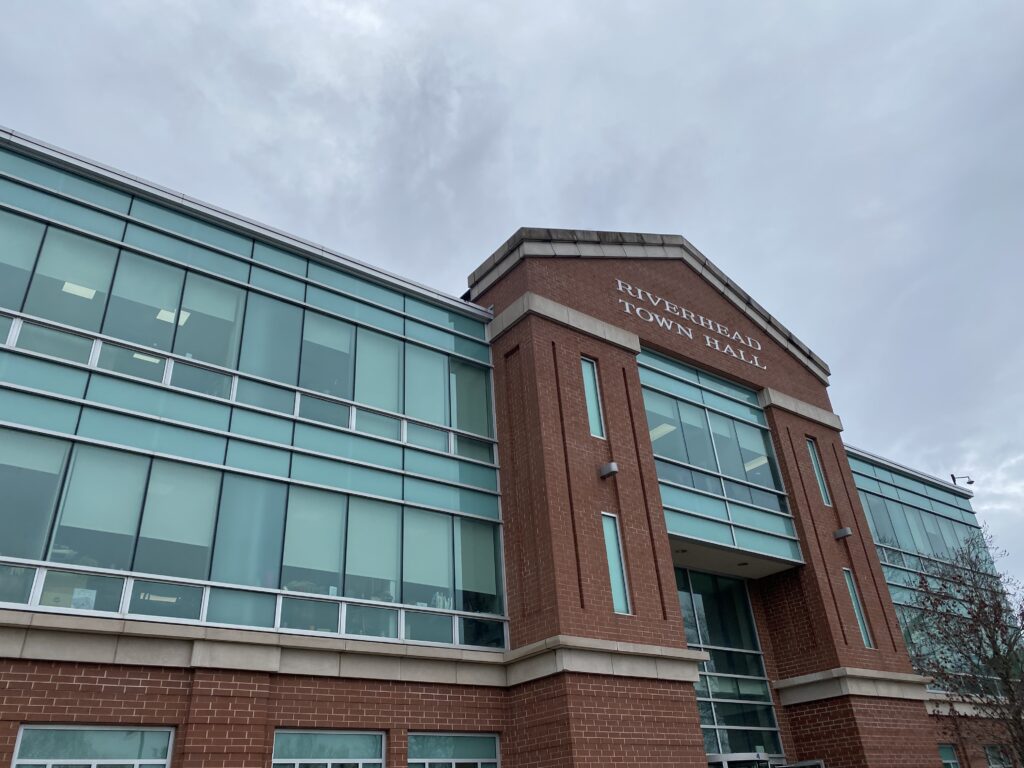
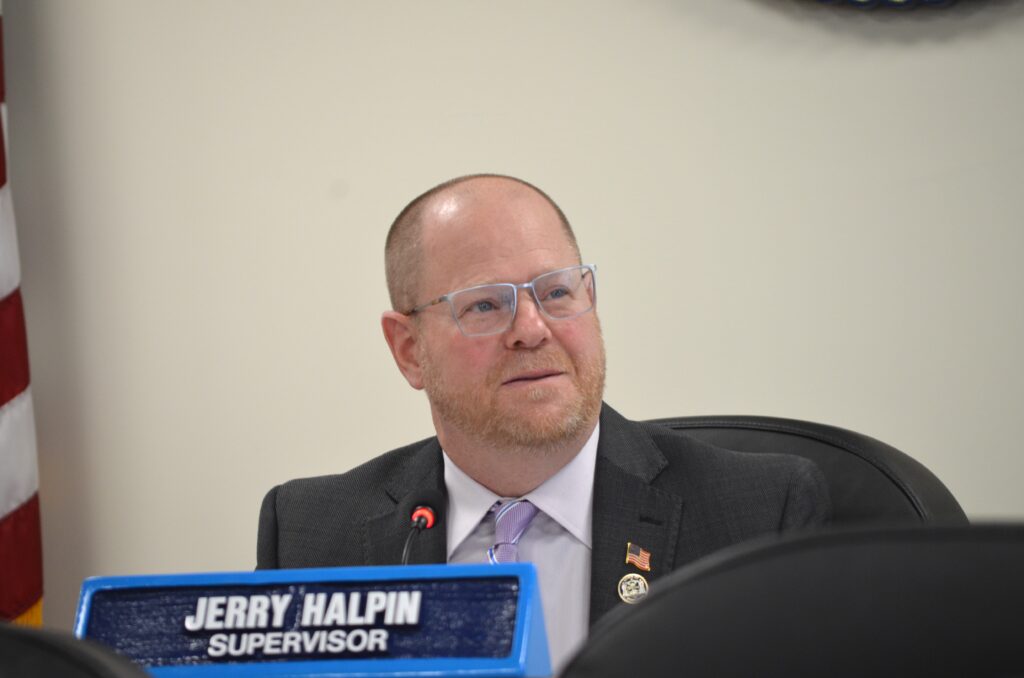
The Riverhead Town Board pumped the brakes on Supervisor Jerry Halpin’s early retirement incentive proposal, saying members needed more financial details before entering talks with the town’s unions.
Mr. Halpin had touted the proposal in a video ahead of last Thursday’s work session as a way to lower future tax increases by encouraging some longtime employees to retire. But the plan drew sharp pushback over transparency, individual payouts and potential risks to future budget stability.
“We’re not putting blind trust in you,” Councilman Kenneth Rothwell said to the supervisor during the May 28 work session. “You doing flashcards in executive session and then going on social media is definitely not an appropriate way to handle this. Let us have an opportunity to do our research and make educated decisions on behalf of the taxpayers.”
Mr. Halpin’s proposal comes after Riverhead pierced the state tax cap with a 7.89% tax hike — the town’s largest increase since the cap was enacted in 2012 — a flashpoint in his narrow win over Republican incumbent Tim Hubbard last year.
The supervisor floated using a newly identified increase in the town’s general fund balance to encourage some union employees to retire early. The idea originated with a CSEA employee who presented it to him in February.
The town’s 2025 Annual Financial Report showed the general fund balance grew by roughly $5 million last year, from $28.4 million to $33.4 million.
Mr. Halpin said the goal of the early retirement incentives would be to “lower payroll costs, reduce future tax increases and honor long-term employees.”
Riverhead financial administrator Jeanette DiPaola said she was initially “skeptical” of the plan before she and the town’s payroll supervisor put the numbers to paper.
They found that if all of the roughly 32 eligible CSEA, SOA and PBA employees accepted the incentive, the town could save up to $1.7 million annually — enough to offset roughly three percentage points of the general fund tax levy, according to town officials.
“I don’t ever want to use fund balance — I like to hold it. I don’t like to put it in the budget because you want to save it for projects down the road or emergency situations,” Ms. DiPaola told the Town Board. “But this one, we have $5 million that we didn’t know about three weeks ago … I’m not saying spend all of it, we don’t think all of these people are going to take it, but anybody that takes it at this point is a savings to the budget for next year.”
Ms. DiPaola offered one example involving a top-salaried police officer eligible to retire.
That officer’s annual salary is $152,901, with $10,703 in longevity pay and $67,568 in Tier 2 retirement pension costs, or 41.3%, according to Ms. DiPaola. A replacement first-year police officer would earn $72,067 annually and fall under Tier 6, where retirement costs drop to 32.3%.
Adding up the salary, longevity, retirement and additional insurance costs for that position, the town could potentially save $96,259, Ms. DiPaola said. The savings varies depending on position — $22,848 for a detective, $18,864 for a sergeant and about $16,872 for a lieutenant.
There are 18 employees within the police department currently eligible for the retirement incentive. They must have 20 years of service in New York law enforcement to be eligible.
If all eligible PBA and SOA employees accepted the incentive, the town would save approximately $1.4 million, according to figures presented at the work session. The potential total savings for CSEA employees is estimated at $265,549.
The total cost of incentives for eligible PBA and SOA retirees would amount to about 1.5% of the general fund balance, while the CSEA incentives would amount to about 0.5%, according to figures presented at the work session.
Regardless of whether the incentive is approved, Riverhead Town still owes eligible retirees nearly $2.5 million in severance when they leave.
Councilwoman Denise Merrifield argued that more specifics about individual salaries need to be made public so residents can understand how much the incentive would be for each eligible retiree.
“An individual officer could walk out the door with the pension, with all the benefits, with the SCAT pay, and then also get a payout check of $80,000, or $78,000” Ms. Merrifield said. “Maybe people in this town do not make $78,000 a year … I really need the public to understand the dollar and cents reality.”
Since the plan is not in formal negotiations yet, Ms. DiPaola said the specific names and salaries of eligible retirees could not be made available to the public.
Mr. Halpin insisted he consulted the town attorney’s office about these personnel and contractual matters before making the announcement, and was advised to bring it to executive session to discuss first. The town’s labor counsel also requested that officials avoid naming specific employees because the unions had not yet consented to disclosing that information.
Riverhead deputy town attorney Annemarie Prudenti said the list was specific enough that names were not needed to identify salary lines and whom they applied to. She added that eligibility criteria and exclusions could be applied if the Town Board wanted to tailor the plan before adopting it.
Councilwoman Joann Waski asked why so much of the discussion focused on the SOA and PBA when a CSEA employee had brought the idea to the supervisor. She said she was concerned CSEA employees were not being prioritized because the potential savings were not as significant.
The incentive for eligible Riverhead Town Hall union employees would allow for salary increases and aid in the town’s retention efforts, she said. Mr. Halpin and Ms. DiPaola assured the councilwoman that CSEA employees are included in the proposal.
“Just from the executive board meeting, I felt there was a great push for the PBA and the SOA,” Ms. Waski said. “I feel bad that the CSEA employee is the one that came requesting this to be looked at and I didn’t feel as though they had as much skin in the game as the PBA and SOA.”
Mr. Rothwell continued to question the proposal during the work session, including why the $1.4 million in interest earnings wasn’t used to reduce the 2026 budget and tax levy.
“We never know; interest can change tomorrow,” Ms. DiPaola said. “We’ve always budgeted conservatively because the market can tank … now because the rates are still so high, we’re earning a lot more money — is there potential to raise the revenues for 2027? How high you want to go, it’s a budget call based on every supervisor’s budget.”
Board members agreed to review previously approved incentives, examine the financial impacts, set up future meetings with the financial administrator and speak with the unions before making a final decision.
“There’s no movement; we need to do research,” Mr. Rothwell said as Mr. Halpin asked if the board would move forward with discussions with the financial administrator. “Let us do our homework.”