Riverhead Planning Board requires Brother Bear Canna to submit full environmental assessment of proposed cannabis facility
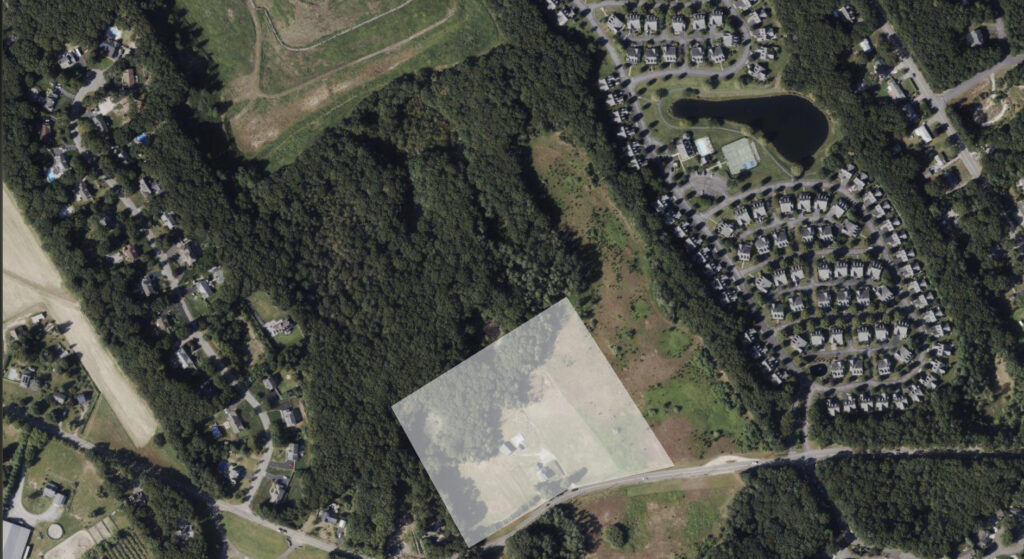
The Riverhead Planning Board made a U-turn decision on Thursday to reclassify a controversial cannabis cultivation facility proposal as a Type I action under the State Environmental Quality Review Act.
The proposed project by Brother Bear Canna, LLC to build a one-story, 27,489 square-foot greenhouse on a 5.3-acre parcel within the Agricultural Protection zoning use district at 1458 Middle Road now classifies as a Type 1 action under the State Environmental Quality Review Act, or SEQRA.
Brother Bear Canna is now required to submit a full environmental assessment form before any review continues. Its application was previously treated as a Type 2 agricultural action, with the Riverhead Planning Department recommending no further environmental review because the property involved “agricultural farm management practices.”
However, after seeing how the proposed greenhouse is not a “farm building” or an “agricultural structure, and is in fact a place of employment where crops are processed, grown, treated and packaged as defined in the Riverhead Town Code, the planning board made a sharp pivot and rejected the planning department’s recommendation.
The Riverhead Planning Board found the proposed structure exceeds the 25% threshold for structures in a city, town or village with a population of 150,000 people or less. Under SEQRA, the greenhouse proposal is also next to publicly owned or operated parkland, a recreation area or designated open space — in this case, a 41-acre town-owned open space parcel.
The board also notes the project does not specifically fall under the categories in state’s Type 2 action list for SEQRA and should be considered an Unlisted action, before being bumped up to a Type 1, according to the resolution.
Any presumption of a project carrying a potential significant adverse impact on the environment triggers a Type 1 action. This does not mean it mandates a full Draft Environmental Impact Statement (DEIS).
Brother Bear Canna must submit a Full Environmental Assessment Form (FEAF), the Planning Department will then seek lead agency status and coordinate a multi-agency review, which involves the State Department of Environmental Conservation, Suffolk County Department of Health Services, Suffolk County Planning Commission, Riverhead Water District, Riverhead Fire Marshal’s office and the Riverhead Highway Department.
The over 50 opposers who packed out the Town Hall board room broke out into applause after the unanimous decision on the SEQRA action reclassification.
“Thanks for keeping your shields up,” Toqui Terchun, president of the Greater Calverton Civic Association, said to the planning board following the 5-0 vote. “We feel it.”
Many reiterated their frustrations over the project and pressed the planning board to pass the resolution.
Over the last nine months, Brother Bear Canna’s proposed cannabis growing operation has drawn sharp criticism from residents living in two over-55 communities near the project site, Windcrest East and Foxwoods. The development is also in close proximity to neighboring homes where children reside.
Residents concerns include the possible negative impact the odors could have on elderly people with respiratory illnesses, on property values, the environment, and increased traffic and noise pollution.
George Pammer, who lives in Windcrest East, said the property itself has been “fallow” for about 40 years, with no farming or growing taking place. Going from no activity to a “24/7 operation” would cause significant disruption, Mr. Pammer argued.
“You have heard from us repeatedly about this being an industrial operation being dressed up as a farm,” Mr. Pammer said. “This is not your traditional farming.”
Back in January, after consideration of all testimonies and potential detriment of community welfare, the Riverhead Zoning Board of Appeals denied a ground variance request from the allowable 15% of the property to 24%, as well as an exception to surround the over five-acre property with an eight-foot wire deer fence, instead of the town-permitted six feet.
This unanimous denial from the Riverhead ZBA prevented Brother Bear Canna from moving forward with a site plan review by the Riverhead Planning Board.
In the spring, the applicant returned to the Riverhead Planning Board with a revised plan with a reduced footprint — from 33,700 to now 27,489 square-feet. The modified proposal includes related improvements such as an asphalt driveway, drainage, lighting, mechanical equipment, as well as new I/A sanitary wastewater system.
Ms. Terchun read a letter from Jennifer Hartnagel of the Group for the East End who implored Riverhead Town officials to clearly define what the actual proposed structure is before further processing the application.
“The subject application is clearly not a standard greenhouse facility,” Ms. Hartnagel wrote. “The industrial nature of the project proposed within the APZ, if permitted, poses precedent setting implications.”
Helen Runnels, another Windcrest East resident, referenced a recent Newsday report on Babylon Town limiting indoor agriculture facilities — such as hydroponics, aeroponics, aquaponics and vertical farming — to industrial zoned areas. These facilities are not permitted within 500 feet of residential lots or another indoor agriculture business, according to the report.
Additionally, all indoor agriculture businesses in Babylon must obtain a special exception use permit from the town’s zoning board of appeals.
“They’re doing this to prevent the future of destruction by these particular warehouse farmers,” Ms. Runnels said. “I really do encourage you to think about the residents in Long Island itself because this is going to spread across and it’s not going to be a good thing for our citizens.”
Editor’s Note: The last name of Helen Runnels has been corrected.