SCWA targets 2027 start for controversial North Fork pipeline
The Suffolk County Water Authority aims to break ground on its controversial North Fork pipeline in 2027 as it fights Riverhead in court over local permits.
In an advance release obtained by the Riverhead News-Review, SCWA said it expects construction to take about a year once final permits are in hand. The board chose Main Road over Sound Avenue on Nov. 19, completing its environmental review.
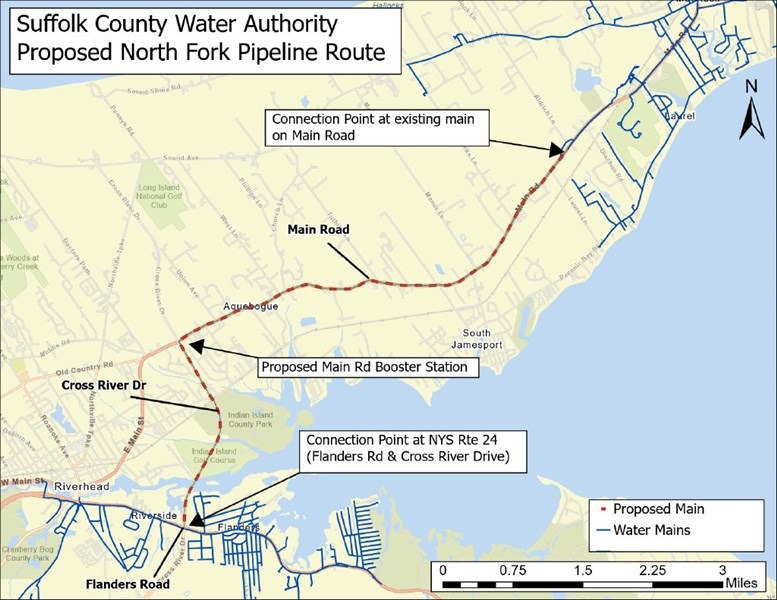
The revised route, first announced in July in response to public input, runs north along County Route 105 and east along Main Road, avoiding the original Sound Avenue corridor. The 24-inch pipeline would run about 7.2 miles from the Riverside-Flanders area to SCWA’s existing main in Laurel, bringing water to North Fork customers and easing pressure on Southold’s wells.
The authority says that route would shorten the pipeline by one mile and allow completion in 2028 rather than 2030 at significantly lower cost than its original proposal.
At Aquebogue Elementary School, crews would work along the north side of Main Road and try to avoid arrival and dismissal times, according to the latest release. SCWA says it would coordinate with the school and road agencies on a traffic plan covering bus routes and stops, parent drop-off and pickup, and pedestrian access. Final work hours would be set through road permits and construction planning.
Residents and Riverhead town officials previously raised concerns at an SCWA public hearing in August about how construction along Main Road could disrupt traffic, affect local schools and disturb wetlands in Aquebogue.
The findings call for scheduling work around peak summer and fall traffic where practicable. SCWA acknowledged some “unavoidable adverse impacts,” including temporary noise, traffic delays and disruptions to driveway and pedestrian access.
The authority plans to post daily updates on work locations and detours, coordinate access with Main Road property owners and appoint a construction manager to oversee those measures.
SCWA determined in its formal findings statement that the project’s benefits outweigh its anticipated impacts. The board adopted those findings three weeks after accepting the final environmental impact statement.
“Approving the Findings Statement is a major milestone for the North Fork,” SCWA chairman Charlie Lefkowitz said in a statement. “After a thorough, transparent environmental review shaped by public input, we are ready to move from planning to construction. This project protects local water resources and secures a sustainable supply of drinking water for our Southold customers.”
In a separate vote Oct. 29, SCWA board members authorized their attorneys to challenge Riverhead’s decision to require local permits and approvals for the Main Road route. Those include a special permit for a booster station near Main Road and Cross River Drive in Aquebogue.
Riverhead officials have maintained that the town should have a say over construction impacts within its borders, even though no customer connections would be made within the Riverhead Water District’s service area. SCWA insists that the project is exempt from local zoning and land-use rules.
The authority first sued Riverhead in February, challenging the town’s decision to require local approvals for the original Sound Avenue route. The lawsuit remains active in Suffolk County Supreme Court.
Riverhead Town Supervisor Jerry Halpin and town attorney Erik Howard did not respond to requests for comment by press time.
SCWA calls the pipeline the largest single infrastructure project in its 75-year history. In October, spokesman Dan Dubois told the News-Review that the Main Road route was estimated to cost $25 million, compared with $35 million for the original Sound Avenue route.
The environmental review identifies higher costs for nighttime work and road restoration on Main Road. Mr. Dubois said the study’s discussion of those costs did not compare the full cost of the two routes.
SCWA operates 60 wells across 18 well fields on the North Fork, serving 9,500 customers. The authority says increasing demand is straining the system despite conservation efforts.
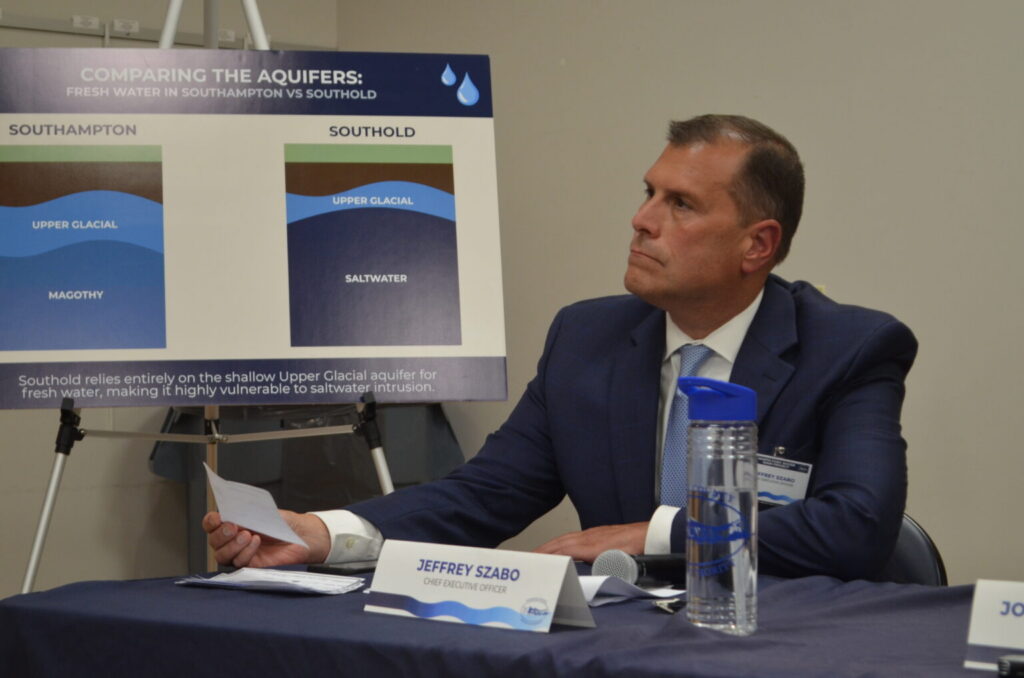
Officials say most North Fork wells draw from the Upper Glacial Aquifer, which is vulnerable to pesticide and herbicide contamination, as well as rising chloride levels. SCWA says concerns about PFAS contamination are driving more private well users to seek public water. Pumping too much from local wells risks drawing saltwater into the freshwater aquifer.
The environmental review anticipates taking eight Southold wells out of routine service and reducing pumping at nine others. It says those changes would ease stress on the aquifer and help limit saltwater intrusion, but the analysis does not establish how fully the aquifer would recover, according to previous reporting by the Riverhead News-Review.
“Completing the SEQRA process shows that SCWA is committed to doing this project the right way,” said SCWA board member John Porchia. “We listened to residents, adjusted the route to reduce community disruption and verified that the benefits to the North Fork’s water supply are clear. Breaking ground in 2027 will put us on track to deliver long-term water security to the region.”
The final findings and environmental impact statement are available on SCWA’s project page.