Bird flu suspected in Peconic Bay waterfowl deaths
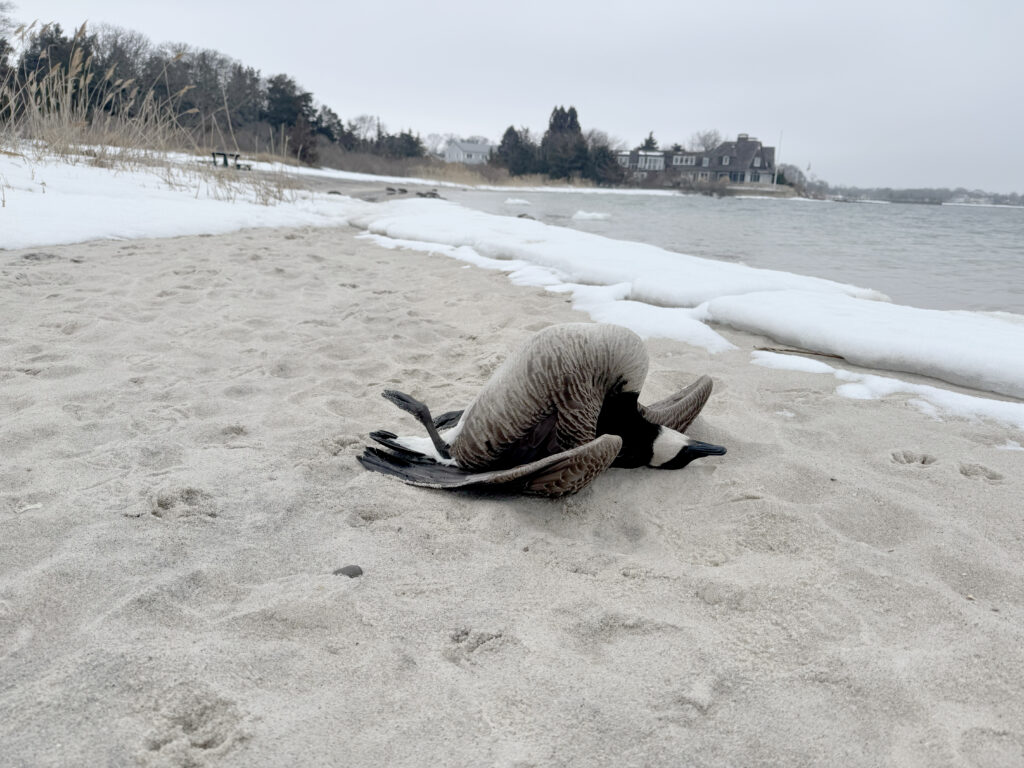
Surviving February is tough for wildlife, even in mild winters. This year, however, experts say the lasting snow cover is leading to food scarcity among North Fork waterfowl flocks, resulting in starvation and susceptibility to Highly Pathogenic Avian Influenza — or HPAI.
The New York State Department of Environmental Conservation received numerous reports recently of dead or sick waterfowl along Peconic Bay. The NYSDEC collected three Canada geese on Feb. 16 from the Jamesport area to undergo testing for HPAI.
Those results were not available by press time, so there are no confirmed HPAI detections thus far on the North Fork, only in the county. Local experts are still sounding the alarm.
“There’s plenty of reports of where they’re showing neurological signs when they’re alive,” said Jennifer Murray of Turtleback Conservation Center. “Their head tilts or swimming in circles, lethargy, and that’s what our Canada geese are displaying,” she said. Reports and videos of geese displaying symptoms have been circulating on social media as well.
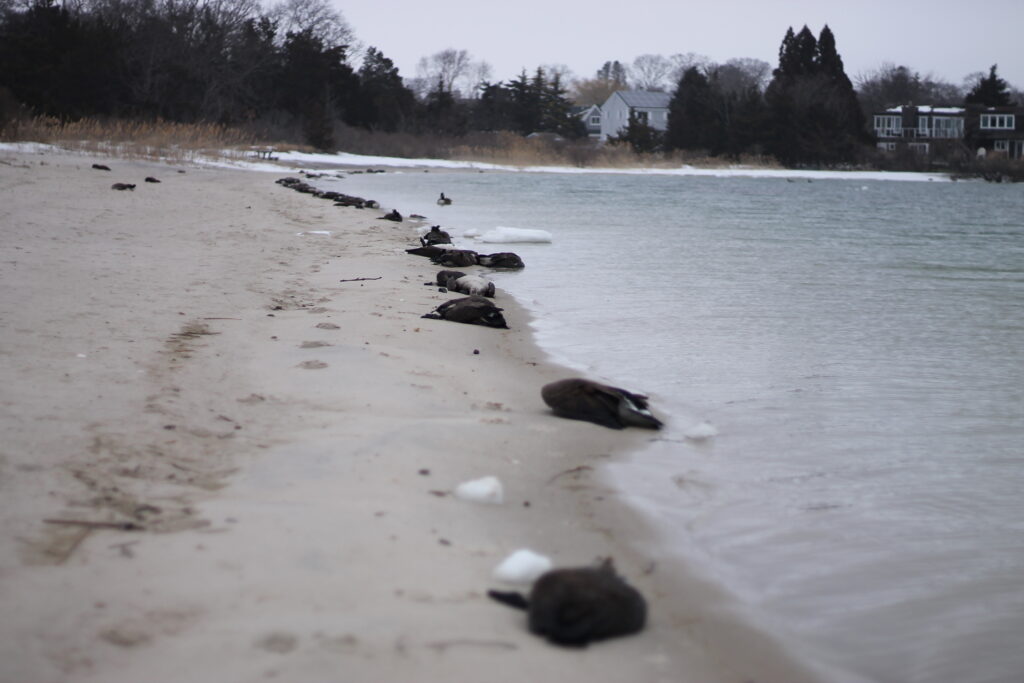
One of those reports included an estimated 106 dead Canada geese off Simmons Point in Jamesport. Riverhead News-Review confirmed over 100 dead birds along the shoreline and in Peconic Bay. A number of birds were alive, but displaying symptoms of HPAI.
The licensed rehabbers at Evelyn Alexander Wildlife Rescue Center in Hampton Bays are also seeing an uptick in cases. “Every year we see avian influenza flare up around this time of year,” confirmed Ryan Gilmartin, an animal care assistant. “Last year in particular was quite bad. A lot of the domestic poultry farms, were hit pretty hard, having to euthanize their flocks. A large amount came into our hospital [then], and we are seeing a pretty large amount [of Canada geese] so far this year as well.”
The Evelyn Alexander Wildlife Rescue Center will take in sick and injured wildlife found east of the William Floyd Parkway if space at the facility allows.
Bald eagles and bird flu
Mr. Gilmartin noted that the center has received calls of concern about bald eagles eating the dead geese, and potentially contracting HPAI. Ms. Murray has also heard reports of North Fork bald eagles eating the geese as well. She said to report dead eagles to the DEC hotline 844-DEC-ECOs or (1-844-332-3267).
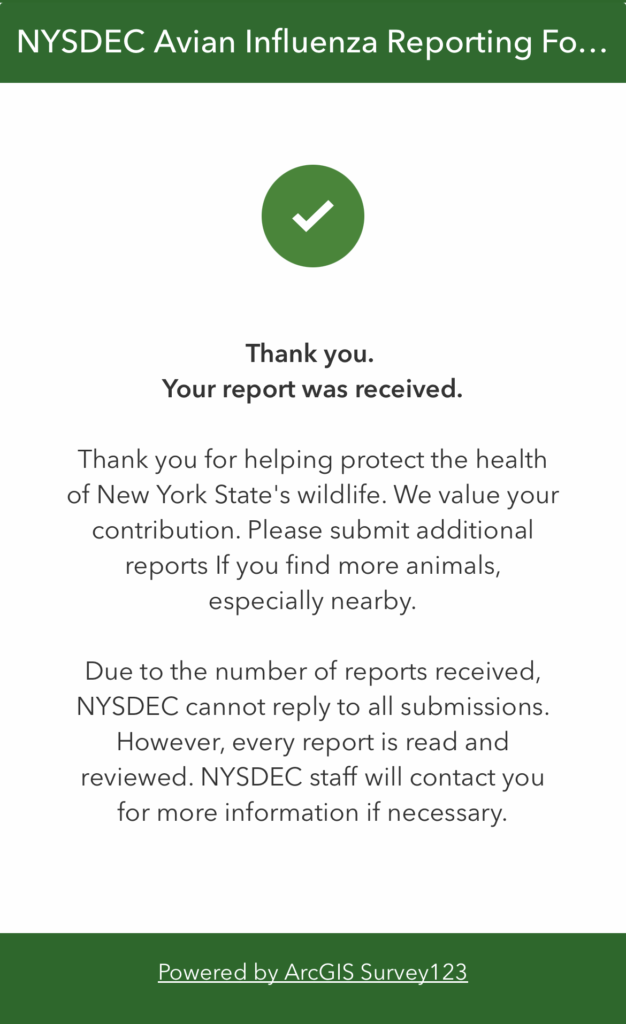
To help with monitoring HPAI in waterfowl, the NYSDEC built a reporting tool to be used when multiple dead birds — either the same species or different ones in the same area — are found.
Riverhead News-Review made use of said tool Feb. 17 after quick stop at Meetinghouse Creek Park in Aquebogue. The typical assortment of winter waterfowl of bufflehead ducks and hooded mergansers were swimming among ten dead Canada geese and four dead swans.
Staying safe from HPAI
Beyond reporting mortalities, according to the NYDEC, the public can help minimize risk and limit disease spread by preventing contact between domestic animals and wild birds. They also said to consider groups of birds found deceased HPAI positive and avoid them.
Should removal be necessary, NYSDEC advises use of disposable gloves, a mask, and eye protection. Avoid direct contact with the carcass by using a shovel and washing hands and clothing immediately after with soap and hot water. Carcasses should be triple bagged and placed in an outdoor trash receptacle.
For more information on keeping other species safe from HPAI, such as song birds and home poultry flocks, see turtlebackconservationcenter.com.