Cold winter linked to spike in area tick bites
A cold, snowy winter may be driving a spike in tick bites across the Northeast, experts say, as the same conditions that buried Long Island in snow helped more ticks survive into spring.
Emergency departments are now seeing the impact, with bites reaching their highest levels for this time of year in nearly a decade, according to an April 23 release by the Centers for Disease Control and Prevention.
“Snow can actually be a protectant for ticks. It protects them from the cold and from dryness,” Dr. Andrew Handel, a pediatric infectious diseases specialist at Stony Brook Children’s Hospital, told Riverhead News-Review. “So that insulating barrier can actually allow greater number of ticks to survive over the winter and then, when temperatures warm up, to become active.”
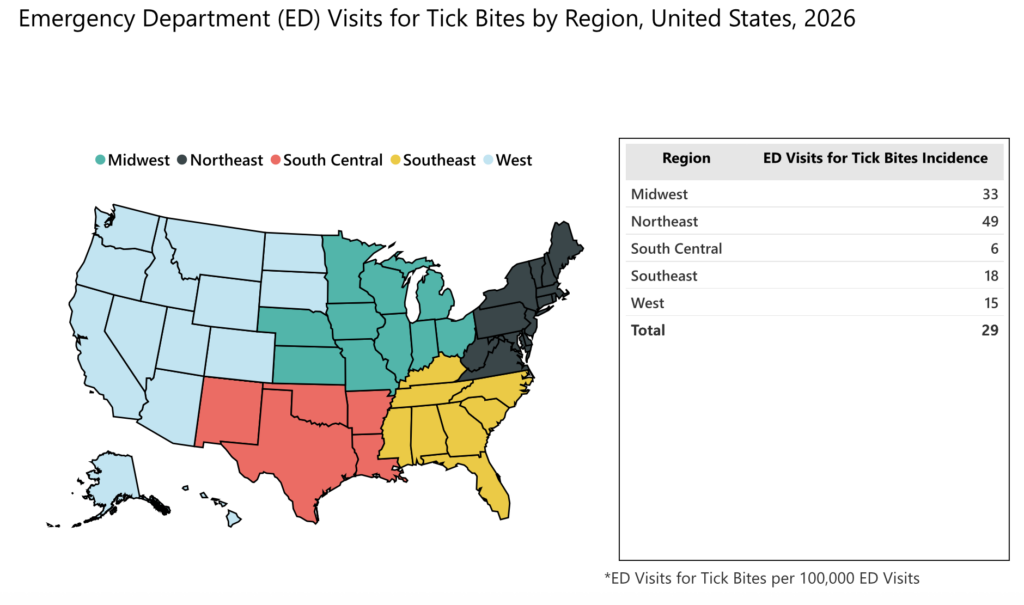
Tick bites accounted for 183 out of every 100,000 emergency room visits in the Northeast this April, according to the CDC’s Tick Bite Data Tracker. That’s a sharp jump from 131 visits per 100,000 at the same time last year.
Dr. Handel said most of the cases he’s seeing involve lone star ticks and deer ticks — both common on Long Island.
He urged residents to check themselves and their children carefully after spending time outdoors, especially in areas where the arachnids tend to hide: along the hairline, behind the ears, around the waist and in skin folds.
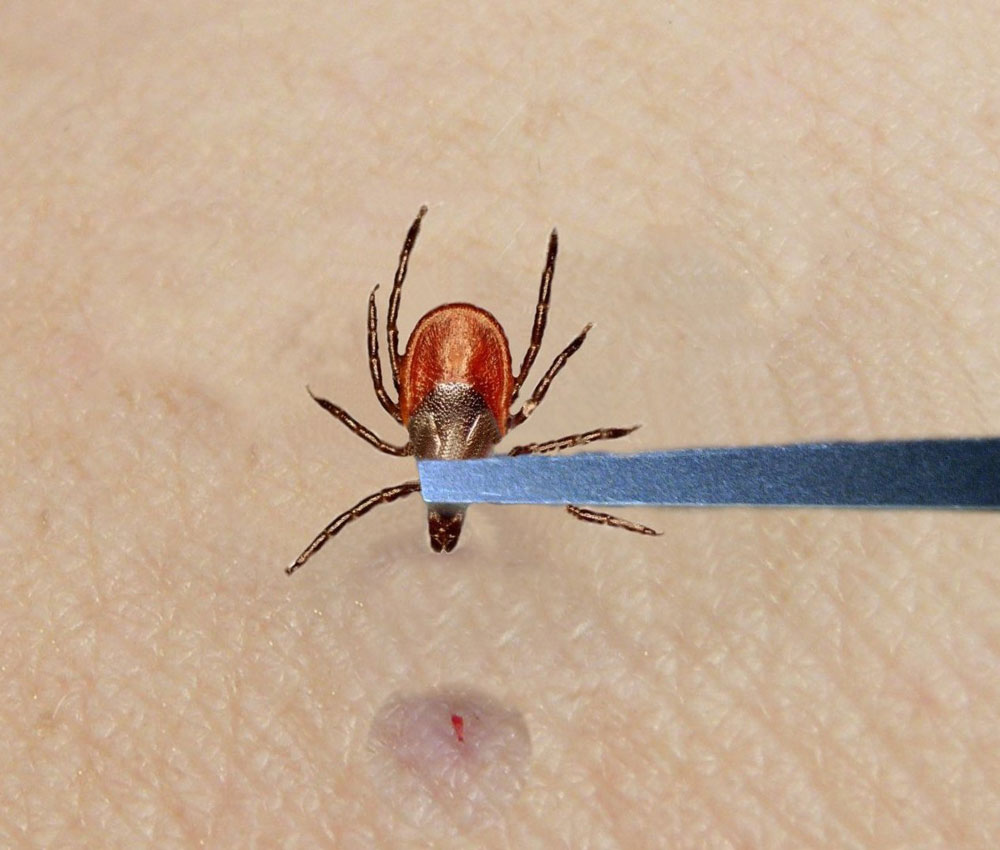
If bitten, the best way to remove a tick is to use tweezers, grab the tick as close to the skin as possible and firmly pull straight up. Once it is removed, Dr. Handel advised patients to place it in a sealed bag so that a medical provider can identify it and the kinds of infections they could be at risk for.
He warned against using matches to try and burn ticks off or smothering them in various solutions.
“It can do more harm than good,” Dr. Handel said.
It’s still early to tell if the increase in tick bites correlates with an increase in tick-borne infections, as they typically occur weeks after the tick bite, he added.
“The tick bite itself is typically asymptomatic,” the pediatrician said.
Symptoms of tick-borne illness vary based on the infection, though common symptoms throughout include fever, headaches, muscle ache or sudden fatigue.
Lyme disease has more specific symptoms including bull’s-eye rash or swollen joints in children specifically. Facial drooping, severe headaches, leg pain, chest pain or shortness of breath are some other symptoms of the disease Dr. Handel noted.
Alpha gal syndrome, which causes people to develop an allergy to red meat after a tick bite, can present three to six hours after someone consumes red meat. Symptoms include diarrhea, upset stomach, hives or, in severe cases, anaphylaxis. Suffolk County has one of the highest rates of alpha gal in the country, Dr. Handel said.
Best practices to avoid tick bites include avoiding tall grasses or brush areas, wearing long pants and tucking them into socks, using insect repellent DEET or spraying permethrin on clothes, and drying clothes on high heat for 10 minutes after going inside.
Southampton Hospital’s Hampton Bays Tick Clinic, also known as the Regional Tick-Borne Disease Resource Center, offers specialized care for adults and children concerned about tick bites, Lyme disease and other tick-borne infections.
The Hampton Bays clinic provides access to human tick removal, diagnosis, treatment, lab services, blood drawing, counseling on tick bite prevention and tick identification. Visitors can also grab free tick removal kits and tick-borne disease reference handbooks at the center.
Patients can also participate in ongoing research studies that contribute to broader understanding and development of effective treatments for tick-borne diseases at the Hampton Bays clinic.
To make an appointment at the clinic, call 631-725-2112 for adult treatment or 631-444-5437 for child treatment. The center’s help line is reachable at 631-726-8425.
For pets, owners can do daily tick checks — focusing on their ears, neck, armpits, under their collar, around their tail and between their toes. Consult your veterinarian for information about vaccination or other preventives.
If your pet is presenting with a loss of appetite, lethargy, limping, joint pain, fever or swelling, contact a veterinarian.