Riverhead proposes new golf-course zoning district to expand cottage plan
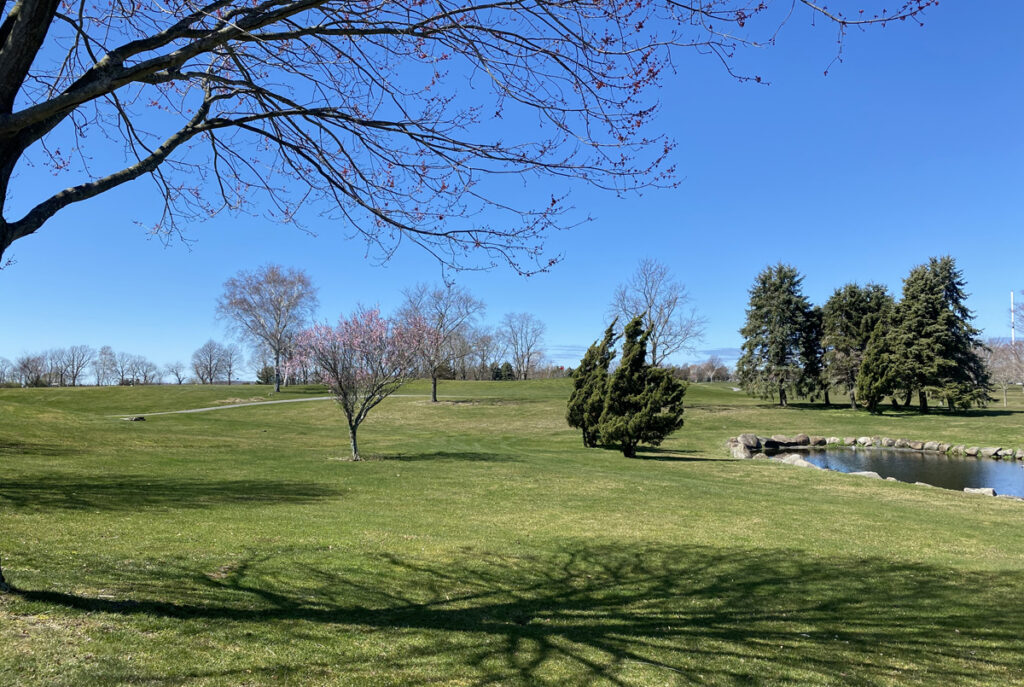
Riverhead officials returned to the tee box Thursday with a new approach to green-lighting their golf-cottage proposal — carving out a proposed new zoning district that would open the program to six courses.
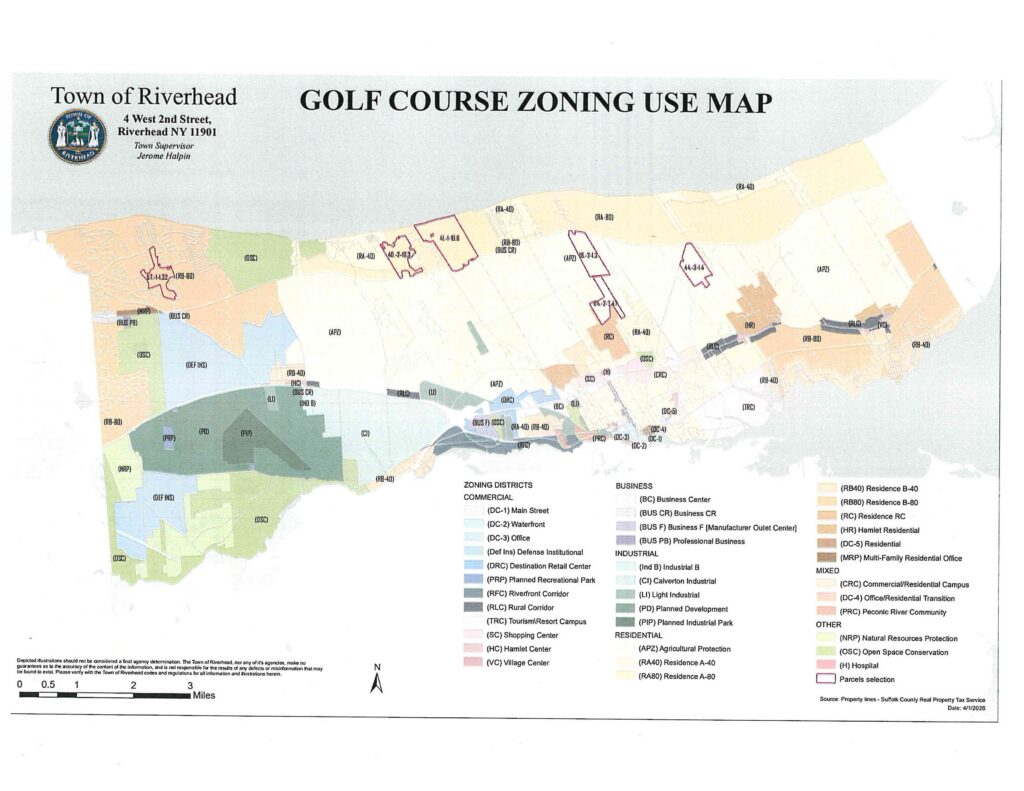
Rather than rezone eligible courses to Residence A-80, the plan detailed at Thursday’s work session calls for creating a golf-course zoning district and designating all six properties as receiving areas under the town’s Transfer of Development Rights, or TDR, program.
The change would extend the program beyond Friar’s Head and Baiting Hollow Golf Club to four additional courses: Great Rock Golf Club in Wading River, Cherry Creek Golf Links and The Woods at Cherry Creek in Riverhead, and Long Island National Golf Club in Aquebogue.
The proposal would allow the courses to use farmland-preservation credits to build cottages as transient lodging for golfers and other visitors. Each cottage would be capped at 600 square feet.
Senior town planner Greg Bergman walked the Town Board through the proposed regulatory framework and projected timeline during Thursday’s work session.
The Town Board is expected to formally launch an environmental review of the proposal when it meets Tuesday. Officials hope to adopt the zoning changes by December.
The first of two resolutions on Tuesday’s agenda would declare the Town Board lead agency for the environmental review and issue a positive declaration finding that the proposed zoning changes may have significant environmental impacts. The resolution includes the draft code amendments and a full environmental assessment form.
A second resolution would accept a draft scope outlining the issues to be studied and open a 21-day public-comment period.
A generic environmental impact statement, or GEIS, would examine water availability, sanitary management, groundwater, traffic, transportation and emergency response, among other potential impacts, Mr. Bergman said. The town’s environmental consultant, Jeffrey Seeman, would prepare it in-house for an estimated $15,000 to $20,000.
“We don’t have a concrete proposal right now in the form of a site plan, we’d get some discussions and correspondence with the fire district, the fire marshal’s ability to respond to emergencies at these locations,” Mr. Bergman explained at the work session. “The purpose of a GEIS is to discuss proposed code amendments and land use changes in broad strokes.”
If the Town Board approves the resolutions Tuesday, written comments on the draft scope would be accepted through Aug. 25. The planning department would then prepare a final scope incorporating any substantive concerns raised during the comment period.
Mr. Bergman said the town hopes to accept a draft GEIS by mid-September and begin a 30-day public-review period. A public hearing and preparation of a final environmental impact statement could follow later in the fall, with the code and zoning changes targeted for adoption in early December.
Town Supervisor Jerry Halpin praised the projected timeline and thanked the planning department for “saving taxpayers money” by keeping preparation of the GEIS in-house.
“We’ve listened to the public,” Mr. Halpin said.
The revised approach followed public outcry over an earlier proposal that would have allowed cottages as large as 1,200 square feet. Critics at a Jan. 21 hearing argued that the proposed maximum far exceeded the town’s Comprehensive Plan and could pave the way for luxury resort-style development.
Concerns were also raised that the program would primarily benefit Friar’s Head and Baiting Hollow Golf Club because both are located in Residence A-80, an existing receiving district for farmland-preservation credits.
Officials subsequently restored the Comprehensive Plan’s 600-square-foot limit and began pursuing a separate golf-course district that would make four more courses eligible.
Under the revised proposal, each cottage would be limited to one bedroom and a kitchenette and could not be used as a permanent residence. Restaurants, spas and other amenities related to the cottages would be prohibited.
The cottages could be built as freestanding units or attached in pairs. They could not be subdivided or placed into condominium ownership.
“We’re trying to help and trying to make things work for different people,” Mr. Halpin said.