Letters to the Editor: A moving force
Brookhaven
A moving force
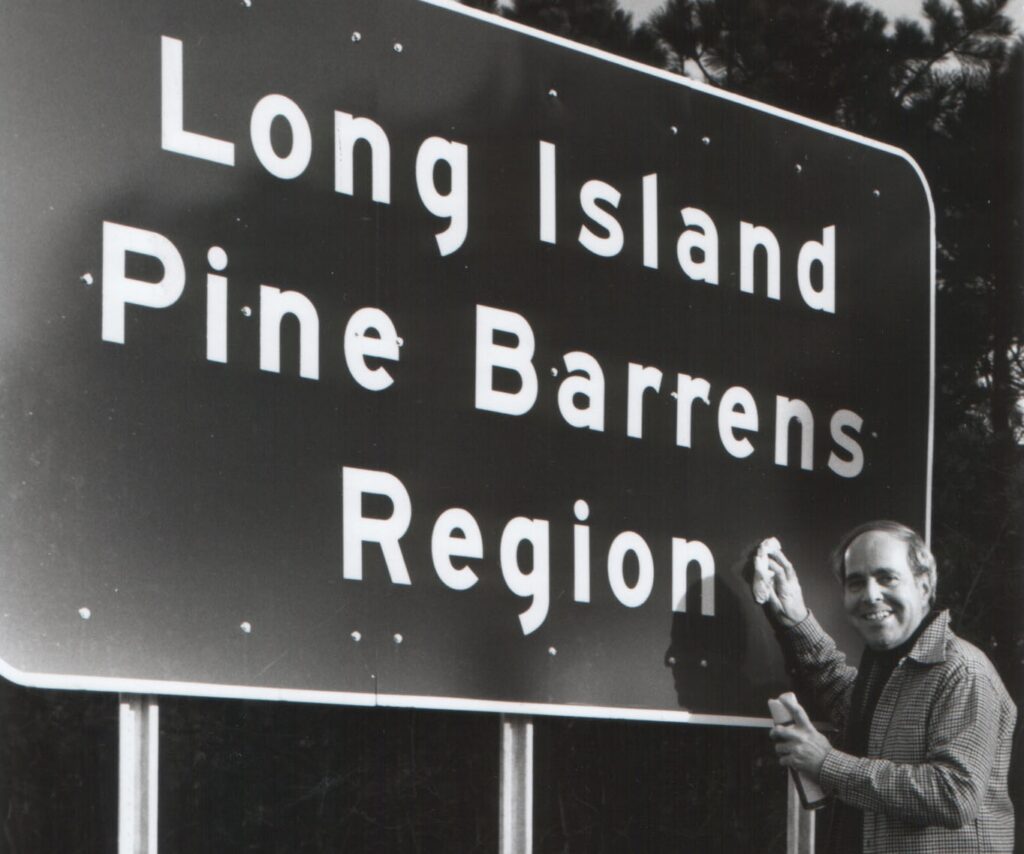
Richard Amper attended several meetings we held when attempting to deal with a local sand mining facility that was abusing its New York State Department of Environmental Conservation 360 permit, along with then-Brookhaven supervisor Henrietta Acampora, supporting neighbors. He was truly concerned about Long Island, having been designated a sole source aquifer. He was a moving force with regard to its preservation.
John Ledogar
Southold
Unsung hero
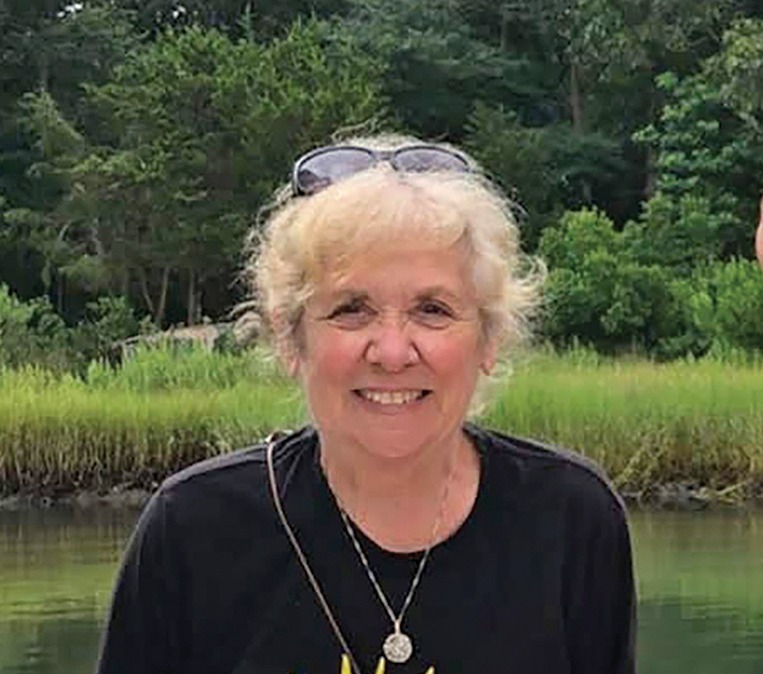
We have lost a caring, thoughtful and concerned man in the passing of Richard Amper. He took care of the Pine Barrens for decades with every ounce of his being, his savvy, and his know how. In many ways he was an unsung hero. I hope there are others who will continue his work.
Elaine Goldman
Riverhead
Suffolk County Historical Society
I recommend every parent, guardian or educator take our young people in small groups to the Suffolk County Historical Society museum in Riverhead. It will make our youth think and be aware of our local heritage.
Warren McKnight
Mattituck
The buzzing begins
Another season of gas-powered leaf-blowing is upon us, and the Southold Town Board has still not taken action to ban this scourge.
Despite many, many complaints and at least one widely signed petition, they are reluctant to address the issue. Why? It’s not that complicated. Numerous other towns have done it, with only positive effects.
We all need to put pressure on board members to end the intolerable noise and gas exhaust that mars life in Southold Town.
Lynn Faught
Southold
Think outside the coop
If the goal is to stop an egg farm from being built while still being fair to the property owner, there’s a practical, business-minded solution that benefits everyone involved.
The current owner purchased the land for $650,000 with the intent to use it for farming. Instead of fighting him through zoning battles and public opposition, which can drag on for years and cost everyone money, why not present a deal that makes financial sense?
Offer him a price he can’t refuse: Double his purchase price, around $1.3 million. That allows him to walk away with a significant profit and relocate his farming operation somewhere more suitable, without conflict or delays. The Jasmine Lane property owners could collectively purchase the land, ensuring local control over what gets developed.
From there, the Town of Southold could step in and acquire the property for community use, specifically affordable housing. At $1.3 million divided into 12 lots, that’s roughly $108,000 per lot, an extremely reasonable cost in today’s market. It also leaves a lot of room on each one-acre property for a coded ADU garage apartment for income.
By using modular homes, construction costs stay lower, timelines move faster and more families can benefit. The end of Jasmine Lane could serve as the access point, with proper infrastructure like water and utilities planned efficiently from the start.
This approach avoids litigation, preserves community interests, supports affordable housing and respects property rights. It’s a clean, logical win-win — exactly what you’d expect when people start thinking like business professionals instead of reacting emotionally.
Jason Taggart
Peconic
Harness the power of the purse
The “No Kings” rallies across this great land were attended by over 3 million people, but will soon be forgotten as too short-lived. What’s really needed to wake up the executive branch is a sustained rally, a prolonged effort.
When our founding fathers had had it with King George’s taxes and suppression, the independent colonies chose to form a more perfect union. Those congresses they held supported an army of local countrymen. And after it was shown to be effective, they supported it.
Congress drafted and upheld a written document that defines our government as a constitutional republic. Thomas Paine emphasized this in “Common Sense,” convincing Americans to understand the great cause of freedom from an autocrat.
We need a string of marches and boycotts that make a real difference. We’ve had a lot of successful pushbacks that have made politicians and their rich backers pay attention to constituents. We need to boycott until it hurts to effect change.
Looking at past boycotts helps us understand their powers: In 1760, the Boston Tea Party; in 1956, the Montgomery, Ala., bus boycott; and in 1965, the United Farm Workers produce boycott. From 1966 to 1972, the NAACP boycotted white-owned businesses. There were also the Nestle boycott, 1974-84; the Starbucks Boycott, 2005-07; the 2023 Twitter/X and Bud Light boycotts; the 2025 Tesla boycott — and the list keeps growing. My good friend is boycotting Amazon; he buys from Etsy, eBay, or Wayfair. Let’s all do as my he did.
Let’s start today. I urge you to pick a company that supports the federal government and its various agencies, such as ICE. If enough of us do that, there will be a difference.
Joel Reitman
Greenport
Preserving land
We are going to spend $265,000 per acre to preserve 13-plus acres near Reydon Shores. I think I remember this land. As a child, a few of us kids would boat to it and camp there overnight. It was low and swampy and far away from grown-ups.
Here is my question: Is this land buildable? I’m guessing it is not. If it were, it would already be developed. So what is going on here? Who else is willing to spend $265,00 per acre for this parcel? Isn’t it already preserved?
I am always amazed by the selection of properties we choose to “preserve”! The little unbuildable lots left over in old subdivisions, swamps and tidal flooded land. What kind of political donation does one have to make to get the taxpayer to buy these properties that have found no buyer in the last 50 years?
John Kramer
Southold
Alzheimer’s ‘mammogram moment’
Behind every Alzheimer’s diagnosis is a family navigating fear, uncertainty and caregiving responsibilities. When my mom exhibited cognitive decline in 2013, no test could confirm what was wrong. When my husband was diagnosed in 2024, the only test was an amyloid PET scan of his brain or a lumbar puncture — both invasive and costly.
Researchers have developed blood tests that detect Alzheimer’s before symptoms appear — progress that exceeds what Medicare can cover under current law. The Alzheimer’s Screening & Prevention Act (ASAP) creates a pathway for Medicare to cover FDA-approved blood tests. The bill doesn’t mandate coverage — it makes coverage possible through Medicare’s existing evidence-based process. Early detection allows time to begin treatment, plan ahead, enroll in clinical trials and seek support.
This is Alzheimer’s “mammogram moment.” When Congress enabled Medicare coverage for routine mammograms in 1990, screening rates soared and breast cancer deaths dropped significantly. Congress can deliver that same breakthrough for Alzheimer’s. I urge Sen. Gillibrand to co-sponsor the ASAP Act (S. 3267). Medicare covers blood test screening for diabetes, heart disease and certain types of cancer. Why not Alzheimer’s?
Nancy Chandler
Cutchogue
A no-win situation
The Supreme Court heard interesting legalese at recent oral arguments. The wording obviously of the 14th amendment was obviously meant to exclude an individual or a group or groups of people born on U.S. soil for reasons not specifically described within the amendment.
It seems improbable that the framers of this amendment would not have left written documents on the meaning of the phrase “and subject to the jurisdiction there of.” Yet so far, none of definitive meaning has been presented, even at those oral arguments.
This leaves open for interpretation who is excepted by the wording of this Amendment. It is true that prior courts, in their rulings, did not have the reality we live in at present. But they did rule based on the reality of the time, and of the case at hand.
In today’s reality, someone who wants their child to be an American citizen need only, legally or illegally, enter America, give birth and that child, by the current understanding, is a citizen — even if the child is not reared within America or its territories or in an adversary nation. I do not believe this is or ever was the intent of the 14th Amendment.
At the time of that amendment, dual citizenship would have been thought of as absurd. However, in a Supreme Court decision in 1967 dual citizenship became legal. This decision has unintended consequences, we now find, with “birthright tourism.” A child born of foreign parents in America can hold dual citizenship, just as a child born of U.S. parents in a foreign country.
I am glad I am not a member of this court. They are in a no-win decision.
Bob Bittner
Southold
Politics is local
Many, including myself, have been told not to talk politics. It seems to me that these misguided souls have no idea what politics mean.
The dictionary defines it as “the activities associated with the governance of a country or other area, especially the debate or conflict among individuals or parties having or hoping to achieve power.”
“Politics is local” is a classic adage coined by former U.S. House speaker Tip O’Neill, emphasizing that voters are most influenced by issues directly affecting their daily lives — such as jobs, schools and infrastructure — rather than abstract national debates. It underscores that politicians win and retain power by addressing these immediate constituent concerns.
From my point of view, people who remove themselves from politics do a great disservice to themselves, their communities and the nation. We need to care about so much. For many of us, apathy is not an option.
Rosellen Storm
Greenport
Placement problem
Suffolk Times readers shouldn’t have had to reach page 13 before they discovered the paper’s story on the recent “No Kings” rally in Greenport. With a turnout that event organizers estimated to be 450 people, this was almost certainly one of the biggest political protests the village has ever seen.
If the paper didn’t wish to put the rally story on its front page, it should at least have referred readers to coverage of the event at the bottom of the front page, as it routinely does with articles it deems particularly important or interesting.
John Henry
Orient
Addressing development
Prior to building on the North Fork, we lived in East Hampton beginning in 1990. We saw firsthand what unchecked development became.
When we first arrived, our street was made up of local residents — the “butcher, baker and candlestick maker.” In 2018, a 0.25-acre lot behind us sold. The existing house was demolished, a 15-foot-deep basement was excavated outside the footprint (now illegal) and a two-story house with a pool was built — fully compliant with the codes at the time. It sold for over $4 million. By 2025, 11 of the 20 houses on that street had been rebuilt at a similar scale. That is how it happens.
Southold has building and zoning codes. The question is whether they are strong enough and consistently applied. When allowable size scales with lot size, and limits on coverage, height, and building envelope are able to be pushed through variances, the result is houses that are technically compliant but out of scale with their surroundings.
The issue is not development — it is how it is controlled. Without clear, enforceable limits that hold over time, the outcome is unpredictable.
On water: Using lack of access as a tool to limit development is misguided. It did not work in East Hampton and it will not work here. Where significant money is involved, workarounds follow — including trucking in water.
Meanwhile, the more pressing issue is water quality. The East End aquifer is shallow and vulnerable to salt intrusion, PFAS and nitrogen from septic systems and agricultural runoff. Adoption of low-nitrogen septic systems remains far too slow.
We do not have decades to wait.
If we are serious, the focus must be on enforceable codes, zoning and environmental standards — not assumptions that infrastructure constraints will limit development.
David Gresham
Laurel
Bring immigrants back
Many deported immigrants had deep roots in the United States. They worked essential jobs, owned businesses, paid taxes and contributed to Social Security and Medicare — often without ever being eligible to receive benefits. Their deportation fractured families, left U.S. citizen children without parents and destabilized communities.
Economically, mass deportations have been counterproductive. Industries such as agriculture, construction, elder care, hospitality and health care have suffered labor shortages directly linked to immigration enforcement. Local economies lose workers, consumers and entrepreneurs. Studies consistently show that immigrants contribute more in taxes and economic activity than they cost in services.
When deported workers are removed, their jobs rarely disappear. Instead, they remain unfilled or drive up costs, fueling inflation and slowing growth. Deportation weakens, rather than protects, the economy.
Allowing certain deported immigrants to return would: reunite families, restore experienced workers to the economy, increase tax revenue, reduce humanitarian crises at the border and restore faith in a system perceived as arbitrary and cruel.
To improve the immigration system, expand legal and realistic pathways and create a permanent legalization program. Legal status allows people to fully participate in civic and economic life — strengthening democracy itself.
Charles Gueli