PBMC offers new treatment to help stroke survivors regain movement
Some stroke survivors struggling to regain use of an arm or hand have a new treatment option at Peconic Bay Medical Center, even years after their stroke.
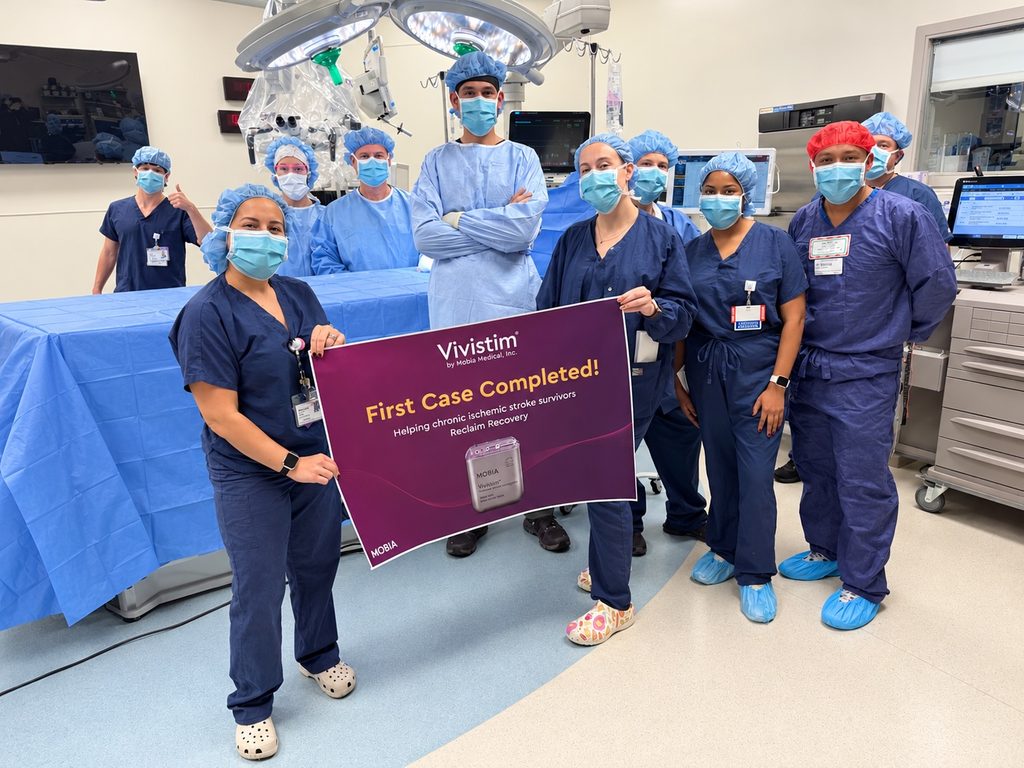
The Riverhead hospital, which unveiled a new stroke center in March, recently performed its first procedure to implant Vivistim, an FDA-approved device that sends mild electrical pulses to a nerve in the neck during rehabilitation exercises.
The stimulation is designed to help the brain relearn movements and make therapy more effective.
“Many stroke survivors have been told they’ve gone as far as they can with their arm or hand recovery, sometimes years after the stroke,” said neurosurgeon Dr. Martin Merenzon, who performed the surgery. “Vivistim doesn’t do the work for them, but it helps the brain respond to therapy in a way it couldn’t before.
“This can result in regaining essential daily functions, such as buttoning a shirt, holding a cup, or lifting a grandchild.”
The implant procedure is performed under general anesthesia and typically takes 90 minutes. A thin wire is placed around the vagus nerve in the neck and connected to a small stimulator implanted in the chest, Dr. Merenzon explained.
At typical settings, the battery is expected to last about five years, according to the manufacturer’s patient manual. The implanted stimulator can be replaced in another procedure if the patient continues to benefit.
A clinical trial reviewed by the FDA found that patients receiving nerve stimulation paired with rehabilitation showed two to three times the improvement in arm and hand function seen with rehabilitation alone.
“For a lot of stroke survivors, the hardest part of recovery comes after they go home, when progress with an arm or hand starts to plateau,” PBMC President Amy Loeb said. “Vivistim gives those patients a real chance to keep improving, and now they can get it right here in Riverhead, close to their families and the care team that knows them.”
PBMC is now seeking candidates with lasting, moderate to severe arm impairment following an ischemic stroke — a stroke caused by blocked blood flow to the brain — who may benefit from the therapy.
Patients interested in learning whether Vivistim may be right for them, and physicians who would like to refer a patient, can contact Dr. Merenzon’s office at 631-824-1360.