Hubbard, Halpin clash over taxes, budget at only joint forum
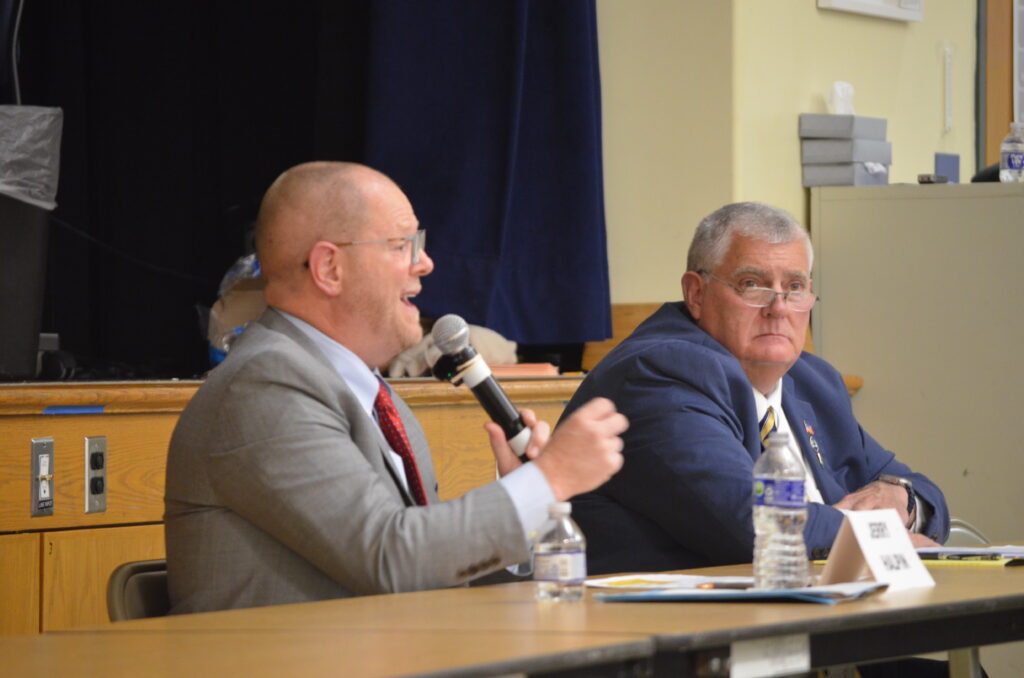
Riverhead Town Supervisor Tim Hubbard and challenger Jerry Halpin squared off over taxes and budget priorities as all six candidates for town offices faced off in their only joint forum before Election Day.
Mr. Hubbard, a Republican, defended piercing the state’s 2% property tax cap for the fourth straight year, calling it “antiquated” during the showdown on Thursday, Oct. 16.
Mr. Halpin, an independent running on the Democratic line, blamed the incumbent’s administration for leaving residents “out to dry” with rising costs.
The exchange highlighted the central issue dividing candidates as voters prepare to choose a supervisor and two Town Board members Nov. 4.
Residents packed Riley Avenue Elementary School in Calverton for the forum, hosted by The Greater Calverton and Wading River civic associations – the only faceoff involving all the candidates after the Republican slate skipped two previous events hosted by civic groups they claimed were biased.
Riverhead’s five-member Town Board includes two other Republicans, Joann Waski and Denise Merrifield, who are not up for reelection this year.
Toqui Terchun and Sid Bail acted as moderators on topics that included taxes, land preservation, agriculture, development, affordable housing and environmental issues.
Supervisor battle
On the main card, Mr. Hubbard pushed back over criticism of his tentative 2026 budget, which exceeds the state-mandated tax cap by more than five percentage points.
The supervisor noted the pension system, health insurance, salaries and contracts alone pierced the tax cap – forcing him to cut nearly $600,000 in equipment from the budget to minimize increases.
“Costs have gone through the roof — it’s out of our control,” he said. “Do yourself a favor and look at the budget online. … Do your homework — be smart, educate yourself.”
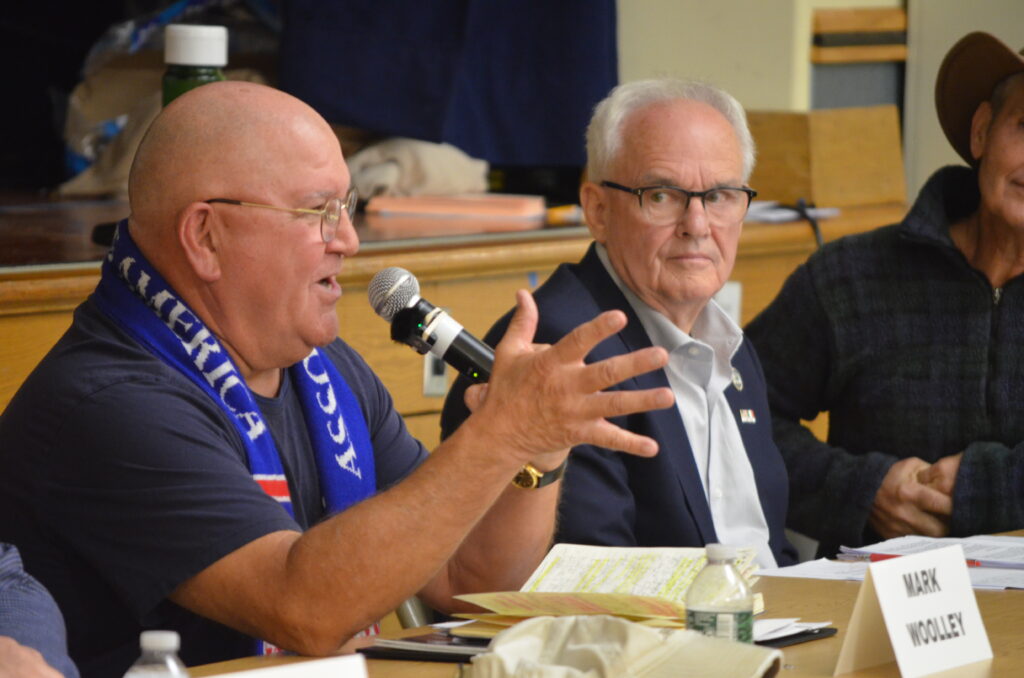
Mr. Halpin, a local pastor, countered that the last two tax cap increases motivated his supervisor run, arguing the board hasn’t done enough to generate revenue and reduce taxpayer burden.
“We’re always having these constant problems, and the entire time, [the residents] have been left out to dry,” Mr. Halpin said. “The reason the tax cap is there is to protect us. We need to have somebody in office that is making sure that those protections are done.”
The two also clashed over Riverhead’s Industrial Development Agency. Mr. Hubbard defended the IDA’s record, noting that 21 properties receiving benefits now generate $2.2 million in taxes, up from $720,000, while creating 1,362 jobs compared to just 39 before 2023.
Mr. Hubbard called the battle between development and preservation a “double-edged sword.” He suggested agritourism projects could be a solution to maintaining this balance, with 70% of land preserved and 30% developed.
“Every piece of land that you preserve, you’ve lost that tax base. We have preserved over 17,000 acres in the Town of Riverhead, between open space and farmland preservation.” Mr. Hubbard said. “You have to have development, but you have to preserve land.”
Mr. Halpin called for stricter IDA oversight to ensure benefits target truly blighted areas instead of “continual renewals that are hurting our schools.”
Council races
The undercard battle featured incumbent councilmen Bob Kern and Ken Rothwell taking on Dems Mark Woolley, who is also Mr. Hubbard’s brother-in-law, and former FDNY firefighter Kevin Shea.
Mr. Woolley threw the first punch, referencing his opponents’ previous forum absences.
“I’m glad that the gentlemen to the left and to the right of me are here today, their political bosses allowed them to be here today,” he said.
Mr. Kern and Mr. Rothwell defended their economic development record, highlighting the town’s Emerging Technology Committee partnership with Brookhaven National Laboratory and Stony Brook University.
Mr. Rothwell said the town has preserved over 400 acres through its Transfer of Development Rights program, which allows developers to buy rights from farmers.
“If no one buys the TDRs, that becomes problematic,” he said. “That’s where we need smart development in areas like EPCAL.”
Both Republicans defended the controversial Town Square project, emphasizing flood mitigation benefits and arguing that Riverhead needs the planned hotel as tourism grows.
Mr. Woolley also blamed rising taxes and fees for motivating his campaign, calling the TDR program “basically broken” and opposing agritourism developments that pressure farmers.
Mr. Shea, who works with Cornell Cooperative Extension, backed preserving farmland while questioning high-rise buildings in the Town Square plan.
“We’ve been farmland for a long time — when we do revitalization, we can’t forget that rural character,” Mr. Shea said.