SCWA pipeline project moves to environmental review phase
The Suffolk County Water Authority pushed forward its controversial North Fork pipeline, despite a standoff with Riverhead over whether the regional authority can bypass local zoning control.
In a 67-page Final Scope released Monday, Dec. 1, SCWA outlined the environmental review for the two-phase, 12-mile project — which is estimated to cost $35 million for the first phase alone. The document sets the stage for a Draft Environmental Impact Statement expected by late January, SCWA communications director Daniel Dubois told Riverhead News Review.
“Following its release, we will hold public hearings to take comments,” Mr. Dubois said. “Once that process is complete, the SCWA Board will make a final determination on the project’s environmental impact.”
The move comes two months after Riverhead’s five-member Town Board voted unanimously that SCWA must comply with local land-use regulations for the 8.15-mile pipeline that would run through town but provide no water service to Riverhead residents.
SCWA conducted its own legal review, known as a Monroe Balancing Test, and reached the opposite conclusion, claiming immunity as a state-created authority.
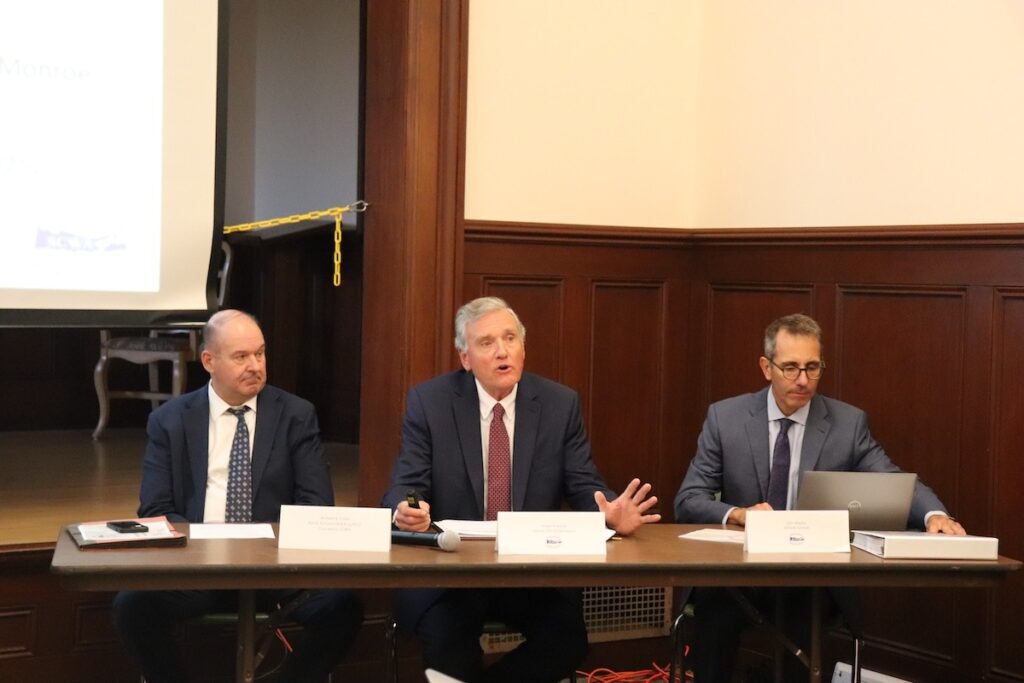
Now Southold wants its own review of whether the pipeline project should be exempt from local regulations. During discussion at the Town Board’s Tuesday, Dec. 2, work session, officials said they would conduct a Monroe Balancing Test — a legal standard that weighs whether regional projects can override local control.
“I think it’s very important that we have that here,” Southold Councilwoman Jill Doherty said.
The town is determining when it will hold the Monroe Balancing Test, which would allow local experts and residents to voice their concerns about the project.
The pipeline is intended to bolster drinking water supplies for Southold, which the Final Scope says faces a “limited supply of potable drinking water” and local water sources “subject to saltwater intrusion.”
If approved following environmental review, construction could take four years, with the pipeline expected to be operational by 2030.
In October, the feud over the pipeline escalated when SCWA attorney Richard Finkel argued the not-for-profit agency should be immune from local regulation because “if the authority was bound by local land-use regulations in each [municipality it serves], it would be subject to the regulations of all 43 municipalities in which it operates.”
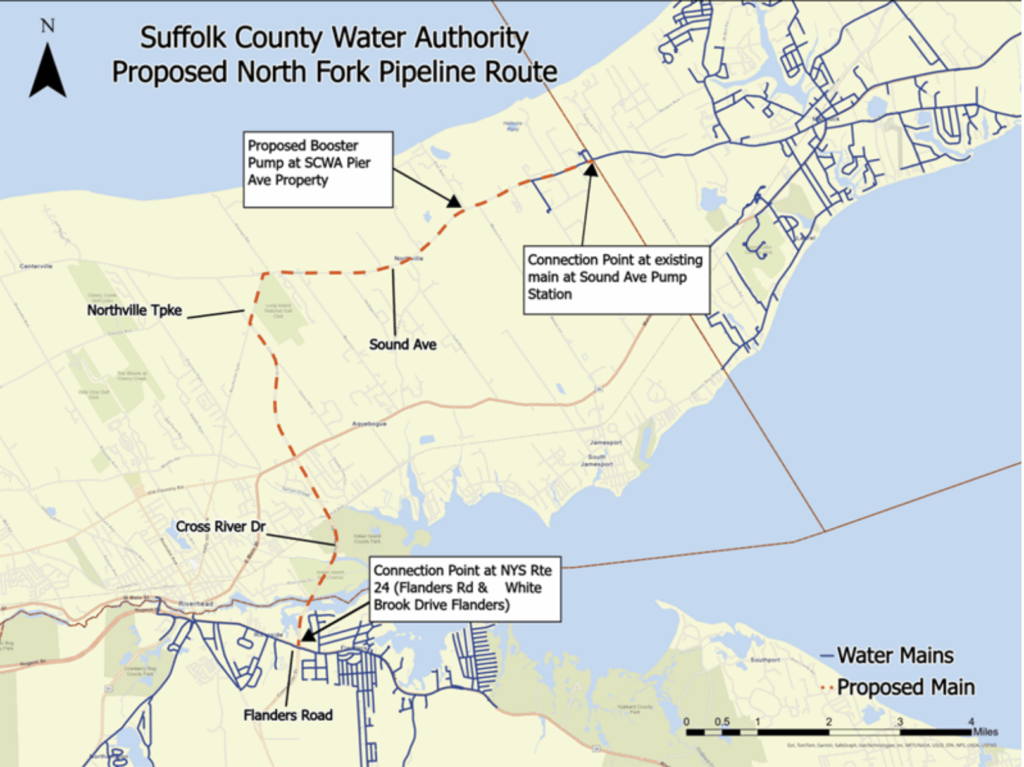
Riverhead officials countered that the town would shoulder construction impacts — particularly along Sound Avenue, a major agricultural and tourism corridor. The pipeline would carry water from Flanders wells through Riverhead to Southold customers.
“You design it, you approve it, and you do it and step all over Riverhead while doing it, with no benefit to us whatsoever,” Supervisor Tim Hubbard said at an October hearing.
Riverhead Town Attorney Erik Howard said he was reviewing the pipeline Final Scope and would respond after completing his analysis when contacted by Riverhead News Review.
In October, Mr. Howard argued that Riverhead should have the authority to conduct the Monroe Balancing Test, saying the host community — not the entity seeking immunity — should determine whether local regulations apply.
Environmental planning firm Nelson Pope Voorhis prepared the Final Scope based on comments from three public scoping sessions held in June and on written comments submitted through August. The firm will now conduct the environmental analysis.
Pipeline construction plans
Phase one would run 8.15 miles from Riverside and Flanders in Southampton to the Riverhead-Southold town line in Jamesport and Laurel, supplying up to 6,000 gallons per minute to approximately 9,500 Southold customers, according to SCWA documents.
No new wells would be drilled. SCWA would draw from excess capacity in its South Shore Low Zone, according to the Final Scope. A booster station would be built on SCWA property on Pier Avenue in the Jamesport area.
The pipeline would be installed using two methods: approximately 0.63 miles by directional drilling beneath the Peconic River, the Long Island Rail Road and Main Road, with the remaining 7.52 miles installed by open-cut trenching.
The daily installation rate for trenched sections is estimated to be 300 to 400 feet per day, and up to 600 feet per day or more on long stretches within grassed shoulder areas such as along sections of Cross River Drive.
An alternate route could run north from the Flanders Road and Cross Island Drive intersection, then north to the Cross River Drive and Main Road intersection, and east along Main Road to the Franklinville Road intersection in Laurel, connecting to an existing SCWA main.
Phase two would extend existing water infrastructure 3.79 miles from East Marion to Orient. SCWA says it is not currently planning the extension and included it only to avoid “segmentation” violations under state law. No cost estimate for the second phase was available.
Southold Councilman Brian Mealy said at the Dec. 2 meeting that data from an ongoing U.S. Geological Survey study on the aquifer should be included in the pipeline environmental review.
In October, Southold Councilman Greg Doroski questioned whether SCWA was overstating the water crisis. Mr. Doroski — who won election to the county Legislature last month and will leave the Town Board in January — asked whether “the urgency created by the SCWA in moving this proposal forward is artificially created.”
Environmental review process
Throughout the environmental review, consultants will evaluate potential impacts, including land disturbance from construction, coastal habitat and wildlife effects, surface water quality, groundwater supply capacity, traffic safety, and proximity to schools and hospitals.
The Final Scope notes that “the Towns of Riverhead and Southold have raised concerns that the proposed action may induce secondary development or will be growth inducing.”
Impacts such as potential property value increases near public water are considered “out of scope for an environmental review,” according to the State Environmental Quality Review (SEQR) handbook.
An analysis of how the project would affect future development at EPCAL in Calverton was also determined to be outside the review scope and is “not expected to be significantly or adversely impacted.”
SCWA and other agencies with permitting authority will be consulted on mitigation options, the Final Scope states.
The draft impact statement, beyond the review of the proposed project, potential impacts and alternative routes, will assist in SCWA’s “final determination of impact and the appropriateness of moving forward with the project.”
The Final Scope determined that water conservation programs alone, like Southold’s irrigation legislation passed in July modeled after an SCWA program, would not achieve the project’s goals of bringing potable water to the North Fork.