Michael Lewis chronicles 40 years of World Cup coverage in new book

Acclaimed soccer writer Michael Lewis has watched the World Cup through a rooftop antenna, covered Diego Maradona’s most famous game from the press box and interviewed Pelé one-on-one.
When the FIFA tournament kicks off June 11, he’ll be back at it again — traveling with the U.S. men’s national team as the World Cup returns to North America.
For Lewis — a longtime Suffolk Times sportswriter and one of the country’s most prolific soccer journalists — the timing felt right to look backward as the world’s biggest tournament arrives here again. His self-published book, “Around the World Cup in 40 Years,” was released on Amazon this month.
Edited by his wife, Joy Rubenstein, his latest book is not a straight preview of the 2026 World Cup. Instead, it’s filled with tales from his four decades around the tournament.
“There are so many World Cup books out there,” Mr. Lewis told The Suffolk Times before departing for Los Angeles for the U.S. team’s opening match against Paraguay on Friday. “I wanted to do something different with a personal touch.”
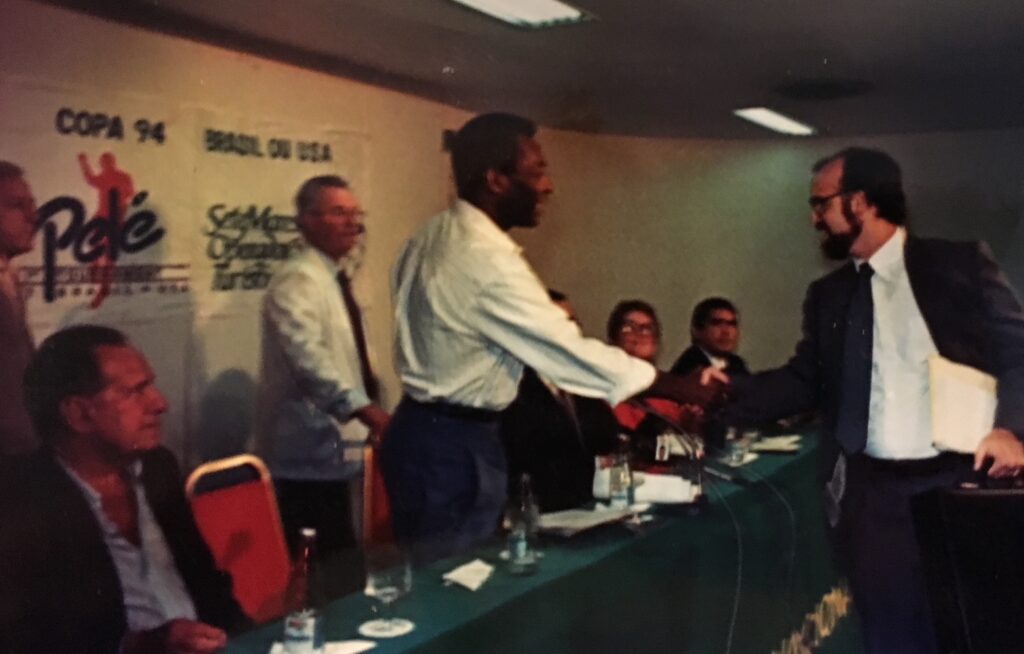
That personal touch comes from a career that has stretched from local fields to the sport’s biggest stages. Mr. Lewis has covered soccer for more than 50 years, including 13 World Cups, seven Olympic Games and nearly every MLS Cup.
He spent 22 years at the New York Daily News, launched several soccer websites and has written for outlets including Soccer America, The Guardian, The Athletic, ESPN, CBS, World Soccer, FourFourTwo, Forbes and The Washington Post.
He has also been a familiar presence on North Fork sidelines. For the last 15 years, Mr. Lewis has covered high school sports for The Suffolk Times, often with the same notebook-in-hand approach he has brought to World Cups around the globe. United Soccer Coaches recently named him the sixth recipient of the Clay Berling Media Career of Excellence Award, one of soccer journalism’s top career honors.
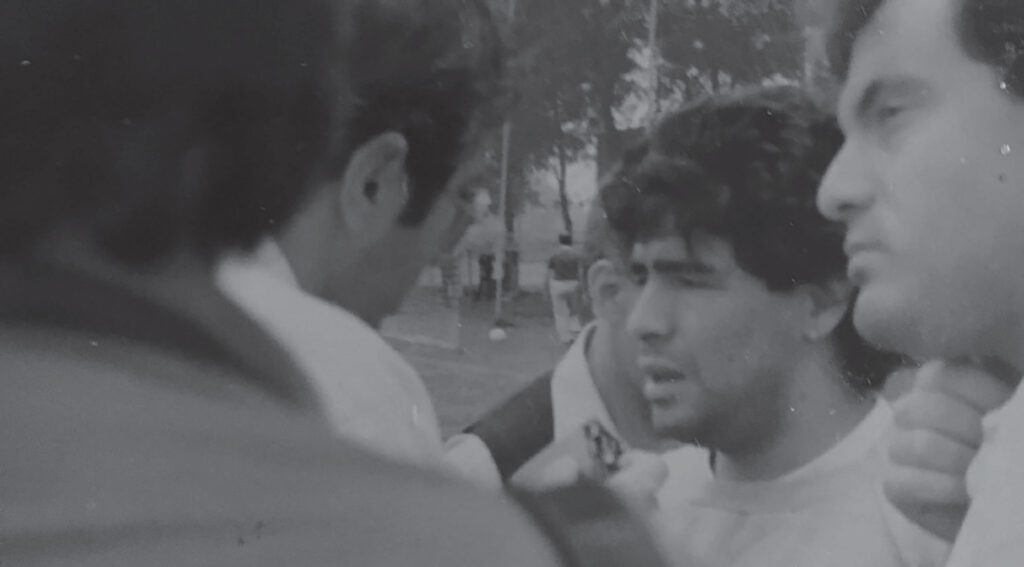
Mr. Lewis’ infatuation with the “beautiful game” stretches back to the sport’s nascent days in the U.S., when he covered the ill-fated North American Soccer League.
Long before wall-to-wall network coverage, Mr. Lewis watched the 1978 World Cup final at the War Memorial in Rochester, N.Y., on a giant screen with thousands of fans. Four years later, living in Brockport, N.Y., he had no cable television. So he pointed a rooftop antenna across Lake Ontario toward Canada to catch games from the 1982 World Cup in Spain.
“I feel like 1978 and 1982 were the stone ages of American soccer when it came to the World Cup,” he said. “Today, I feel we are in the space age on steroids.”
As fandom in the U.S. slowly blossomed, his own World Cup memories stretched across eras and continents.
He was there in Mexico in 1986 when Maradona scored the “Hand of God” goal against England in Argentina’s 2-1 win. He later watched the Americans make it out of group play when the U.S. hosted the spectacle for the first time in 1994.
But when asked what moments remain seared in his memory, Mr. Lewis went immediately to another American highlight.
Landon Donovan. Algeria. 2010.
The U.S. needed a win, not a draw, to advance to the Round of 16. The play began with goalkeeper Tim Howard — who wrote the foreword for the book — saving a header by Rafik Saifi. Howard threw the ball to Donovan, who raced up the right side and found Jozy Altidore, who touched it to Clint Dempsey. Dempsey’s shot was stopped by Algerian goalkeeper Rais M’Bolhi, but the rebound fell to Donovan, who finished from seven yards.
“The scoring sequence took 12 seconds,” Lewis recalled. “Then pandemonium.”
That is the kind of moment Lewis has spent a career chasing — the small, sudden turn that becomes part of a country’s soccer memory.
The book is full of those turns, some famous and some wonderfully strange. Lewis writes about the dog that found the stolen World Cup trophy in 1966, the media crush that nearly toppled onto David Beckham in Japan, Marvelous Marvin Hagler walking into the U.S. locker room at the 1990 World Cup and the pressure that comes with coaching Brazil, where even an undefeated team can still be treated like a national emergency.
There are larger-than-life figures in the book, too. Pelé. Johan Cruyff. Maradona. Lionel Messi. Lewis does not pretend to be neutral when asked to pick a favorite.
“Pelé,” he said.
The reason is partly soccer history and partly personal history. When Lewis began covering the sport, the Brazilian legend was the face of the game. Lewis covered Pelé’s first goal in the NASL for the fabled New York Cosmos. As a 23-year-old reporter, he also interviewed him one-on-one. Over the years, they developed a rapport, with Pelé once joining him for a roundtable lunch with other writers.
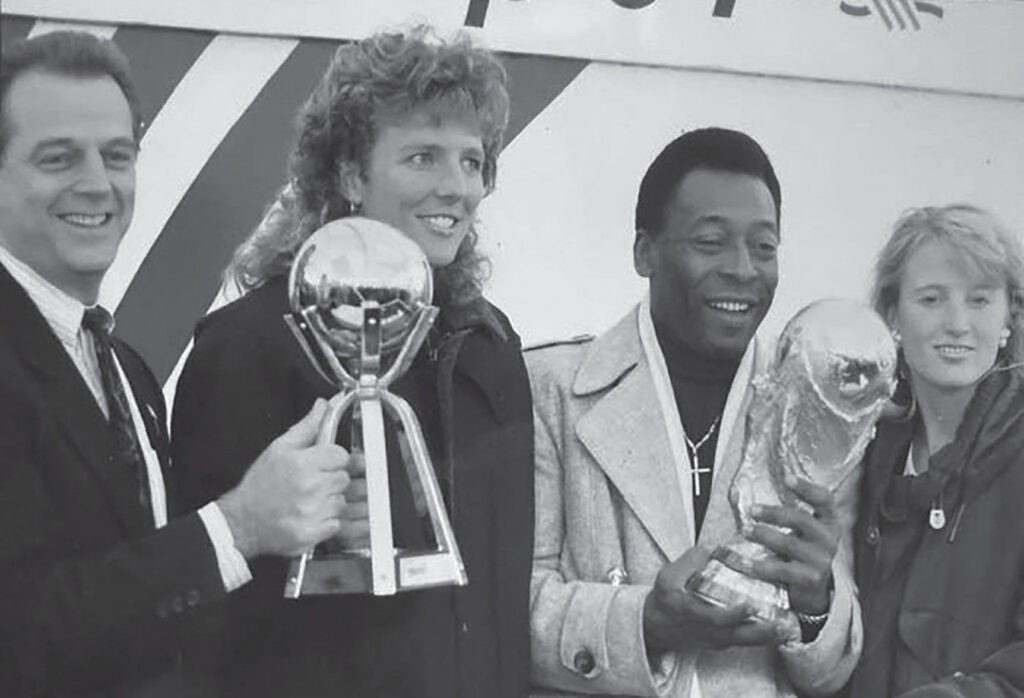
“I have never seen a sports superstar who was more patient with fans,” Lewis said. “Pelé was willing to talk to fans and sign autographs for as long as possible. His ‘people’ had to pull him away or he would be there all day.”
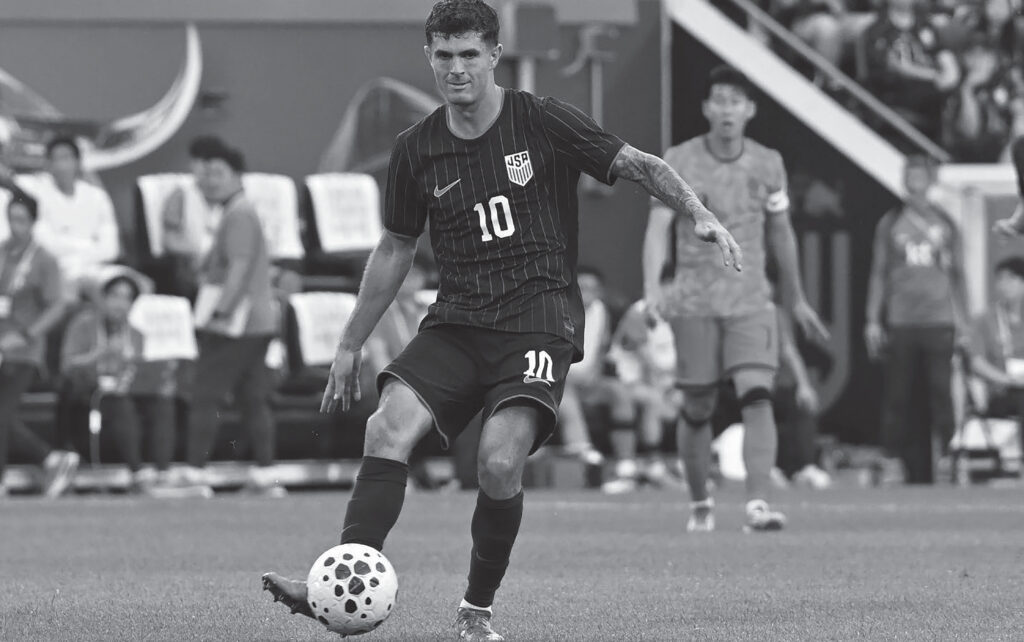
The book arrives at a moment when American soccer, led by Christian Pulisic, is again trying to measure itself.
The success of the 1994 World Cup helped launch Major League Soccer, which debuted two years later. Lewis has seen the sport climb from the collapse of the old North American Soccer League after the 1984 season to the modern landscape of MLS, women’s soccer, youth soccer, streaming audiences and American players competing abroad.
“It has been night and day compared to years ago,” he said.
That growth, he said, began in some ways with goalkeepers. The U.S. produced Tony Meola, Kasey Keller, Brad Friedel and Howard, then slowly began developing more field players skilled enough to compete in Europe and Mexico.
“We still need a lot more depth at many positions,” Lewis said, “but it’s a start.”
The question, one Lewis raises in the book, is whether the United States can truly be considered a soccer nation when football, basketball and baseball still compete for the top athletes.
The 2026 World Cup will test that question in ways the country has never seen. For the first time, the tournament will include 48 teams, 104 games and three host countries: the United States, Mexico and Canada. The final will be played at MetLife Stadium in East Rutherford, N.J., close enough for Long Islanders to think of the world’s biggest game as a regional event, even if many never make it inside the stadium.
Lewis is not entirely sold on the expanded format.
“I fear it will dilute it,” he said. “More is not always better.”
The tournament has grown from a month to 38 days. The group stage will feature four games a day instead of three. The knockout round will expand from 16 teams to 32.
For FIFA, the sport’s organizing body, Lewis said the motivation is clear.
“I can describe in one word: Greed,” he said.
That criticism is even sharper when it comes to ticket prices. Lewis said a World Cup match is unlike anything else in sports, no matter who is playing. The atmosphere, he said, is electric.
But if ordinary fans are priced out, something essential is lost.
“When you seemingly have to take out a second mortgage to pay for tickets, it dampens people’s enthusiasm,” he said. “Many fans cannot afford to attend matches.”
Still, Lewis does not dismiss what 2026 could mean.
He believes the tournament will further solidify soccer’s place in the United States.
“Soccer has come a long way,” he said. “While we want to see things done immediately, one of my favorite phrases is: We want revolution, but in reality, we have evolution.”