$3M state grant to help North Fork oyster growers with infrastructure improvements
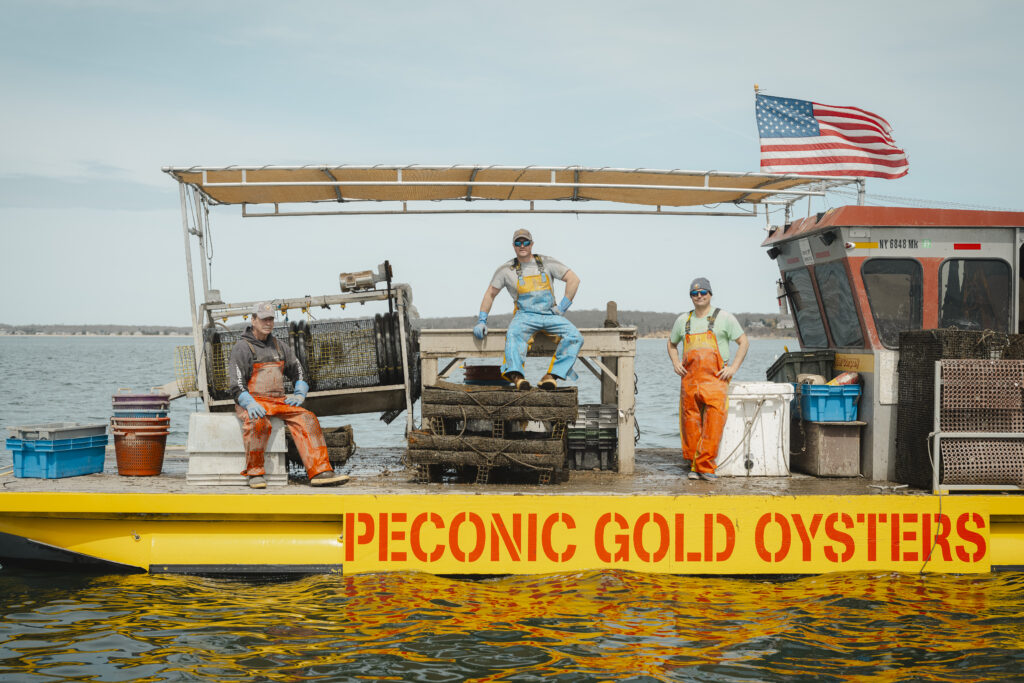
Oyster growers on the North Fork are getting a much-needed boost.
The state has awarded $3 million to 14 small businesses through the second round of the Long Island Aquaculture Infrastructure Grant Program, Gov. Kathy Hochul announced Saturday.
Locally, those receiving funds include Peconic Gold Oysters in Cutchogue, Oysterponds Shellfish in Orient, North Fork Big Oyster Corp. and Little Ram Oyster Company in Southold.
This relief comes at a critical time, following the devastating aftermath of what oyster farmers are calling “The Big Freeze.” Prolonged icy waters, blizzard conditions and freezing temperatures this past winter caused significant damage to gear and equipment and threatened inventories.
The Long Island Oyster Growers Association provided data to the governor’s office and other state agencies projecting an average crop loss of 33% for oyster farmers, as well as an estimated $2.4 million in gear repair and replacement costs.
“These $3 million in Round 2 infrastructure grants, part of the total $4.2 million committed, will help family farms like mine, along with 13 other operations, upgrade docks, cooled storage facilities, and equipment to scale up Long Island’s oyster and seaweed production,” LIOGA president Eric Koepele said in an email to The Suffolk Times. “Grants like these address the capital challenges that bootstrap operations face and help us build critical infrastructure.”
The aquaculture industry makes up 25% of farms on Long Island, with 155 total operations in Suffolk County and 15 in Nassau County, according to the most recent USDA Census of Agriculture. Those operations generated over $14.5 million in sales in 2022.
The recently awarded funding will help support infrastructure upgrades, streamline operations and increase production, according to state officials.
“These efforts will help our farmers get back on their feet and continue building a stronger, more sustainable aquaculture industry on Long Island,” Long Island Farm Bureau executive director Bill Zalakar said in a statement.
The $3 million grant was the second part of the the state’s Blue Food Transformation initiative. The first round awarded $1.2 million in equipment grants to 17 businesses on Long Island last October to upgrade operations and boost production.
This announcement comes almost a month after the governor responded to sever economic losses by requesting a Secretarial Disaster Designation for Suffolk County from the U.S. Department of Agriculture. If approved, the designation would allow access to low-interest emergency loans to aid recovery.
Last month, New York State Department of Agriculture and Markets commissioner Richard Ball and Amanda Lefton, commissioner of the Department of Environmental Conservation, joined other state and local representatives to visit to multiple aquaculture farms on the North Fork to assess the devastation firsthand.
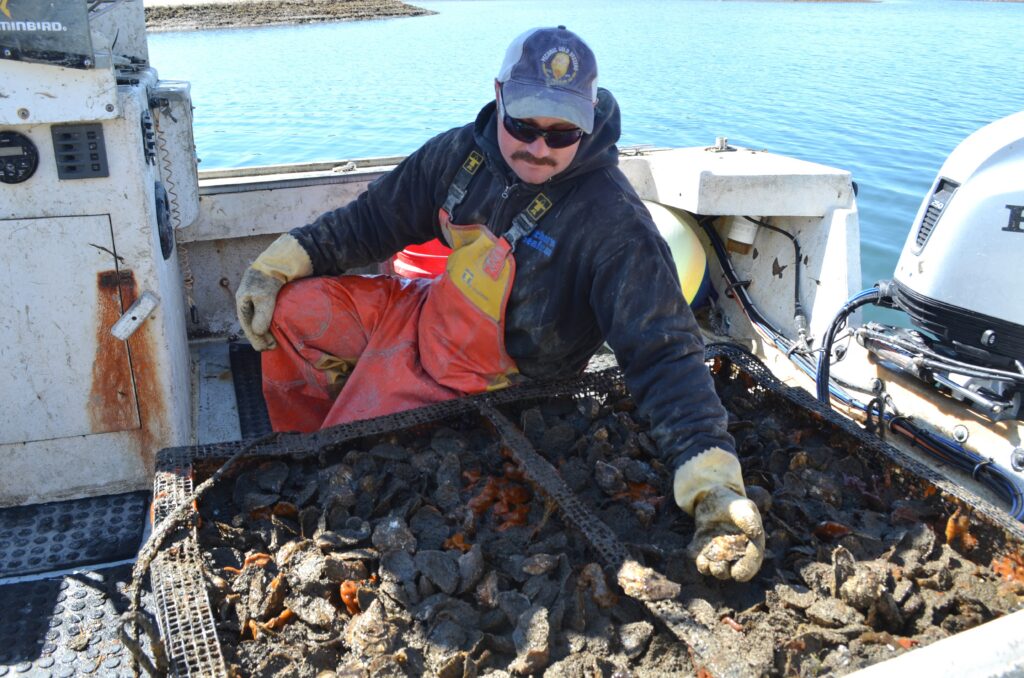
Matt Ketcham of Peconic Gold Oysters started his business in 2013 after beginning his career as a commercial fisherman. When state officials visited his operation in early April, he explained that, to keep harvesting after the blizzard, he and his crew had to shovel the boat ramp by hand and use a sledgehammer to break the ice.
He sank his oyster cages in the bay to shield them from ice, removed all his buoys and even took his boat out of the water to protect it. Still, he continued harvesting every week or so, even with ice scraping the bottom of the bay at 10 to 12 feet.
Although he was one of the few businesses that got lucky, the harsh winter still damaged his equipment and gear.
“The cages are just mangled. A lot of them are simply pressed into the mud … big rectangle messes of wire,” Mr. Ketcham told the commissioners during their visit on April 8. “I anticipate that we will be able to harvest and continue to provide oysters for our customers, like a normal year, but this year was supposed to be the breakout year.”
In this second round of funding, Peconic Gold Oysters will receive more than $116,000 to invest in an industrial-sized ice machine and the installation of screw anchors on the farm. The funding is crucial for the small operation to grow, Kelsey Ketcham said Monday.
“Our operation has needed an ice machine for years, but we have never been able to justify laying out that amount of cash,” Ms. Ketcham wrote in an email. “With this funding, we can invest in this asset, which will save us up to two hours a day and $600 a week in the height of growing season.”
Screw anchors are essential to oyster farming and will help Peconic Gold Oysters make the best use of its two 10-acre leases in Cutchogue Harbor to lay out floating and off-bottom gear, Ms. Ketcham said.
Overall, the upgrades will allow the family-owned company to grow more oysters, hire more employees and lower its variable costs.
“Peconic Gold Oysters Inc. remains 100% self-funded as we reinvest in our business, year after year, without any partners or outside investors,” Ms. Ketcham wrote to The Suffolk Times. “This grant makes a tremendous difference to expand and grow our family-run business.”
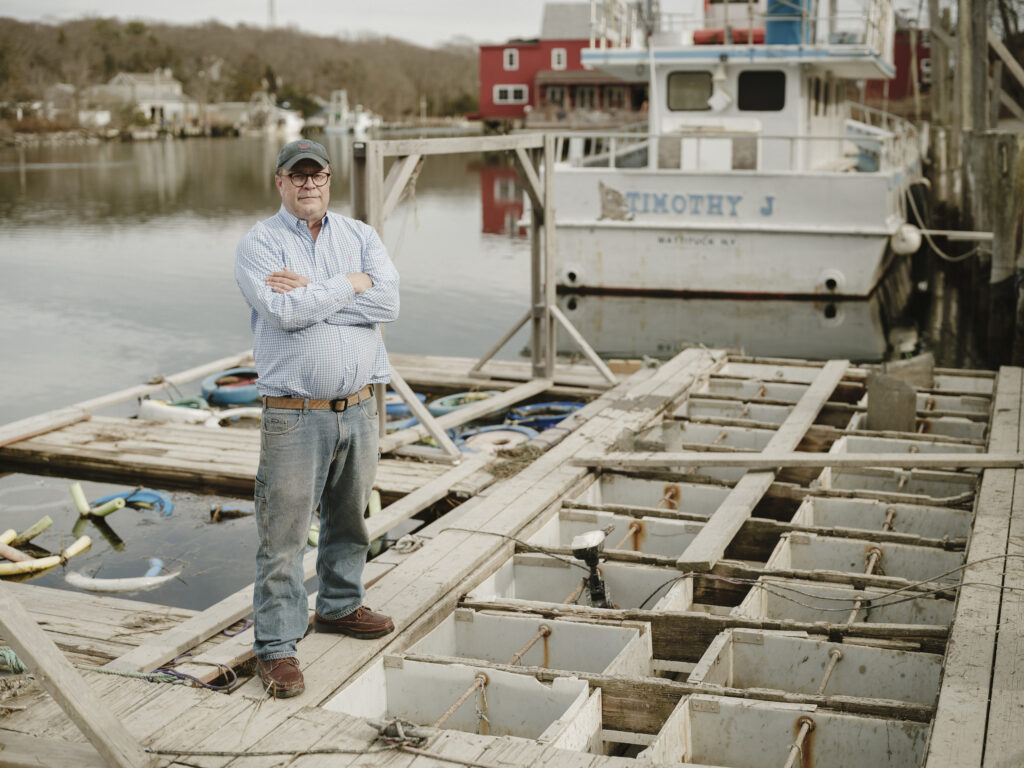
Little Ram Oyster Co. received $229,379 out of the $3 million state grant. For the women-owned oyster company, this money will help in developing new on-land shellfish processing infrastructure, designed to support long-term growth and expanded production capacity.
“This funding gives us the ability to build the kind of waterfront infrastructure Long Island aquaculture has needed for a long time,” said Stefanie Bassett, co-owner of Little Ram Oyster Co. “After the winter our industry just endured, this investment is not just meaningful, it is stabilizing.”
Co-owner Elizabeth Peeples said this funding announcement is New York State “sending a clear message that aquaculture matters” on the North Fork and throughout Long Island.
That kind of support changes what small waterfront businesses are able to build for the future,” said Ms. Peeples. “We believe aquaculture can be one of the most powerful intersections of food production, environmental stewardship, and working waterfront economies on Long Island.”
Staying afloat
Although Peeko Oysters is not included on this list, owner Peter Stein spoke recently with The Suffolk Times about the requested disaster designation. He also discussed how his business suffered heavy financial losses and hard hits to their market-ready oyster crop.
“That is the name of the game that we want to be in, but while we are replenishing inventory and rebuilding a farm, we are trying to lean into other revenue streams to try to make ends meet,” Mr. Stein said.
State officials visited Peeko’s New Suffolk operation last month and is aware of the governor’s push of the secretarial disaster designation. He described heavy financial losses and damage to market-ready oyster crops.
Mr. Stein also praised community support during the crisis, recalling efforts by residents to notify farmers of washed-up gear and help recover it.
Going forward, he and others in the aquaculture industry are discussing mitigation measures and how to better prepare for future disasters.
“Without even people being asked to help, people are helping in small ways and large,” the fisherman said. “Obviously, we never intended for any of this to happen. We are very much thinking daily about how to prevent it from ever happening again, should the extreme weather come through again.”
Here is the full list of the second-round grant recipients:
- WROC LLC
- Hampton Oyster Company
- Davy Jones Landing
- Oysterponds Shellfish LLC
- Lucky 13 Oysters
- East Hampton Oyster Company
- Scrimshaw Enterprises LLC
- Hart Lobster, Co.
- Thatch Island
- Peconic Gold Oysters Inc.
- North Fork Big Oyster Corp
- Jeffrey M. Kraus
- Dune Fishery LLC
- Cornelius & Little Ram Oyster Company LLC