How local schools are incorporating AI into the classroom

Artificial intelligence in schools is no longer a question of if — it’s a question of how. North Fork districts are working to prepare students to use it without letting it replace the skills they’re in school to build.
AI can write a student’s essay, solve their math problems and answer their teacher’s questions. For educators, that means guiding students in how to use it — and staying vigilant about how they do.
“Our approach emphasizes balance, using technology to enhance learning while ensuring students remain the primary thinkers and creators of their work,” Greenport Superintendent Beth Doyle said.
That challenge is playing out nationally, too. A report released in January by the Brookings Institution’s Center for Universal Education found that AI’s risks currently overshadow its benefits — not because the benefits aren’t real, but because unchecked use erodes the foundational skills students need to take advantage of them.
The 219-page report — drawing on a yearlong global study of 505 students, teachers, parents, education leaders, and technologists across 50 countries — organized its recommendations around three pillars: prosper, prepare and protect.
Superintendents in the region say they share that concern and are building guardrails to address it.
Protecting the thinker
“Our teachers are the first line in the district of having their antenna up to make sure that AI isn’t becoming the primary tool that students use along the way,” said Shoreham-Wading River Superintendent Gerard Poole. “We have to work to protect our students. I think it’s really nuanced work, making kids understand that the thinking skills required in college and careers are critical for them for their lives, so that they understand why they can’t over-rely on artificial intelligence.”
Over-reliance is one of the main risks outlined in the Brookings report. Without safety guardrails and boundaries, the report states that AI can encourage students to delegate complex thinking, which in turn erodes critical thinking, blurs fact from falsehood and diminishes communication. The report also warns that AI can exploit emotional vulnerabilities, which could result in unhealthy digital attachments, and poses serious privacy and security risks.
The study acknowledges that AI brings some positives as well, such as bridging gaps between students from different educational backgrounds.
Mr. Poole said the district formed a stakeholder group in 2023 to review and create an artificial intelligence position statement, which he calls the district’s “guiding document.” It states that acceptable uses include tailoring learning materials and experiences to students’ individual needs, assisting faculty with lesson plans, supporting research and providing feedback on work. Unacceptable uses include inputting personal information, creating inappropriate content or generating evaluative decisions and answers without verification.
The district and the stakeholder group, along with some students, will continue to have meetings to see how implementation has gone so far and to make future plans.
“It’s changing quickly, but we are really thinking about our students. We’re really here for our students’ future,” said Mr. Poole. “It’s important work, and I think it’s going to be a lot of hard, important work for the next decade for educators.”
Finding the balance
Ms. Doyle said Greenport is using AI in a limited and structured way. Teachers determine when it’s appropriate to use, and sometimes use it to support brainstorming, revision or research.
The implementation has been an ongoing learning curve, Ms. Doyle said, and the primary challenge has been helping students understand what the appropriate uses are. Along those lines, she said the primary concern is preserving authentic student learning.
“We want students to develop strong critical thinking, reading, writing and problem-solving skills,” she said. “Overreliance on AI can undermine those foundational skills. Our approach emphasizes balance, using technology to enhance learning while ensuring students remain the primary thinkers and creators of their work.”
Ms. Doyle said feedback from community members has been mixed. Many recognize that AI is a powerful tool that will play a role in students’ future academic and professional lives. At the same time, there are understandable concerns about overuse and academic integrity.
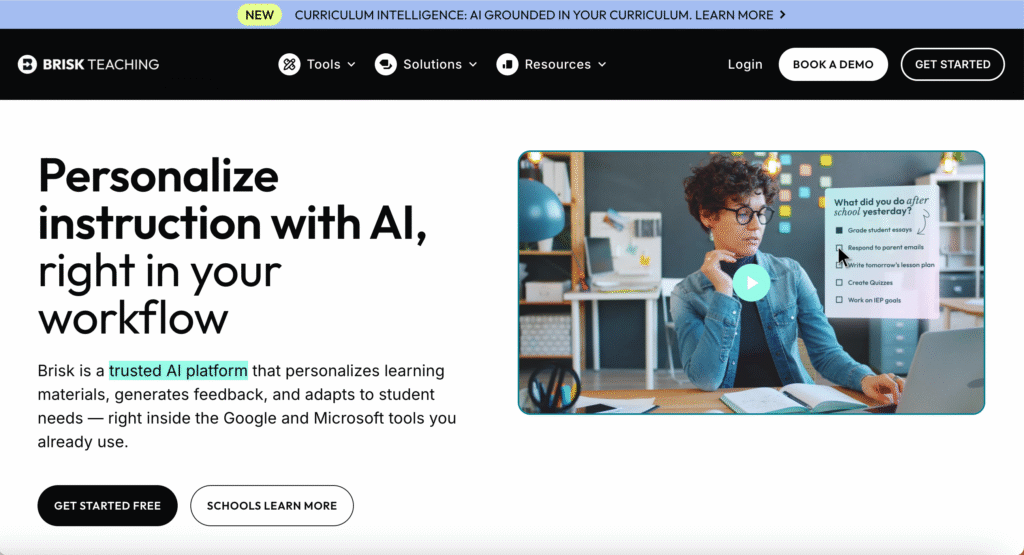
The district has provided professional development focused on educator-specific AI platforms, such as Brisk. Ms. Doyle said teachers have received training on responsible integration, including lesson design, resource development, assessment creation and interactive instructional tools.
Greenport has also established a Technology Committee that will be developing a clear vision for responsible use. The committee plans to create guidance documents to serve as a handbook for staff and students, outlining expectations, best practices and guardrails for implementation in the future.
“AI technology is evolving rapidly. We are monitoring developments carefully and evaluating potential instructional and operational benefits,” said Ms. Doyle. “Future applications may include differentiated learning supports, accessibility tools, and instructional planning enhancements. Any expansion would be deliberate and aligned with district priorities.”
A tool, not a shortcut
Southold is teaching its students to view AI the same way they view the internet: as a valuable tool. Superintendent Anthony Mauro said there’s “nothing wrong with using AI for the structure of something,” but having it complete work, or using it to do things such as sending emails, could be irresponsible.
The district also has trainers come in to model the use of AI in the classroom for its teachers.
Mr. Mauro said he feels there are “tremendous benefits” to AI. He said the district is currently in the process of teaching students how to use the software appropriately and that each teacher uses it as much as they are comfortable, some more than others. There is no specific amount each teacher has to use it in their classrooms.
“Our kids are much better served by teaching them what AI is, what the pluses and the minuses are, and how to use it,” he said. “There are a lot of really good ways to use it. We need to teach kids to utilize it as a resource, responsibly, and to understand, not only its pluses, but its minuses.”
Proceeding with caution
Riverhead has been more deliberate in its pace. Superintendent Robert Hagan said the district hasn’t done any advanced training on it, but there are certain uses allowed for teachers and staff.
Teachers have been trained to use Brisk, an AI platform that personalizes learning materials, generates feedback, and adapts to student needs, and can be utilized right inside Google Workspace.
Mr. Hagan said teachers are “the most important aspect of any instruction we do,” and that they’re focused on learning how to properly use this “tool.”
“It really enhances their lesson planning,” said Laura Arcuri, the district’s assistant superintendent for curriculum and instruction. “If it’s going to help and enhance our teaching practices, we’ll be all for that, along with teaching our students how to use it responsibly, like any technology.”
Right now, the district is focused on learning more about AI, the different platforms and how it can enhance learning before fully going all in.
“We want to make sure that whatever we do is within the top lines of safety,” Mr. Hagan said. “We’ve been in the classrooms, and they’re doing what they do, which is instructing. It’s not one of those things where students are plugged into an AI and doing those kinds of things there; it looks very similar to when we all went to school, as far as the instructor. We’re really trying to emphasize the proper utilization of different tools and what to look out for.”
Teachers first
Ilana Finnegan, director of curriculum, instruction and innovation for the Mattituck-Cutchogue School District, said teachers and staff have undergone substantial professional development and training to be up to speed on AI. While students do use it, the district has been focusing on getting teachers fully ready first.
Ms. Finnegan and district technology director Kelly Urraro have also done a lot of professional development on their own to get an understanding of its impact in education.
“It’s something that we are very invested in,” said Ms. Finnegan. “What we have learned is, I think, there’s a lot of fear around it and what it could take away from students’ academics. Having said that, we started with our faculty first, and talked about the positive ways that could save them some time, or things like that.”
Teachers in the district are encouraged to use AI, but a hard line has not been drawn as to how much. What was hammered on, perhaps the hardest, was not to have students and staff put any personal or sensitive information into the sites.
Ms. Finnegan coupled the idea of teaching kids not to over-rely on AI with the recent cell phone restrictions. Growing up with the technology, they’re so used to using it, so the big thing is teaching them to use it responsibly.
“I don’t think they’re using AI in the classroom as much as you think they would be,” she said. “We still also encourage our students, and we want to be in the year 2026. We try to do that as much as we can, but we also believe in pen and paper.”