Riverhead moves closer to seizing Science Center site after heated hearing
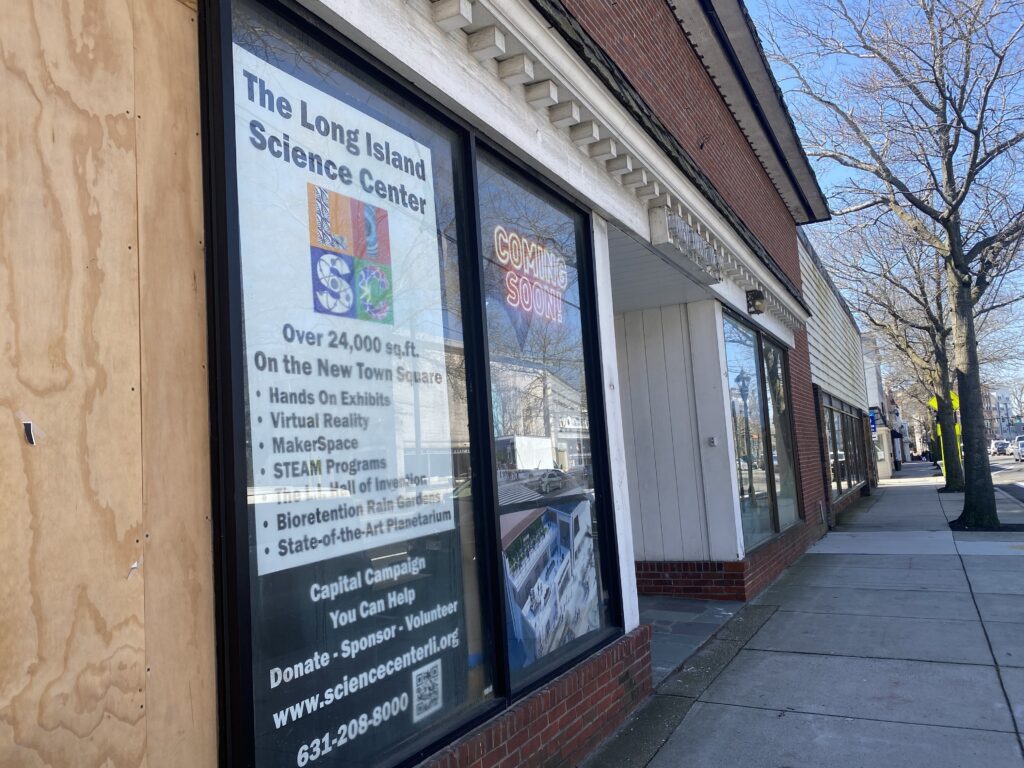
Riverhead leaders moved a step closer Wednesday night to seizing the Long Island Science Center’s planned East Main Street home — as critics questioned whether the town has a real plan for the site if they take control of it.
During a tense, nearly three-hour public hearing, Riverhead town officials defended the possible use of eminent domain to acquire the long-vacant building at 111 E. Main St., arguing the blighted property has stalled downtown revitalization and remains a key missing piece in the Town Square project.
Just a year ago, the Riverhead Town Board backed off its first attempt to take control of the property after the nonprofit presented a two-phase expansion plan for the building and pledged to move forward with renovations and fundraising.
Since then, the nonprofit has yet to begin the first phase of its long-promised East Main Street expansion. Over the last few months, council members have scrutinized the Long Island Science Center’s stalled progress, questioned its financial backing and raised doubts about the two-phase project’s overall viability.
“The opportunity for a successful Town Square project hinges on activation, and the current owner’s plans provide none,” Dawn Thomas, the town’s community development administrator, said at the start of the hearing. “The town is on the precipice of meaningful revitalization after waiting for over 30 years.”
Frank Isler, the town’s special counsel, said the Town Square project is clearly for a “public purpose,” which gives the Town Board the authority to acquire the Science Center property through eminent domain.
Jeffrey Seeman, the town’s environmental consultant, also framed the acquisition as important to the town’s flood mitigation plan, which intends to protect private and public properties, as well as boost downtown’s coastal resiliency.
Town officials stressed that the eminent domain public hearing was not about the Long Island Science Center’s educational mission, but whether the building itself has become an obstacle to the town’s broader downtown plans.
“I loved it. I took my kids there. I wish they could be down there, but there is no financial pathway for them to be down there, because [they] don’t have the funding to go forward,” Councilman Kenneth Rothwell said. “We sat here a year ago, and we gave them a second chance because we wanted them to succeed…we’ve gotten nowhere.”
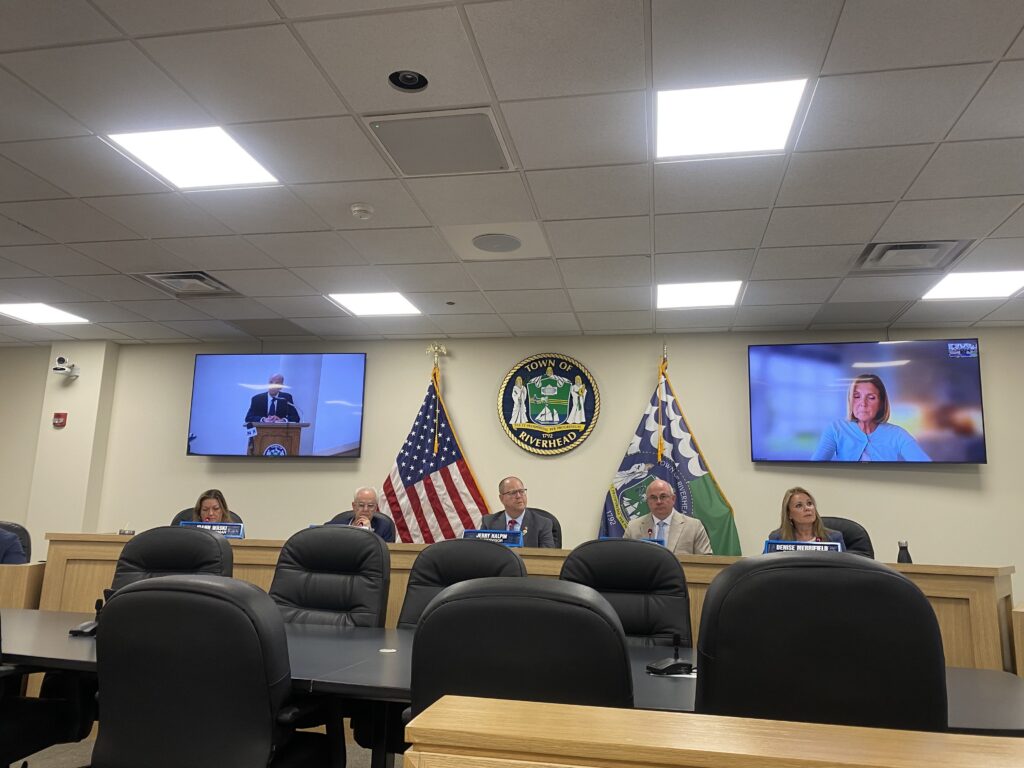
But community members argued the Long Island Science Center should still be given a chance and said town officials may be moving too quickly toward condemnation without clearly explaining what would replace it.
At a previous meeting, LISC representatives refuted claims of insufficient progress. They presented a 90-page stack of documents, including permit applications and correspondence with the town and other parties.
“The biggest benefit is it will enhance our downtown revitalization,” said Cindy Clifford, president of the Heart of Riverhead Civic Association. “Hasn’t that been the great goal all along?”
The town has expressed interest in using the property for “general municipal purposes” once acquired, but opponents said that leaves too much unanswered.
“It doesn’t make a lot of sense to get rid of a blighted building, purchase it with town funds, get rid of it without a replacement, and if you have a replacement in mind, that needs to be brought forward before you make the full decision,” Greater Calverton Civic Association president Toqui Terchun said. “Your judgment needs to include that — without it, it’s incomplete and premature.”
In response to those concerns, Mr. Rothwell said: “you can’t market something you don’t own.”
Riverhead Town Supervisor Jerry Halpin sided with some of those concerns, saying the town is supposed to disclose its plans under eminent domain law.
Mr. Rothwell countered that the site would be used “to build an activation space for the Town Square,” but said the town cannot issue a request for proposals until the acquisition process is complete.
“The town board can make the determination that it’s in the public purpose of eminent domain to acquire this building to take control over it, so that it is dealt with as the town decides to deal with it,” Mr. Isler said. “Either by removing it, selling the property, however it decides to proceed.”
The cost also remains unclear. Colin Tooker of Riverhead asked how much the acquisition would cost, but Riverhead Town Attorney Erik Howard said there has not been an appraisal of the property.
Riverhead Town would be required to pay “just compensation” to the property owners, as it did during its eminent domain pursuit of the former Craft’D property last year.
The hearing grew increasingly heated as the night went on. Former town board candidate Kevin Shea read aloud a poem he wrote in opposition to eminent domain. Peter Timmons of Wading River spoke in support of condemning 111 E. Main St.
“Insanity is doing the same thing, over and over again, and expecting different results,” Mr. Timmons said. “It is insane to allow the science center group more time to continue this farce.”
Mr. Timmons is Councilwoman Denise Merrifield’s husband, but he did not identify his relationship to Ms. Merrifield when stepping up to the podium — and neither did the town board members.
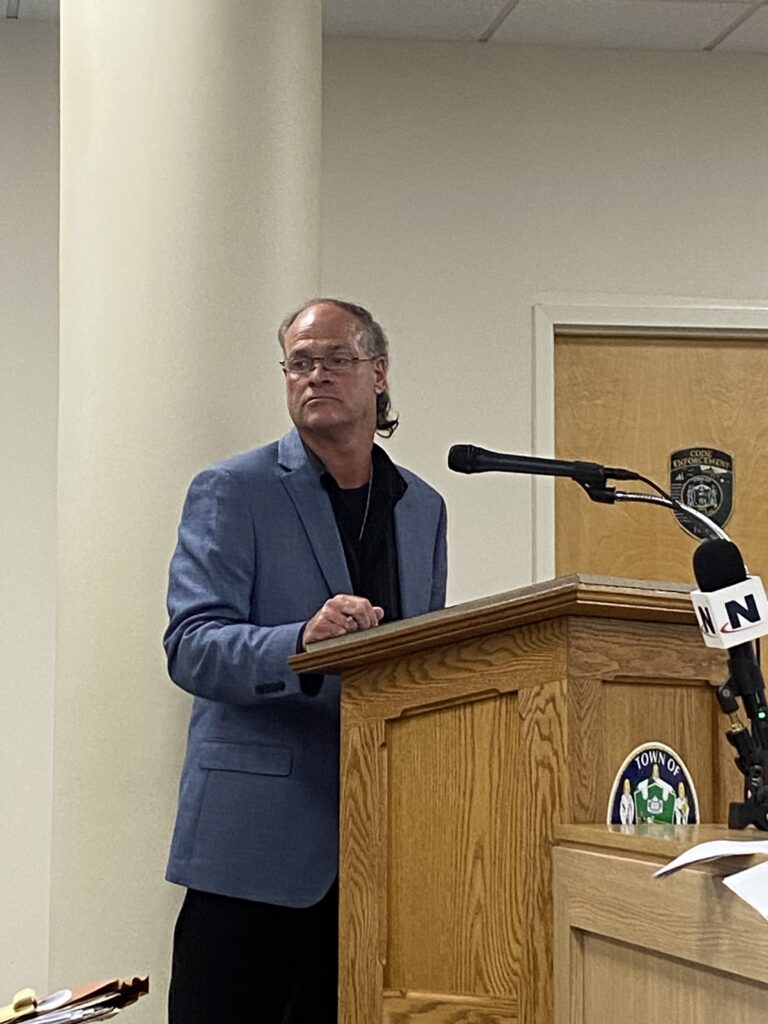
James Cartisano of Facility Construction Services, a private contractor who worked with the Long Island Science Center, said he filed a $13,867 mechanic’s lien against the organization last November. He said another unpaid invoice of $2,148 is also pending.
Mr. Oxman and other LISC representatives attended the public hearing, but remained mum about the claims from the podium.
In a press release sent the day before hearing, Mr. Oxman accused town officials of “creating a cloud of condemnation” that scared off donors and “damaged funding” for the project.
“The Town must choose whether its future is built around children, families, and education — or private development for apartments,” he wrote. “The Town cannot create the problem and then use that problem as justification for taking the property.”
Mr. Halpin, who previously voted against holding the eminent domain public hearing, called the lengthy meeting a “disappointing night.”
“I do not believe eminent domain is a card to be played unless there is a specific, absolute need for that,” the supervisor said. “I really wish we could have worked something out, and I do understand the process that’s happening…it’s just not the course that I wanted to go.”
The public hearing is a legal requirement before eminent domain proceedings can begin.
The Town Board voted to close the hearing, but left the record open for written comments until May 30.
Under the law, town officials have 90 days after the public hearing to adopt a resolution determining whether to move forward with the science center acquisition and whether the decision is in the public interest.